Restaurant hiring and training investments boost returns, reduce turnover
One understaffed restaurant shift can cost hundreds of dollars, and nearly half of short-staffed restaurants said they could not run at full capacity.
A single missing worker can wipe out hundreds of dollars on one shift, and the National Restaurant Association is arguing that restaurants should treat that loss as a management problem, not just a hiring headache.
In its Research Insight: Workforce Hiring and Staffing report, the association said staffing decisions should be viewed as a strategic business investment rather than a short-term cost. The group said technology creates its biggest payoff after someone is hired, especially in onboarding, scheduling, training and manager effectiveness, the day-to-day systems that decide whether a new line cook, server or host gets thrown into chaos or learns the job fast enough to stick around.
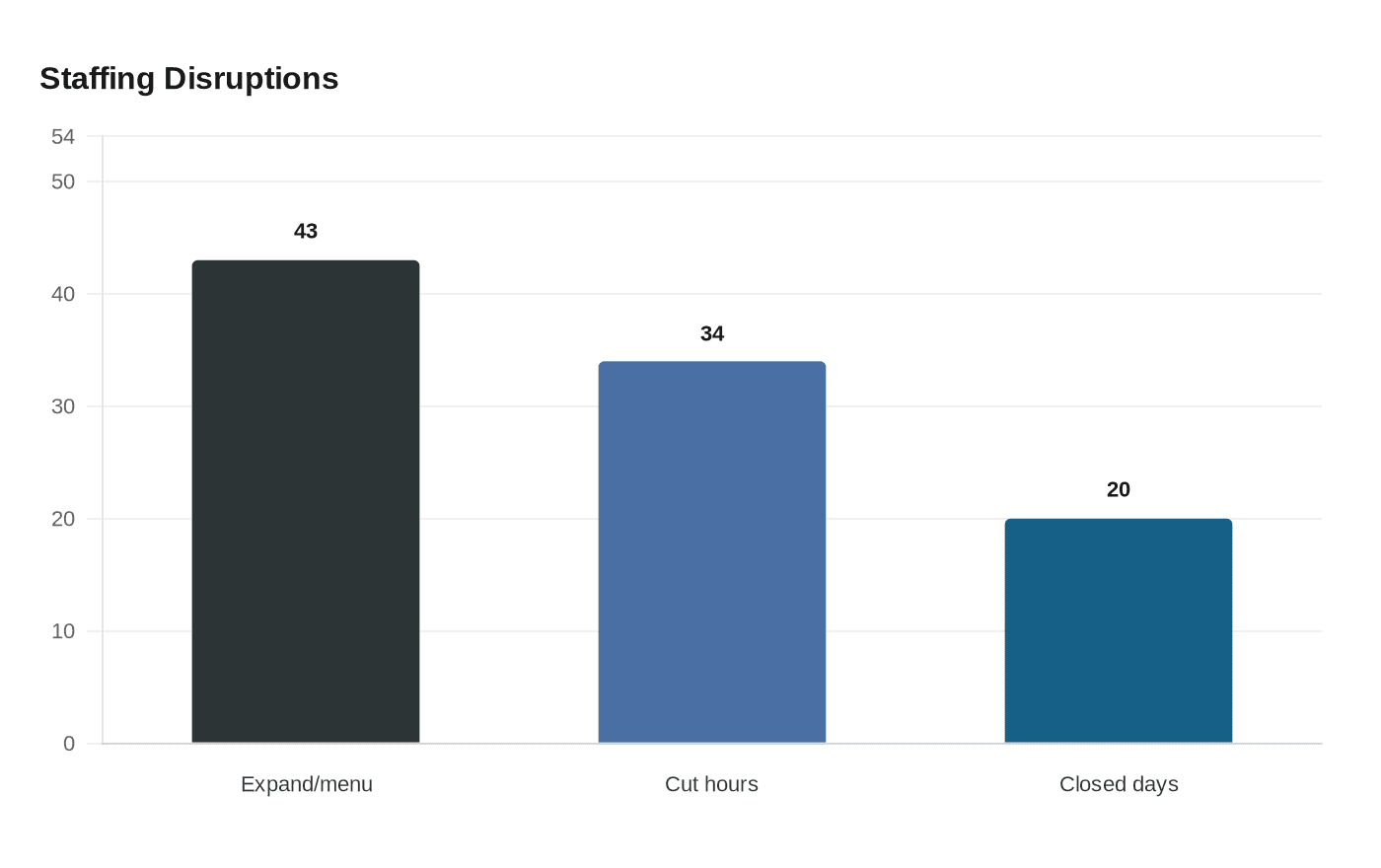
That matters because the cost of getting staffing wrong is showing up on the floor. Nearly 8 in 10 short-staffed operators said understaffing significantly limited their ability to grow and succeed. Nearly half said they could not operate at full capacity. Another 43% postponed expansion plans or changed menus, 34% cut hours, and 1 in 5 closed on days they normally would have been open. One operator estimated that being short one team member could cost hundreds of dollars per shift; another said losing one worker could shave thousands off annual sales.
The association’s answer is not simply to hire faster. It said restaurants get the highest workforce return when they maximize technological efficiency and build stronger management teams that can actually support people once they walk in the door. For hourly workers, that can mean a more organized first week, less last-minute scrambling on the line and a better shot at being coached into higher-paying roles instead of burning out and quitting.
The numbers underscore why the pitch is aimed at a workforce that still has room to grow. The association said restaurants and foodservice employed about 15.7 million people in March 2026, or 10% of the U.S. workforce, and projected 15.8 million jobs for 2026. It also said 40% of workers are under 25 and 60% are under 35, which helps explain why the industry keeps framing itself as a ladder into leadership, not just a stopover. The association said restaurants offer careers across more than 70 roles, from entry-level shifts to management.
The labor market has cooled since the Great Resignation, but staffing is still tight. As of February 2026, fullservice restaurant employment remained 207,000 jobs, or 3.7%, below pre-pandemic levels, even as eating and drinking places were 76,800 jobs above their February 2020 peak. Restaurant and lodging job openings also fell from 991,000 in January to 780,000 in February 2026. The association said nearly three-quarters of operators still plan to hire, though many expect trouble finding experienced managers and chefs.
The report was backed by Workday and drew on restaurant operators and HR leaders from Biaggi’s Ristorante Italiano, Captain D’s, Chipotle, Golden Corral, Lehigh Valley Restaurant Brands, Red Robin, The Saxton Group, Southern Rock Restaurants, Slatebridge Restaurants Group, JRI Hospitality and Taco John’s. It also points to ProStart, which reaches roughly 130,000 to 165,000 students in schools across the country, as the long-term pipeline for the next generation of cooks, servers and managers.
This article was produced by Prism’s automated news system from verified source data, official records, and press releases, then run through automated quality and moderation checks before publishing. The system is built and supervised by the people who set the standards it runs under. Read our full AI policy.
Did this article answer your question?