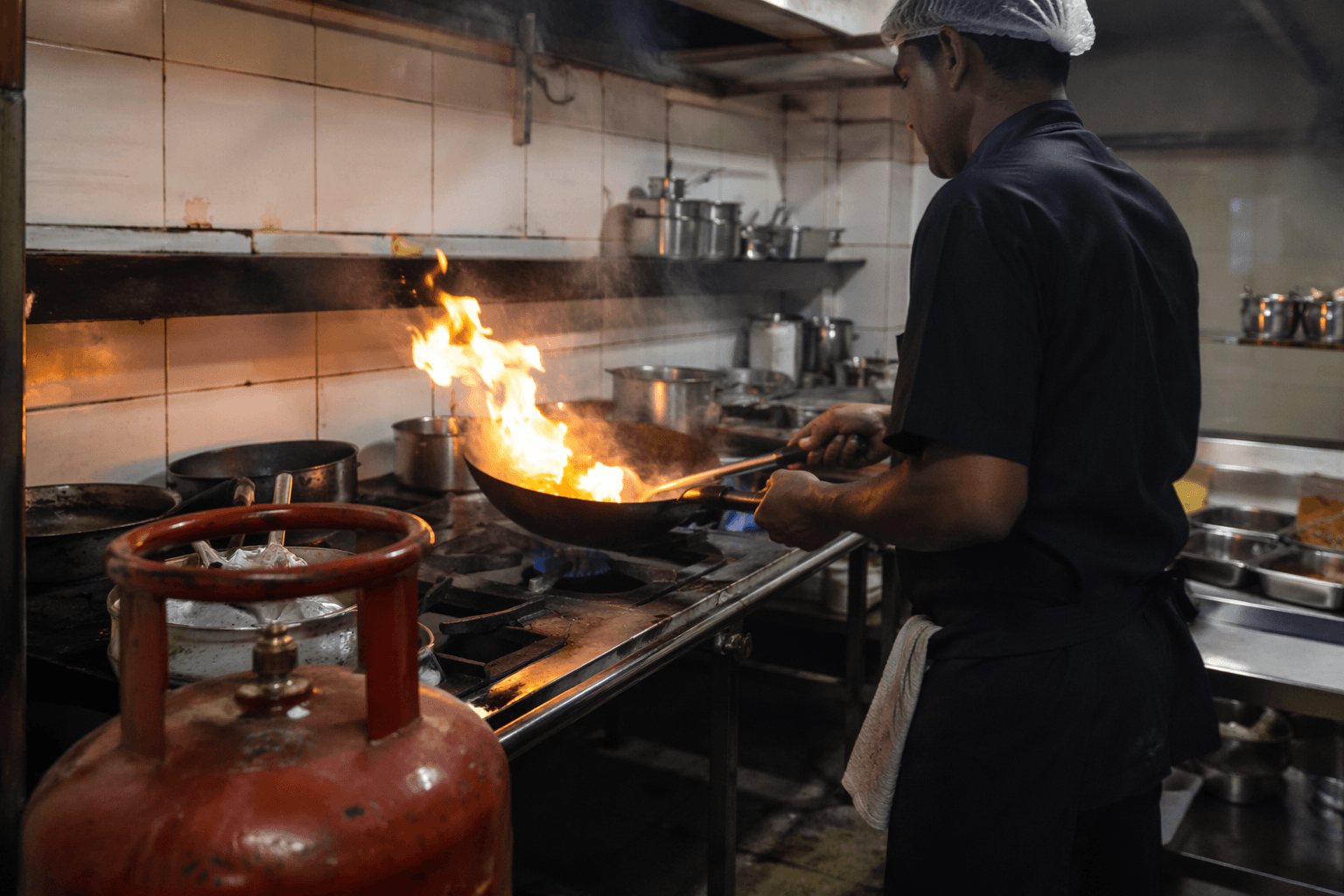
Restaurant operators weigh automation to ease labor shortages and repetitive tasks
Automation is becoming a labor strategy in restaurants, but the real question is whether it cuts drudgery or just squeezes smaller crews harder.

Restaurant automation is moving from a side experiment to a staffing decision. The National Restaurant Association says 47% of operators expect technology and automation to become more common as they try to address labor shortages, even as 45% still say they need more employees and 70% have hard-to-fill openings. That puts the pressure where workers feel it most: on the host stand, the prep line, the dish pit, and the manager’s schedule.
Where the money is going
Operators are not just talking about robots in the abstract. In related association materials, 37% of operators said they expect to invest in automated labor management, recruitment, or scheduling systems, while 52% planned to put money into back-office technology. The association’s technology report also found that 76% of operators believe technology gives them a competitive edge, and 16% planned to invest in AI integration, including voice recognition, in 2024.
That mix tells you a lot about the current push. Some tools are aimed at the guest-facing side, like ordering and payment. Others are designed to tighten the mechanics behind the scenes, from labor forecasting to inventory counts, which can change how often a manager has to step away from the floor to handle admin work. For line cooks and shift leaders, the effect is usually not fewer tasks overall, but a different mix of tasks, with more software and less paperwork.
What automation actually removes, and what it adds
The National Restaurant Association’s guidance is useful because it treats automation like an operational question, not a slogan. It tells operators to look at the actual work inside the restaurant: repetitive kitchen and front-of-house tasks, bottlenecks in prep and service, employee feedback about physically demanding duties, and whether current systems can even integrate with new tools. That is the right lens for workers too, because automation rarely arrives as a clean replacement for labor. It usually redistributes labor.
A kiosk may change the host stand and move the first point of contact away from a person. A back-of-house reporting system may reduce manual counting and give managers more real-time data. A fry robot or AI ordering tool may change what a line cook, expo, or shift leader is doing during a rush, especially when every second matters and the screen becomes one more thing to monitor.
The upside is real when the technology takes the worst parts of the job off the crew’s plate. Fewer tedious chores, fewer errors, and less wasted motion can help a kitchen breathe during service. The downside is just as real if management uses automation mainly to trim staffing without redesigning the workflow. In that case, the same number of tickets can land on fewer people, and the new burden becomes pace, not relief.
Why automation is accelerating now
The labor picture helps explain why this is happening so quickly. The National Restaurant Association said in February 2024 that the industry was still struggling to hire, with 45% of operators needing more employees to meet demand and 70% reporting hard-to-fill openings. At the same time, the industry was forecast to exceed $1.1 trillion in sales in 2024 and employ 15.7 million people in the United States by the end of the year.
That scale creates a strange combination of urgency and caution. One in four operators said using gig workers to fill staffing gaps would become more common in their segment, which shows how many restaurants are still patching holes one shift at a time. Automation sits in the same toolbox as temp labor, but it is aimed at a different problem: making each employee cover more ground without breaking the operation.
Consumer behavior is pushing in the same direction. In the association’s technology report, 82% of Gen Z adults said they were comfortable ordering at a limited-service restaurant with a smartphone app. That does not mean every guest wants the same thing, or that a full-service dining room can be run like a quick-service chain. It does mean operators see a business case for faster ordering, easier payment, and fewer friction points, especially where speed already drives the sales model.
California turned the wage debate into an automation debate
Few developments sharpened the discussion more than California’s fast-food minimum wage increase to $20 an hour, which took effect on April 1, 2024. Grubbrr CEO Sam Zietz said at the National Restaurant Association Show in May 2024 that the change turned in-store ordering kiosks from “a nice-to-have to a need-to-have overnight.” He argued that kiosks are less about true labor replacement than labor reallocation, and said brands testing them in California did not find major labor savings, even though they did see larger checks, with an estimated 12% to 22% uplift across brands.
That matters because wage pressure and automation are now tied together in the same conversation. For operators, the math is not only about hourly pay. It is also about labor intensity, throughput, ticket size, and how much of the guest interaction can be moved to a screen without breaking service. For workers, that means the wage debate can quickly become a workflow debate, with management asking the remaining crew to absorb more of the physical and emotional load.
The worker risk is stress, not just headcount
There is also a labor-side warning that should not be ignored. A Washington State University study published in May 2024 found that among more than 620 lodging and food service employees, fear that robots and technology will take jobs increased job insecurity and stress and was linked to higher turnover intention. The effect was especially pronounced among people who had real experience with robotics, and it reached both managers and frontline workers.
That is the part of automation conversations that gets lost when executives talk only about efficiency. A new system can create anxiety long before it creates savings. If a bartender thinks the new ordering tool is a prelude to fewer hours, or a host sees a kiosk as a step toward a smaller front desk, morale can drop even if the machine works exactly as designed.
- Ask what job disappears before asking what tool gets bought.
- Measure whether the tool cuts repetitive work or just adds another screen.
- Check whether staffing levels will stay realistic during the transition.
- Survey the crew doing prep, service, and closing work, because they know where the bottlenecks are.
- Match the tech to the customer base, because a limited-service app strategy is not the same as a full-service dining room.
The real test is whether the restaurant gets easier to run
The association’s own history suggests this is an incremental shift, not an overnight replacement of people. Its 2024 technology report was the first broad look at restaurant technology integration since 2016, which underscores how much the issue has matured from novelty to operational planning. The best uses of automation make the restaurant easier to run and easier to work in. The worst simply move the bottleneck somewhere else.
That is the central question for cooks, servers, bartenders, hosts, and managers as the automation wave grows: whether the technology is being used to support hospitality, or to hollow it out. In a business already shaped by labor shortages, burnout, tip-sensitive service, and constant turnover, that difference will decide whether automation becomes relief on the floor or just another way to squeeze the crew.
This article was produced by Prism’s automated news system from verified source data, official records, and press releases, then run through automated quality and moderation checks before publishing. The system is built and supervised by the people who set the standards it runs under. Read our full AI policy.
Did this article answer your question?