Restaurant Pay Growth Slows, Falling Behind Inflation as Hiring Continues
Restaurant pay rose 2.4% in March, but inflation ran hotter, leaving cooks and servers with less buying power even as hiring picked up.
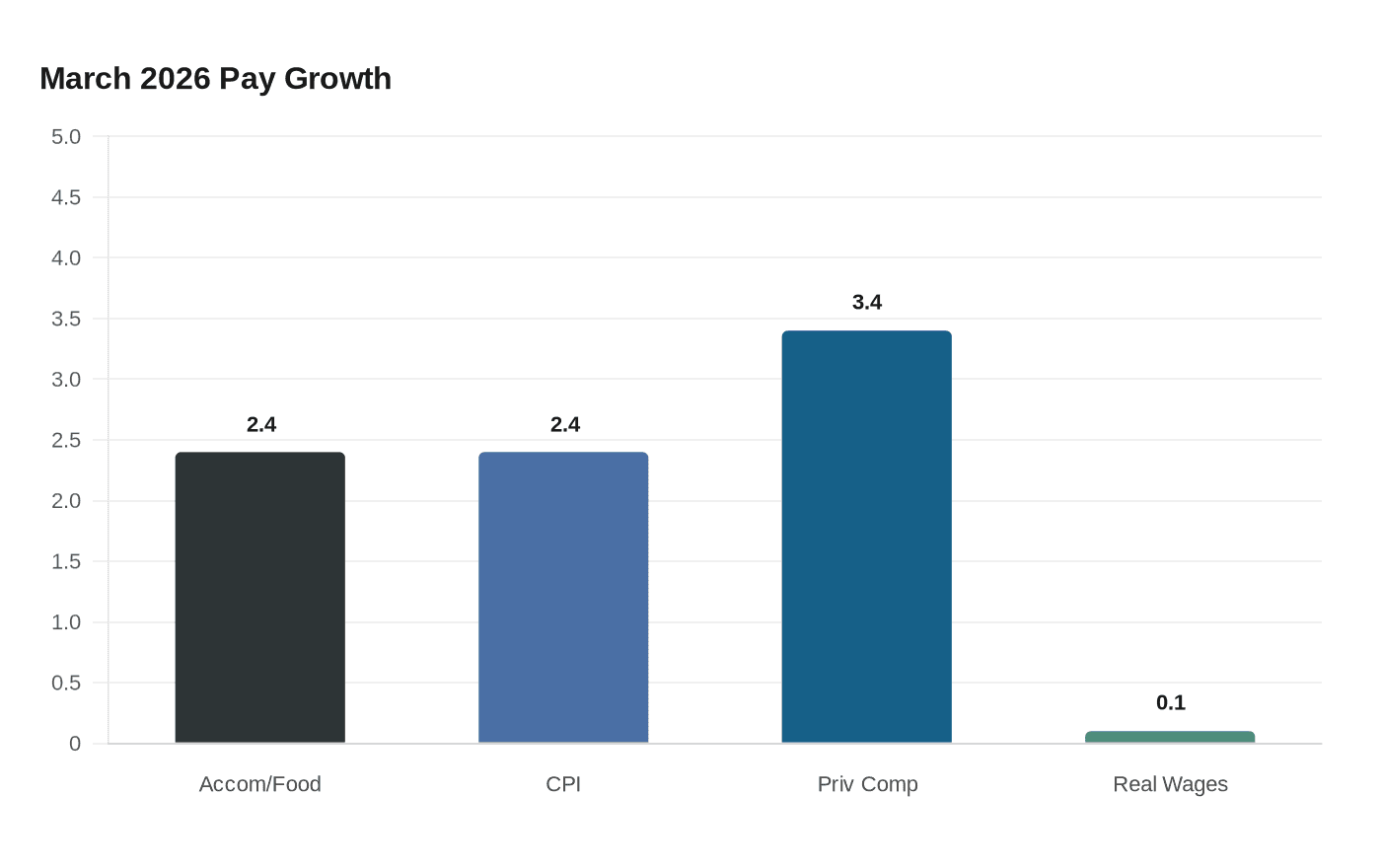
Restaurant workers are still getting raises on paper, but those gains are no longer keeping up with the cost of living. OysterLink’s May 4 analysis of U.S. Bureau of Labor Statistics data showed compensation in accommodation and food services rose 2.4% over the 12 months ending March 2026, down from 3.9% a year earlier, while inflation ran at 3.3%. For cooks, servers, bartenders and hosts already juggling uneven schedules and tip-heavy paychecks, that gap means the paycheck is buying less than it did a year ago.
The pressure is showing up in the broader price data too. The BLS said the Consumer Price Index rose 2.4% over the 12 months ending March 2026, while the food away from home index rose 0.2% in March and the full-service meals index rose 0.3% that month. In other words, restaurant prices were still moving, but not in a way that gave hourly workers much relief at the register. The BLS also defines the Employment Cost Index as a measure of hourly labor cost to employers, which helps explain why OysterLink’s reading focused on compensation, not just base wages.
At the same time, restaurants were still hiring. OysterLink said leisure and hospitality added 44,000 jobs in March 2026, the strongest monthly gain in four years, after February employment in the sector had fallen. That rebound marked a 55,000-job swing in a single month. In the first quarter, OysterLink tracked 166,770 job postings across 707 U.S. cities, including 127,716 entry-level roles. The market still has openings, but that does not mean workers are seeing better pay growth or more stable shifts for sticking around.
That tension matters for retention. When inflation outruns raises, workers are more likely to pick up second jobs, move to restaurants with better hourly rates or chase stations and sections that produce stronger tips. Managers then have to do more with staffing, because the problem is not just filling jobs, it is keeping people available for the worst shifts, the slow lunches, the late closings and the weekend rushes that make the business run. Better training and steadier scheduling can help, but the numbers suggest pay is becoming harder to ignore.
The recent pattern also shows how quickly the math can turn. OysterLink said hospitality workers got a 77-cent raise in 2025, but inflation erased 51 cents of it, leaving just 26 cents an hour of real purchasing-power gain by the end of the year. The BLS said private-industry compensation costs rose 3.4% over the 12 months ending in March 2026, while inflation-adjusted private-industry wages and salaries rose only 0.1%. For restaurant operators, that is the warning sign: if pay keeps lagging prices, understaffed shifts may cost more than a raise ever would.
This article was produced by Prism’s automated news system from verified source data, official records, and press releases, then run through automated quality and moderation checks before publishing. The system is built and supervised by the people who set the standards it runs under. Read our full AI policy.
Did this article answer your question?