Restaurant profits fall as costs climb, industry leans into efficiency
Profit pressure is forcing restaurants to squeeze harder from every shift. The 2026 outlook signals growth, but workers should expect tighter scheduling, cross-training, and more scrutiny on labor and food waste.
What the 2026 outlook really says
Restaurant sales are still headed higher, but the floor-level reality is harsher than the topline suggests. The National Restaurant Association projects $1.55 trillion in total restaurant and foodservice sales in 2026 and says operators will add more than 100,000 jobs, yet its own outlook also warns that the industry is entering the year with rising costs, softening traffic, and uneven consumer spending.
That combination is why the numbers feel contradictory to the people actually running shifts. Growth is continuing, but margins are still thin enough that even a small sales miss, a labor spike, or a food-cost jump can wipe out a week’s gains. Michelle Korsmo’s call for “breakthrough efficiencies” is not corporate fluff in this environment. It is a sign that restaurants are being pushed to do more with the same dining rooms, the same back-of-house square footage, and teams that are already stretched.
Why the profit picture matters on the restaurant floor
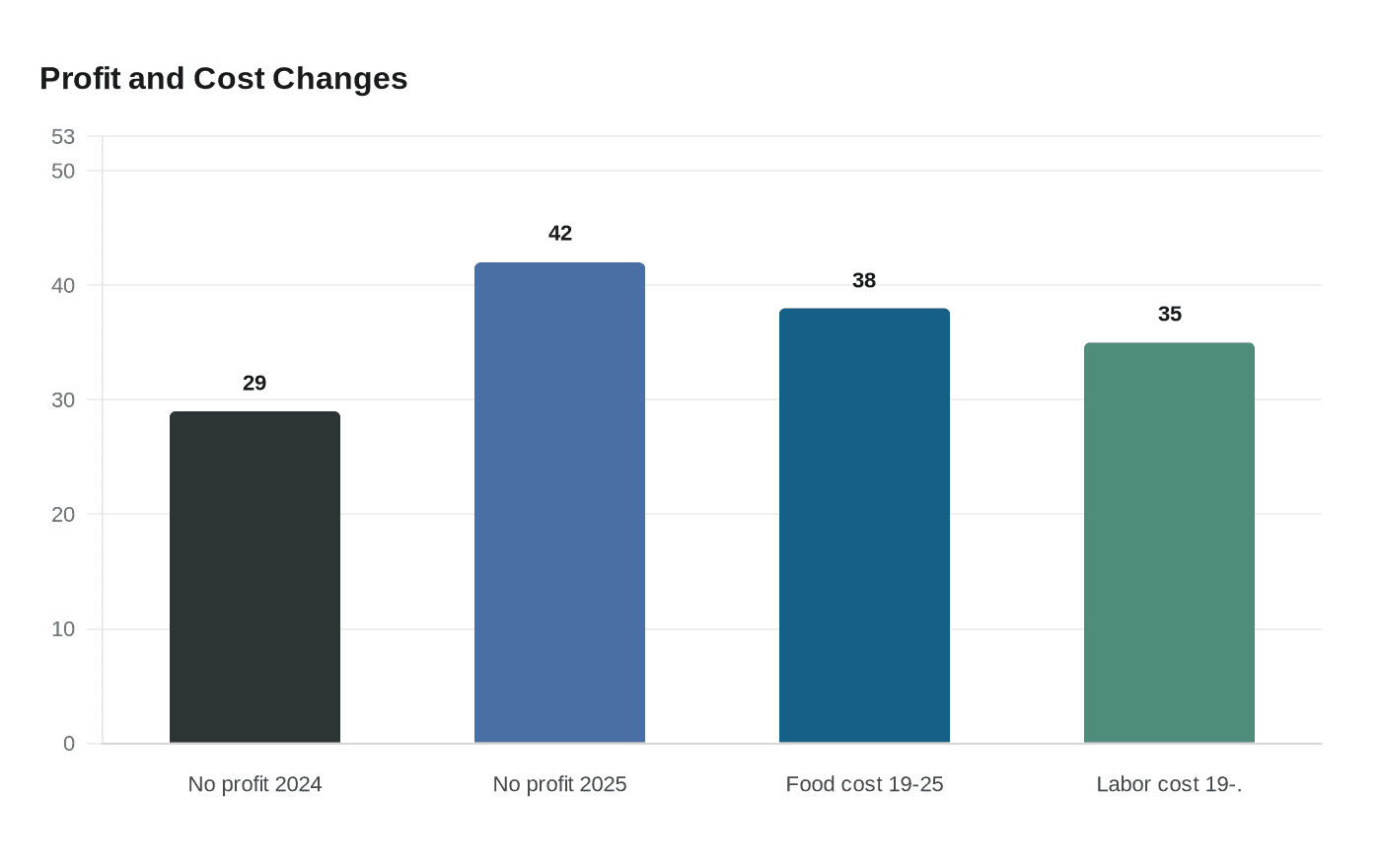
The clearest warning sign is profitability. Nation’s Restaurant News reported that 42% of restaurants did not turn a profit in 2025, up from 29% in 2024. That is not a small deterioration. It means a larger share of operators is entering 2026 with less room to absorb overtime, call-outs, waste, slow shifts, or a bad weather weekend that knocks traffic down.
The same report showed food costs climbing 38% between 2019 and 2025, while labor costs jumped 35% over the same period. For workers, those two numbers explain a lot of the daily pressure: tighter pars, more menu scrutiny, more labor squeezing, and less tolerance for inefficiency. When both the kitchen and payroll are more expensive, managers are almost always looking for faster ticket times, more prep discipline, and fewer people covering more roles.
Efficiency is becoming the new management language
Korsmo’s message about “breakthrough efficiencies” points to the direction restaurants are heading in 2026. Expect more attention to scheduling software, labor targets, prep counts, and service consistency. That can help reduce chaos when done well, but it can also translate into more pressure on line cooks, servers, hosts, and managers to cross-train and move between tasks with less slack in the system.
For frontline workers, efficiency usually shows up in practical ways:
- Fewer slow periods that allow a restaurant to carry extra staff
- More insistence on cross-training across host, expo, bar, and support roles
- Tighter labor models that reduce the number of people on a shift
- More monitoring of food waste, comps, voids, and ticket time
- Greater pressure on managers to keep service steady even when staffing is thin
The upside is that better systems can reduce fire drills and make shifts more predictable. The downside is that efficiency can become a polite word for running leaner than feels comfortable, especially in restaurants where one missing dishwasher or one late prep cook can throw off the entire night.
Why demand may stay solid, even if workers feel the squeeze
The association’s outlook does not read like a collapse story because consumer demand is still being supported by flavor, convenience, and social connection. People are still eating out, ordering in, and using restaurants as part of how they socialize. That is why operators can still forecast growth even while complaining about costs and traffic.
But demand support is not the same as stability. Softening traffic and uneven consumer spending mean guests are choosier, more value-conscious, and less forgiving of mistakes. That tends to push restaurants toward menu simplification, better throughput, and more aggressive attention to upselling and check average. If guests are coming in less predictably, the burden shifts to the team to make each visit count.
The price pressure is still real for guests and staff
The U.S. Bureau of Labor Statistics reported that food away from home prices rose 4.1% from December 2024 to December 2025. That sits above the overall consumer price increase and reinforces what workers already feel when guests complain about menu prices, tip less on a higher check, or trade down to cheaper items.
The broader inflation picture matters too. The Consumer Price Index for all items rose 2.7%, while food prices increased 3.1%. That means restaurant prices are still climbing in an environment where guests are already feeling pressure in other parts of household spending. For servers and bartenders, that can mean more pushback over check totals and tip percentages. For cooks and managers, it can mean more demand for value menus, specials, and faster service that justifies the price.
How tariffs and immigration policy fit into the pressure
Korsmo has also said the Administration’s tariff and immigration policies are biting into the industry’s ability to prosper and grow. That matters because restaurants do not operate in a vacuum. Tariffs can add pressure to input costs, while immigration policy affects the labor pool that many restaurants rely on to keep kitchens and dining rooms staffed.
For workers, this is a reminder that the labor crunch is not just a scheduling problem. It is a structural problem that affects hiring, training, turnover, and the mix of people available for back-of-house and front-of-house jobs. In an industry already dealing with stubborn cost inflation, policy pressure can show up as leaner staffing, longer waits for hiring, and more responsibility pushed onto existing teams.
What workers and managers should watch in 2026
The best way to read the year ahead is to watch for signals that the profit squeeze is intensifying or easing. The most important signs are not executive speeches. They are the day-to-day changes inside each unit.
Watch for:
- Scheduling patterns that get tighter as traffic remains uneven
- More emphasis on cross-training and job blending
- Menu simplification or narrower prep lists
- Increased use of technology to track labor, sales, and waste
- Pressure to maintain service quality with fewer hours
- More scrutiny over overtime, break timing, and labor-to-sales ratios
If labor growth is concentrated in certain concepts while profits remain weak elsewhere, the industry may keep hiring but still fail to relieve frontline pressure. A projected addition of more than 100,000 jobs sounds strong on paper, but it does not automatically mean better shifts, higher wages, or steadier hours if operators are still fighting 3% margins and elevated input costs.
What this means for restaurant jobs right now
The 2026 outlook is best understood as a warning wrapped inside a growth forecast. Restaurants are still large, still hiring, and still supported by consumer demand, but the old assumption that sales growth alone will fix staffing stress is gone. With 42% of restaurants unprofitable in 2025, food costs up 38% since 2019, and labor costs up 35%, the industry is asking workers to absorb more of the burden of efficiency.
That means the people on the line, on the floor, and in the manager’s office should expect a year defined by sharper cost controls, more cross-training, and less tolerance for waste. The restaurants that hold up in 2026 will not just be the busiest ones. They will be the ones that can protect service, stabilize hours, and keep teams from burning out while trying to turn thin margins into something sustainable.
This article was produced by Prism’s automated news system from verified source data, official records, and press releases, then run through automated quality and moderation checks before publishing. The system is built and supervised by the people who set the standards it runs under. Read our full AI policy.
Did this article answer your question?