Restaurant traffic slows as war, gas prices, inflation reshape 2026 outlook
War-driven gas spikes and higher inflation are already cooling restaurant traffic, forcing operators to juggle pricing, portions and tighter schedules.
What changed first: traffic
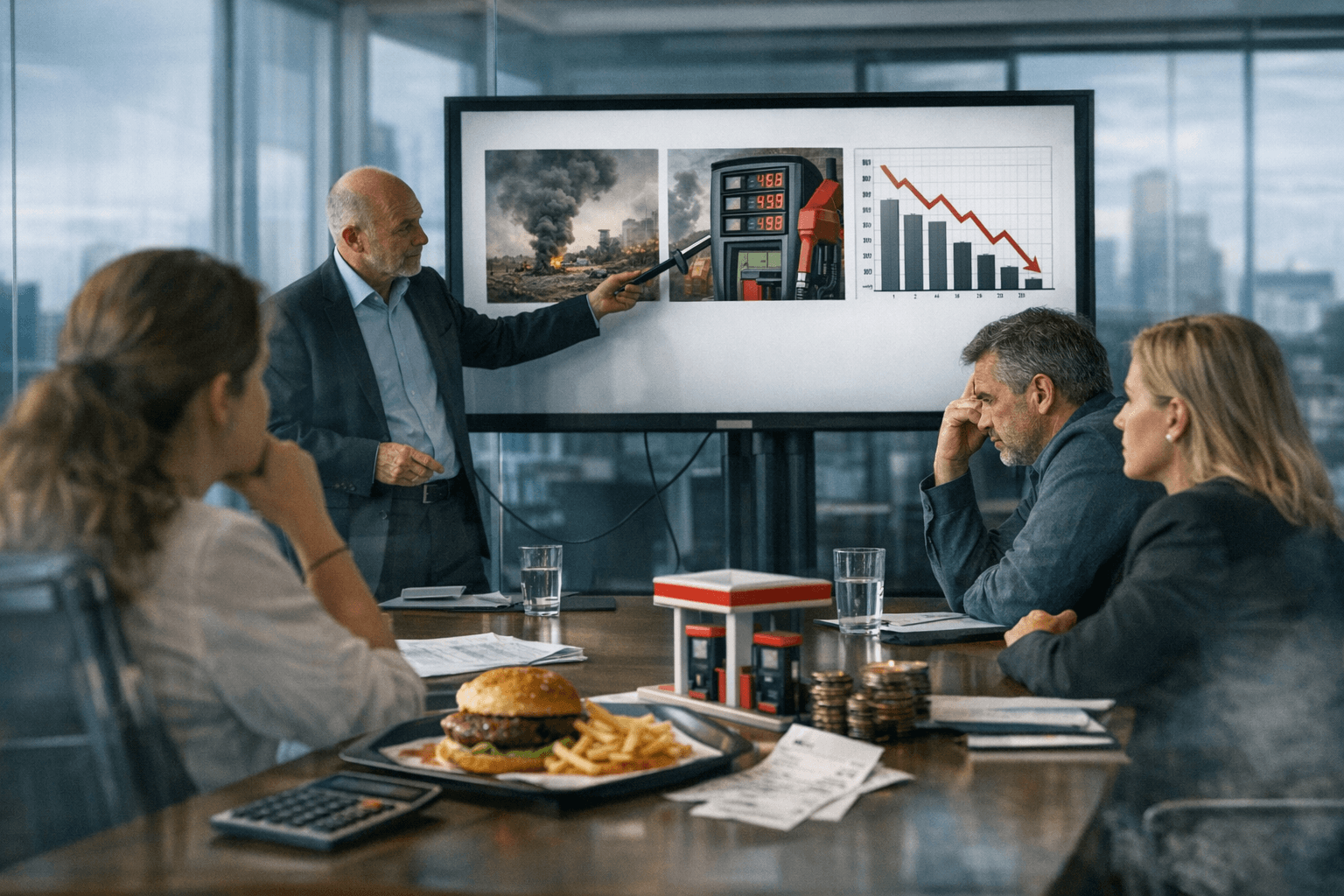
A strong start to the year did not last. Technomic said restaurant traffic was up in the first two months of 2026, then flattened in March as the war in Iran began to affect demand and push U.S. gas prices past $4 a gallon nationwide on average. That matters on the floor because the first sign of macro pressure is rarely a boardroom chart, it is a slower lunch rush, fewer second rounds, and guests reaching for the cheapest path to a meal.
Technomic put that shift in a longer context: traffic fell 0.8% industrywide in 2025, about the same as in 2024. The message for line cooks, servers, bartenders and managers is not that demand vanished. It is that demand is becoming more sensitive to outside shocks, and those shocks can change the week-to-week pace of service fast enough to disrupt pars, prep lists and labor schedules.
The pressure on the check rises even when sales do
The National Restaurant Association still projects 2026 U.S. restaurant sales at $1.55 trillion, with real growth of 1.3%. That is a big number, but it sits beside a harsher one: 42% of restaurants did not turn a profit in 2025. Average food costs rose 38% between 2019 and 2025, while labor costs climbed 35%. In other words, the industry can be growing and still leave a huge share of operators trapped between rising expenses and thin margins.
That squeeze shows up in daily decisions that workers notice immediately. Menu prices cannot rise forever without pushing guests away, especially when consumer confidence is shaky and gas costs are eating into household budgets. So operators lean harder on combos, add-ons, limited-time offers and tighter portion control, trying to protect revenue without scaring off the customer who has already decided every dollar counts.
The Organisation for Economic Co-operation and Development added another layer of strain when it raised its U.S. inflation forecast for 2026 to 4.2% from 3.2% before the war began. For restaurants, that is less an economic headline than a warning that the cost of everything from ingredients to utilities to transportation may keep shifting underfoot.
Value is now a service standard
When guests feel squeezed, they do not stop eating out; they look for proof that the meal is worth it. That means the value message is no longer a marketing line, it is part of the job on the line and on the floor. Operators will be under pressure to make meals feel bigger, faster, or more customizable, even when their own cost structure is pushing in the opposite direction.
For staff, that often translates into more scrutiny around portioning, more questions about substitutions, and more attention to ticket times. A server explaining why a combo saves money or a manager steering a guest toward a more affordable plate is doing the work of demand retention as much as hospitality. That also helps explain why restaurants are so focused on speed and consistency when traffic softens: if the guest is already price-conscious, a slow or sloppy meal feels even more expensive.
Portions, protein and the new menu mix
Technomic’s 2026 foodservice trend forecast points to a real shift in what guests want to eat and how much of it they want. GLP-1 medications are changing appetites and consumption patterns, which is pushing restaurants toward smaller portions, snacks, shareables, and protein- and fiber-rich items. At the same time, Technomic said new USDA guidelines emphasized protein and healthy fats while downplaying whole grains and sugars, lining up with the Make America Healthy Again movement associated with Health Secretary Robert F. Kennedy Jr.
That mix matters behind the pass. Smaller portions and more snackable items can change prep routines, speed of plating and inventory planning. Shareables can increase complexity in the kitchen even when they sound simpler on the menu. And protein-forward items often require tighter control of portion sizes and cook times, which means line cooks need more consistency and managers need better forecasting.
It also changes the questions coming from the dining room. Servers are increasingly expected to answer ingredient and nutrition questions that used to be a niche concern. If more guests are ordering with appetite suppression, health goals or family-style grazing in mind, the menu has to do more of the selling before the table even orders.
The labor crunch is moving from chronic to operational
Technomic’s outlook says the labor shortage will intensify because of policy, economic, lifestyle and demographic factors. That is a broad forecast, but its effect is concrete: fewer available workers, higher labor costs, and more pressure to make each shift cover more demand without burning people out. The National Restaurant Association has also said restaurants will need creativity and technology to deliver value and better productivity, and CEO Michelle Korsmo has pushed the industry toward more workers, more efficiency and more tech to meet the pressure.
For restaurant teams, that means schedule volatility is not going away. If traffic is uneven and labor is tighter, managers have to thread the needle between understaffing, which drags service and tips, and overstaffing, which hurts margins. The gap between a good schedule and a bad one gets narrower when gas prices, inflation and consumer caution can all change guest counts in the same week.
That is why the workplace impact of this forecast is bigger than menu strategy. It reaches all the way to how many cooks are on the line, how many servers can handle a section, how much training a host gets before a rush, and how quickly managers can reshuffle a floor plan when traffic dips.
Technology is becoming less of a promise and more of a tool
Technomic’s 2026 outlook says technology is moving from hype toward practical tools that improve customer service, operations and decision-making. That shift is important because restaurants do not need more jargon, they need systems that help them run a shift with fewer surprises. Better forecasting, easier ordering, and faster service tools can matter most when weather, fuel prices or geopolitics suddenly change who walks through the door.
The larger lesson for restaurant workers is simple: the forces reshaping the business are not abstract. A conflict that squeezes the Strait of Hormuz, gas above $4 a gallon, inflation at 4.2%, and pressure to serve more value in smaller, healthier formats all end up in the same places, the prep list, the labor board, the menu, and the paycheck. In 2026, the restaurants that adapt fastest will be the ones that treat those signals as part of daily operations, not as noise from far outside the dining room.
This article was produced by Prism’s automated news system from verified source data, official records, and press releases, then run through automated quality and moderation checks before publishing. The system is built and supervised by the people who set the standards it runs under. Read our full AI policy.
Did this article answer your question?