Restaurant turnover stays high as pay alone fails to fix retention
Higher hourly pay has not stopped restaurant turnover because workers are still walking away from unstable schedules, weak management, burnout, and dead-end careers.

Higher hourly pay has become the default answer to restaurant turnover, but the numbers keep saying the same thing: a bigger paycheck alone does not make the job stick. In a sector where annual churn hovers around 75 percent and some quick-service concepts can top 100 percent, operators are often refilling the same shifts instead of building a stable team.
Pay is only one part of the retention problem
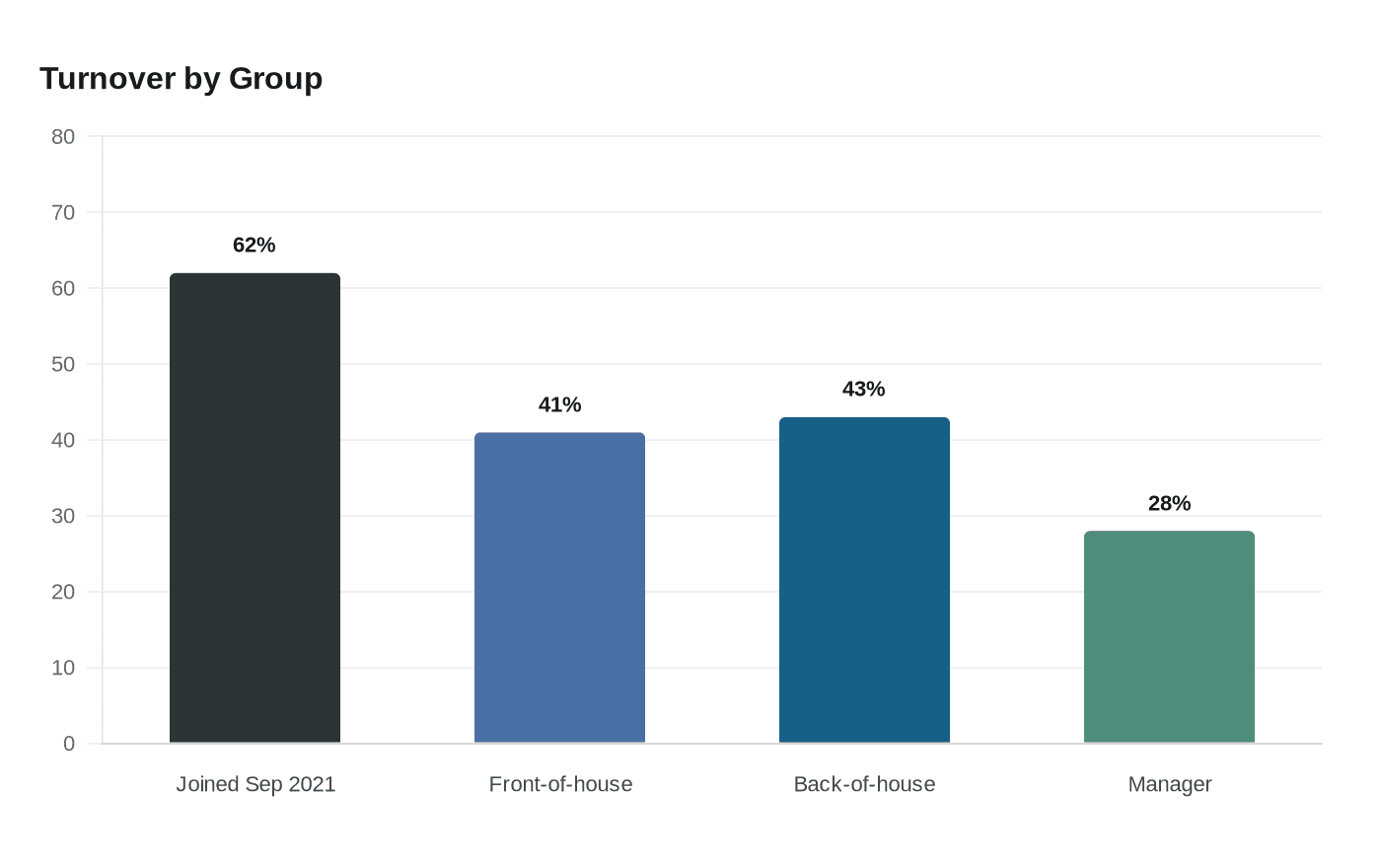
The clearest warning sign comes from 7shifts’ 2025 retention playbook, which analyzed anonymized data from more than 635,000 U.S. restaurant employees. It found that average tenure for employees added in the prior year was just 110 days. The same dataset showed 62 percent turnover among employees who joined in September 2021, with front-of-house turnover at 41 percent, back-of-house turnover at 43 percent, and manager turnover at 28 percent.
Those are not abstract staffing numbers. They describe the reality of a dining room, kitchen, and bar that are constantly re-learning each other. When a server, cook, or host is gone after a few months, the team loses speed, trust, and consistency, and the people who stay inherit the slack. That is how a short-staffed weekend turns into a burnout cycle that no hourly raise can fully patch.
What churn actually costs operators
The money lost to turnover is much larger than the cost of a hiring ad or a wage bump. Cornell University Center for Hospitality Research has estimated that turnover costs about $5,700 per employee for relatively low-complexity jobs, with much higher costs for more complex roles. That total includes separation, recruiting, and training, which means every resignation carries a real financial hit before a new hire even clocks in.
The scale gets ugly fast. If an 80-person hourly team loses 60 people in a year, the replacement bill rises quickly, and the business pays again in lost productivity, slower service, and higher pressure on the remaining staff. For managers, that means retention is not just a people problem. It is a margin problem that shows up in labor costs, training time, and the guest experience.
The workplace conditions workers weigh most
The real retention decision is broader than base pay. Restaurant workers compare the whole job: the schedule, the manager, the workload, the chance to move up, and whether the workplace feels like it values them or just uses them up. 7shifts’ 2024 employee-engagement research, based on surveys of around 4,000 restaurant employees, found that low pay, lack of recognition, and lack of advancement were the top reasons people gave for leaving.
Recognition matters more than many operators admit. In that same research, 69 percent of employees said they would work harder if their efforts were better recognized. Workers also said what they wanted was not complicated: 67 percent wanted paid bonuses, 38 percent wanted public kudos, and 32 percent wanted promotions. In other words, people do not just want a higher rate on the schedule. They want to see a path, hear feedback, and believe the workplace notices the work.
That lines up with broader labor sentiment. Randstad’s 2024 Workmonitor found that 93 percent of workers ranked work-life balance as important, 81 percent ranked flexible hours as important, and 72 percent said training and development opportunities mattered. It also found that 47 percent of workers were not focused on progression at all. For restaurant teams, that suggests a blunt truth: if the job offers erratic hours, little training, and no route forward, pay alone will not buy loyalty for long.
Scheduling is a retention tool, not just an admin task
For line cooks, servers, bartenders, and hosts, scheduling is often where the work either becomes livable or unbearable. Unpredictable shifts, clopening, last-minute changes, and inconsistent hours make it hard to plan child care, second jobs, school, or even sleep. A wage increase does not compensate for a schedule that changes every week or a manager who treats availability like a suggestion.
Operators looking for a practical fix should audit the schedule before they touch the wage scale. Ask how often shifts are changed after posting, how many employees are getting enough hours to stay, and whether the same people keep getting the hardest sections, the latest closes, or the most weekend pressure. If the answer is yes, the turnover problem may be self-inflicted.
Benefits and sick leave still separate good employers from bad ones
Pay also cannot mask weak benefits. Toast’s benefits guidance cites a Restaurant Opportunities Centers United survey showing that 89.7 percent of restaurant workers lacked employer health insurance and 87.7 percent lacked paid sick days. The same survey found that 63.6 percent of restaurant workers said they worked while sick.
That is not just a health issue. It is an operations issue and a fairness issue. A cook who shows up sick because they cannot afford to stay home can spread illness through a staff that is already stretched thin, while a server working through a fever is less likely to deliver the kind of service that keeps guests returning. Toast’s material also notes that medical benefits ranked as the top preferred benefit among restaurant workers, ahead of free meals and paid time off, which tells operators where the real pressure points are.
What managers should audit before spending more on wages
Before adding another dollar to the base rate, operators should look at the job itself and ask whether people are being set up to stay. A useful retention audit should cover:
- Scheduling stability, including last-minute changes, clopening, and uneven hour distribution
- Manager quality, including how often feedback is clear, respectful, and consistent
- Workload, including whether stations are understaffed or responsibilities keep piling up
- Recognition, including whether good work is noticed before a resignation letter is needed
- Advancement, including whether training leads anywhere or just fills time
- Benefits, including health coverage, sick leave, and paid time off
- Flexibility, including whether people can realistically balance work with life outside the restaurant
If those basics are weak, a wage increase may buy a little time but not loyalty.
The strategic question is not how much to pay, but what kind of job to offer
The National Restaurant Association’s 2026 State of the Restaurant Industry report projected $1.55 trillion in total restaurant and foodservice sales and more than 100,000 added jobs, even as cost pressures and an uncertain labor market continue to squeeze operators. That is the backdrop for every hiring decision: labor demand is still real, but workers have more choices than they used to.
The message for restaurants is plain. A small raise layered onto an exhausting job may not win much. A better job, with steadier schedules, stronger managers, visible advancement, and decent benefits, can do more to keep a line cook, server, bartender, or host than a pay bump alone. In a business built on repeat visits, retention starts by making the workplace worth returning to.
This article was produced by Prism’s automated news system from verified source data, official records, and press releases, then run through automated quality and moderation checks before publishing. The system is built and supervised by the people who set the standards it runs under. Read our full AI policy.
Know something we missed? Have a correction or additional information?
Submit a Tip