Restaurant workers’ money stress, retirement benefits emerge as retention tools
Two-thirds of quick-service and fast-casual workers say money is stressing them out, and retirement benefits can sharply cut first-year turnover.

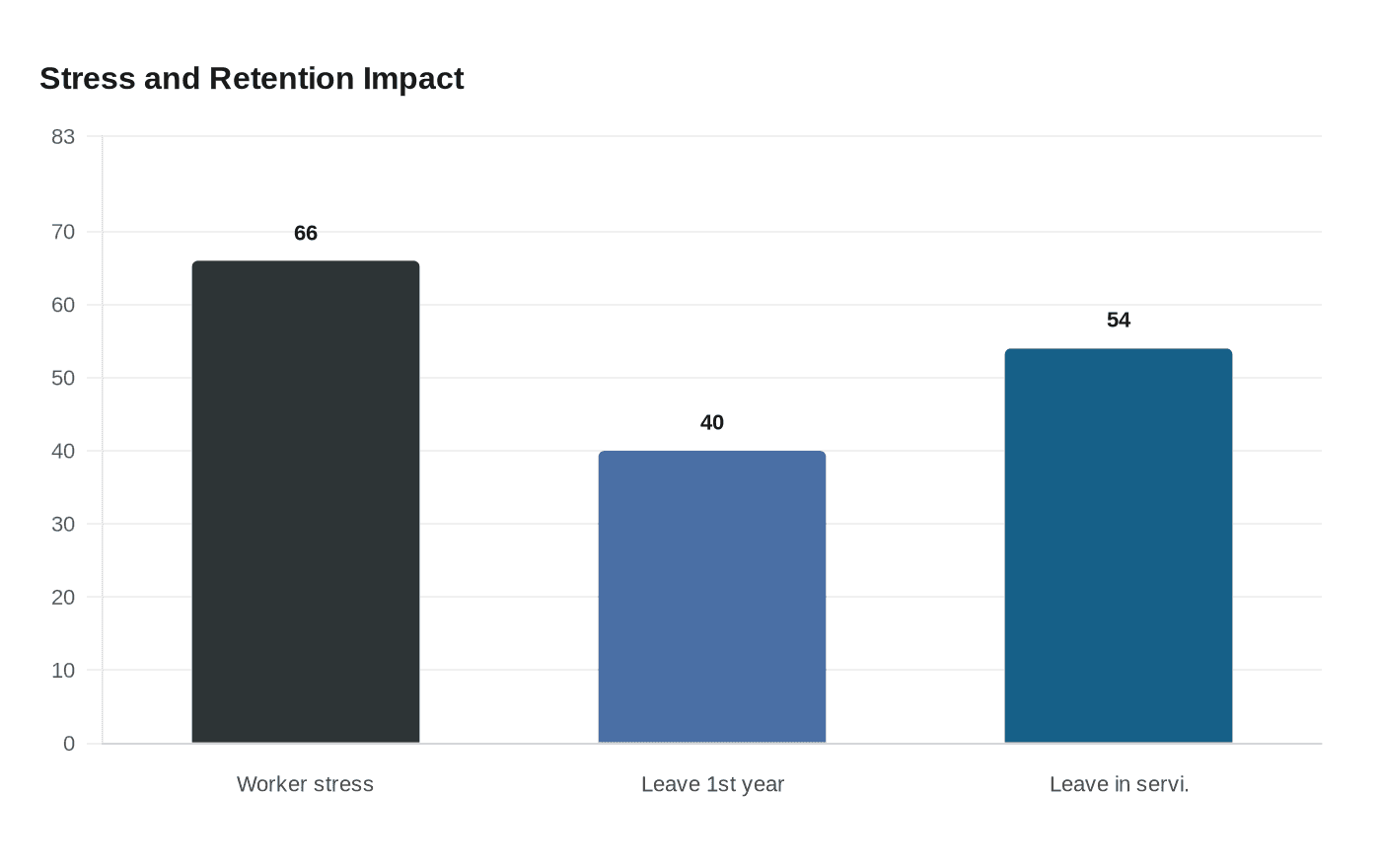
Money stress is already bleeding into restaurant operations. A YouGov study commissioned by DailyPay found that 66% of quick-service and fast-casual workers were at least somewhat stressed about their finances, a strain that shows up in emotional well-being, mental health, physical health, job satisfaction, job performance and attendance.
That matters because the retention problem in restaurants is not just about the hourly rate. Gusto found that workers offered retirement benefits were 40% less likely to leave in their first year, and the effect rose to 54% in retail, food and beverage, and other personal-service jobs. In a sector where many employers are small businesses and still lag on retirement coverage, that kind of benefit is more than a perk. It is a reason to stay.
The pressure on operators is real, too. Labor costs were more than 30% higher than before the pandemic, Restaurant Business reported in March 2025, even as recruitment and retention had moved back toward roughly pre-Covid levels. The same reporting said understaffed restaurants were limiting growth, slowing service, adding overtime expense, cutting hours and, in some cases, forcing temporary closures or postponed expansion. The U.S. Bureau of Labor Statistics’ JOLTS tables continue to track quits in leisure and hospitality, underscoring how much churn still runs through the industry.
For workers, the stress is not abstract. A 2025 hospitality survey on earned wage access found that bill-paying, food, money availability, housing and childcare were among the biggest concerns. That is the daily math behind restaurant turnover: if a line cook cannot cover rent, a server cannot bridge a gap between paychecks, or a host cannot line up childcare around a late schedule, the job becomes harder to keep no matter what the posted wage says.
The takeaway for operators is blunt. Higher pay matters, but it is not the only lever. Retirement contributions, earned wage access, predictable scheduling and earlier schedule posting can all change whether a worker feels stuck or stable. In restaurants, where burnout and high turnover are baked into the business model, financial wellness is starting to look less like a soft benefit and more like a retention strategy that affects service, staffing and the bottom line.
This article was produced by Prism’s automated news system from verified source data, official records, and press releases, then run through automated quality and moderation checks before publishing. The system is built and supervised by the people who set the standards it runs under. Read our full AI policy.
Did this article answer your question?