Rising Gas Prices Squeeze Delivery Driver Earnings, Threatening Restaurant Order Reliability
Gas just crossed $4 a gallon nationally, and delivery drivers are logging off. Here's what that means for your restaurant's order flow, and what you can do about it.
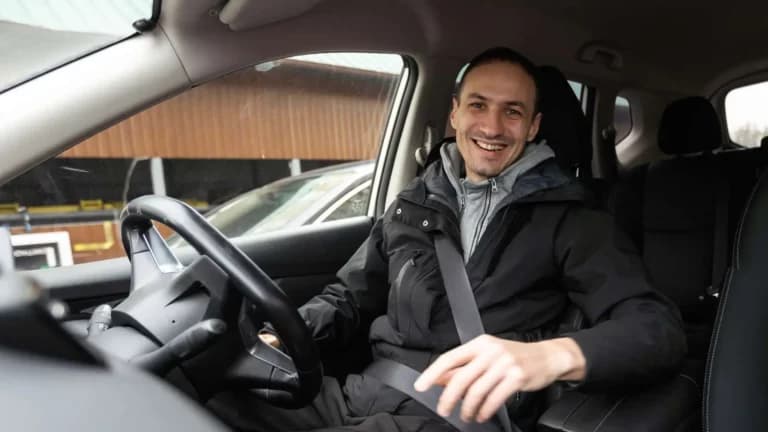
Greg Dahl, 65, delivers for DoorDash, Uber Eats, and Instacart out of Detroit's North End to supplement his Social Security payments. Since gas crossed $4 a gallon, he's made a hard calculation: he now accepts fewer than 25% of the orders his app sends him, limits himself to a tight geographic corridor he knows well, and focuses entirely on minimizing miles driven per dollar earned. "I really have changed my strategy since the gas prices went up," Dahl says. His goal is to keep mileage as low as possible. Dahl is not an outlier. He's the preview of what every restaurant relying on third-party delivery is about to experience.
As of April 1, 2026, the national average price for a gallon of regular gasoline hit $4.06, according to AAA data. That's 86 cents higher than it was on March 4, a staggering jump in under a month. In California, drivers are paying $5.89 a gallon. For gig workers whose entire income model is built on the margin between what a platform pays per delivery and what it costs to complete it, that kind of price spike doesn't just pinch. It shuts down shifts entirely.
What Drivers Actually Take Home
The math that platforms advertise bears little resemblance to what drivers deposit. DoorDash base pay ranges from $2 to $4 per delivery depending on distance, order size, and market demand. Tips make up the difference, but not the way most restaurant workers assume. About 50% of the total delivery pay a driver receives comes from the tip, according to industry data. "A lot of people don't realize the impact, especially on the delivery side, on the worker if you do not tip," says one industry analyst tracking driver compensation.
Here's the receipt-level reality that surprises most people: DoorDash charges customers an average delivery fee of $4.08, while Uber Eats averages $5.79. But the service fee, which runs 10 to 11% of the order on DoorDash and 15% or more on Uber Eats, goes entirely to the platform, not the driver. So on a typical $30 DoorDash order, a customer might pay a $4 delivery fee plus a $3.30 service fee. The service fee disappears into platform revenue. The driver's base share of that transaction: as little as $2. After accounting for gas, maintenance, and depreciation, most DoorDash drivers net approximately $9 to $11 per hour, and that calculation was built before gas crested $4. With fuel costs rising sharply, the real hourly figure is compressing further.
How Fewer Drivers Translates Into Your Restaurant's Problem
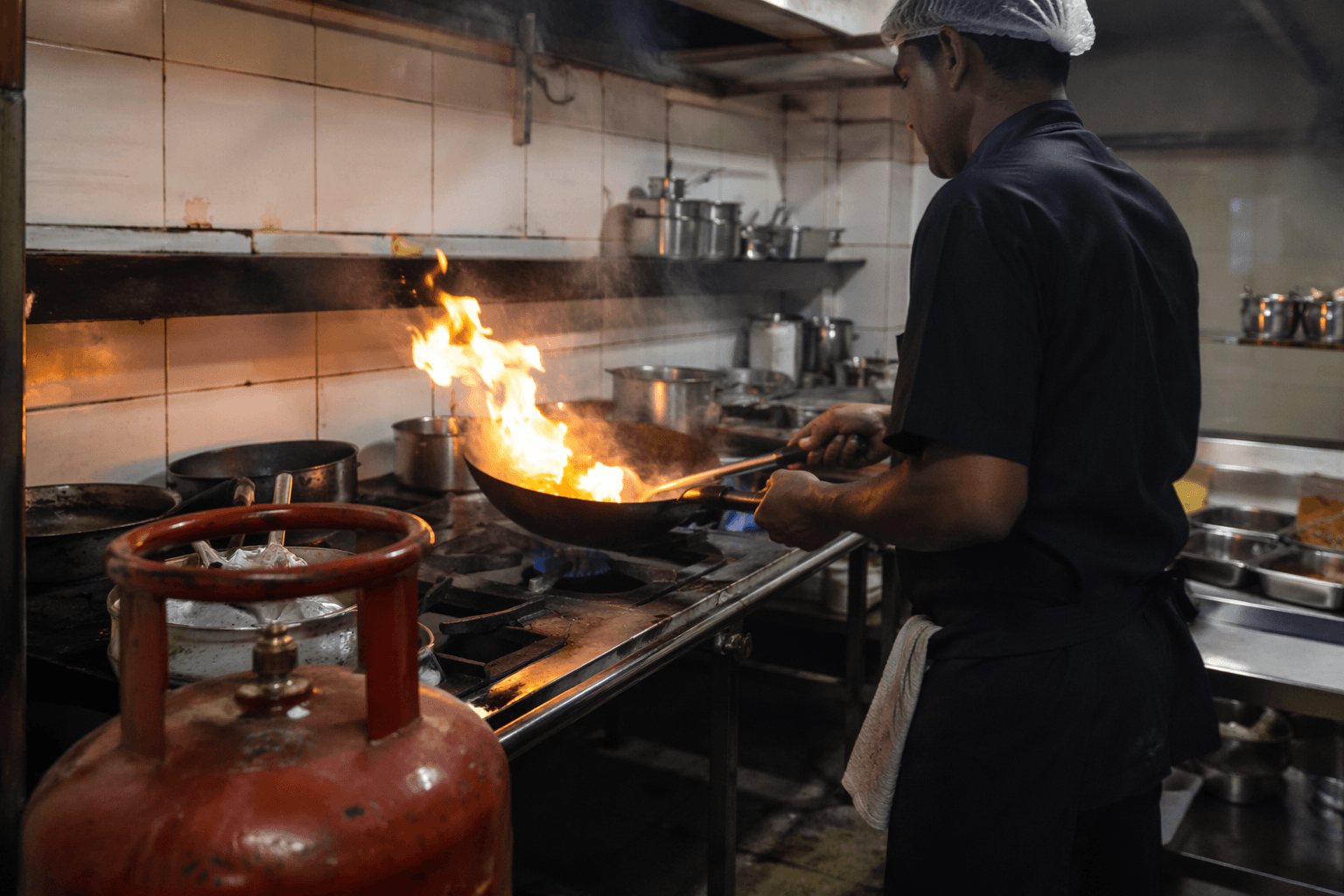
When drivers like Dahl become more selective, the effect on restaurants is immediate and specific. Drivers who previously accepted 60 to 70% of incoming orders are now cherry-picking only the highest-paying, shortest-distance requests. Orders originating from restaurants at the edge of a delivery zone, or during slower midday windows when tips skew lower, get passed over repeatedly. The result is a longer queue time for the order and, eventually, a timeout that routes back to the restaurant as a failed pickup.
For line cooks and expo staff, this creates a particular kind of chaos: food is plated and sitting under heat lamps while an app hunts for a driver willing to take the run. That food either goes out degraded or gets reprinted at the restaurant's cost. Neither outcome helps ratings or revenue. If customers see repeated late deliveries or cancellations, platforms' algorithmic ranking tools quietly downgrade that restaurant's visibility, shrinking organic order volume independent of any driver shortage.
The pressure doesn't stay on the platform side of the counter. Front-of-house staff bear a secondary load: more incoming calls about delayed orders, more refund requests escalated by app customer service, and more interactions with frustrated customers who blame the restaurant for a problem that originated at a fuel pump.
The Driver Playbook for Surviving a Fuel Spike
Drivers who stay active during high-gas-price periods are adapting their tactics, and restaurants that understand those tactics can work with them rather than against them. The practical steps emerging from driver communities break into four core strategies:
- Cluster deliveries in high-density windows. Lunch (11 a.m. to 1 p.m.) and dinner (6 p.m. to 8 p.m.) in dense commercial corridors produce more back-to-back orders, shrinking dead miles between pickups. Drivers who zone-stack around a few anchor restaurants rather than roaming wide can keep fuel spend low.
- Use fuel-efficient routing apps. Navigation tools that account for traffic, avoid freeway idling, and optimize multi-stop routes can meaningfully reduce miles per hour. Some drivers report measurable MPG gains from consistent use.
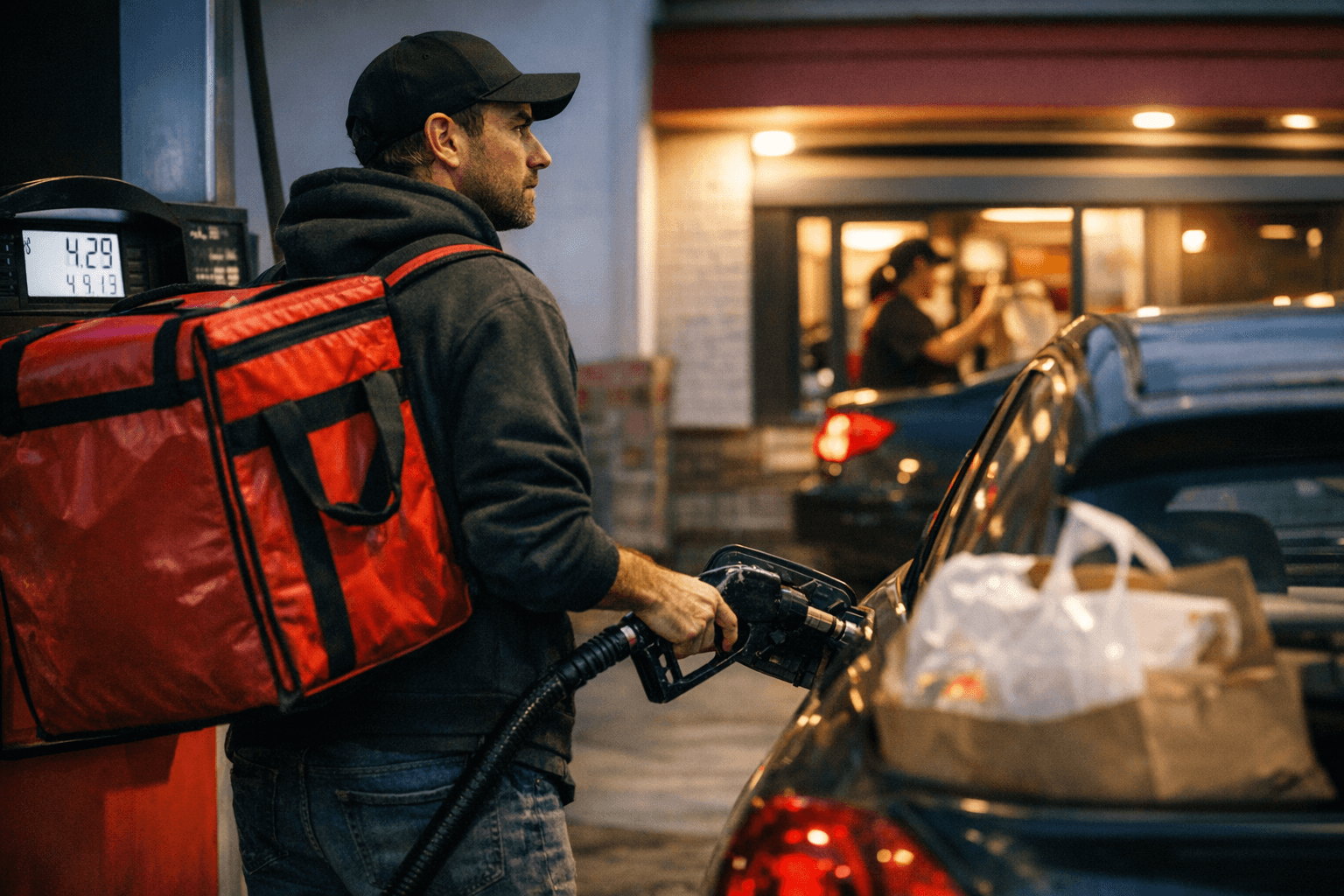
- Maximize the IRS mileage deduction. The 2026 IRS standard mileage rate is $0.67 per mile. For a driver averaging 12 miles per hour while working, that's $8.04 per hour in deductible expenses, which can substantially offset self-employment tax liability when tracked carefully.
- Perform regular vehicle maintenance. Tire pressure, clean air filters, and fresh oil all affect fuel efficiency. Drivers letting routine maintenance slip during a cost crunch are paying twice: once at the pump, once in accelerated vehicle wear.
What Restaurant Operators Can Do Right Now
Restaurants have more leverage than they typically use in the delivery ecosystem. While renegotiating platform commission rates is a slow process, several tactical adjustments can stabilize delivery reliability quickly.
Adjusting your delivery radius is the most direct lever. A tighter geographic boundary keeps your restaurant inside the zone where drivers are willing to work during a fuel squeeze, increasing the odds that incoming orders get picked up on the first pass. Restaurants using their own branded ordering sites or tablet-based third-party dashboards often have radius controls that are underutilized.
Throttling online ordering capacity during low-driver windows protects food quality and staff morale. If the platform data shows 2 p.m. to 5 p.m. generates high cancellation rates, pausing or limiting delivery intake during that window prevents the kitchen from spinning up food that sits uncollected. Redirect those customers toward pickup promotions, which convert at a meaningful rate when paired with a modest discount and a simple call-to-action.
Where permitted, adding small driver incentives at the point of order, such as a pre-set tip floor or a pickup bonus communicated through the platform's driver-facing notes, can make a specific restaurant more attractive to a driver scanning a list of nearby offers. DoorDash dropped its minimum base pay to $2 per order in 2021, so the difference between a $2 and a $4 base is the difference between a driver accepting or skipping your pickup slot.
The Regulatory Backdrop
In Seattle, the city implemented a law in January 2024 requiring delivery apps to pay drivers a minimum rate combining per-minute and per-mile compensation, with a floor of $5 per delivery. Researchers found that base pay per delivery in Seattle jumped from about $5 to more than $12 after the law took effect. New York City announced its own 2026 delivery-worker pay increase in January 2026, before an April 1 rate change took effect. In markets where these mandates exist, restaurants have already seen the downstream pricing impact: platforms pass costs forward through higher consumer fees or reduced restaurant promotion. As more cities debate similar rules, particularly in a high-fuel-cost environment, the pressure compounds.
For restaurants in unregulated markets, the absence of a pay floor means driver availability will continue to track pump prices directly. When gas spikes, supply of willing drivers drops, and the reliability gap widens. The longer that gap persists, the more it costs, not in delivery commissions, but in customer trust, staff stress, and the kind of quiet rating erosion that's difficult to reverse once it starts.
The practical response isn't to wait for platforms to fix the economics. It's to shrink your delivery exposure, strengthen pickup economics, and treat driver retention at your restaurant's pickup window the same way a good floor manager treats server retention: with attention, respect, and a clear understanding of what makes the shift worth showing up for.
This article was produced by Prism’s automated news system from verified source data, official records, and press releases, then run through automated quality and moderation checks before publishing. The system is built and supervised by the people who set the standards it runs under. Read our full AI policy.
Did this article answer your question?