Sightline OS launches AI supply chain tools for restaurant teams
Sightline OS is betting restaurant AI wins or loses in the walk-in: its new forecasting tools lifted Din Tai Fung accuracy 14% and aim to cut 86s and waste.

When a prep list is wrong, the cost shows up fast, in 86s, wasted product and a kitchen manager sprinting to fix service before the next rush. Sightline OS is trying to make that chaos less common with software it says was built for restaurant operations, not generic back-office planning.
The company launched out of stealth on May 6 with machine learning-powered forecasting, inventory optimization and cost-of-goods management tools aimed at enterprise restaurant teams. Sightline OS says the platform centers on the messy parts of supply chain work that kitchen managers and prep teams feel every day: supplier and distributor data in real time, invoice reconciliation, contract pricing management and ingredient forecasting tied to actual demand.
Sightline OS said one early customer, Din Tai Fung, saw a 14% lift in forecast accuracy after using the system. That matters because forecasting is not an abstract finance exercise in a restaurant. It determines how much gets prepped, what gets ordered, how much lands in the walk-in, and whether a busy night ends with enough dumplings, vegetables and protein to get through service without a last-minute substitution.
The launch also came with a strategic integration partnership with SynergySuite, which the two companies said will connect real-time sales data with supply-chain intelligence for enterprise restaurant operators. Sightline OS says its forecasting is designed to account for the realities that break standard models, including ramp-up periods for new openings, limited-time offers and marketing campaigns.
Yusha Hu, Sightline OS’s CEO and co-founder, previously led supply chain and procurement at Chipotle, sweetgreen and HelloFresh, a background that signals where the company is aiming: the operational choke points that can ripple from the ordering screen to the line. For restaurant managers already dealing with labor shortages, vendor problems and constant menu adjustments, the promise is not that AI replaces judgment, but that it reduces the amount of time spent firefighting.
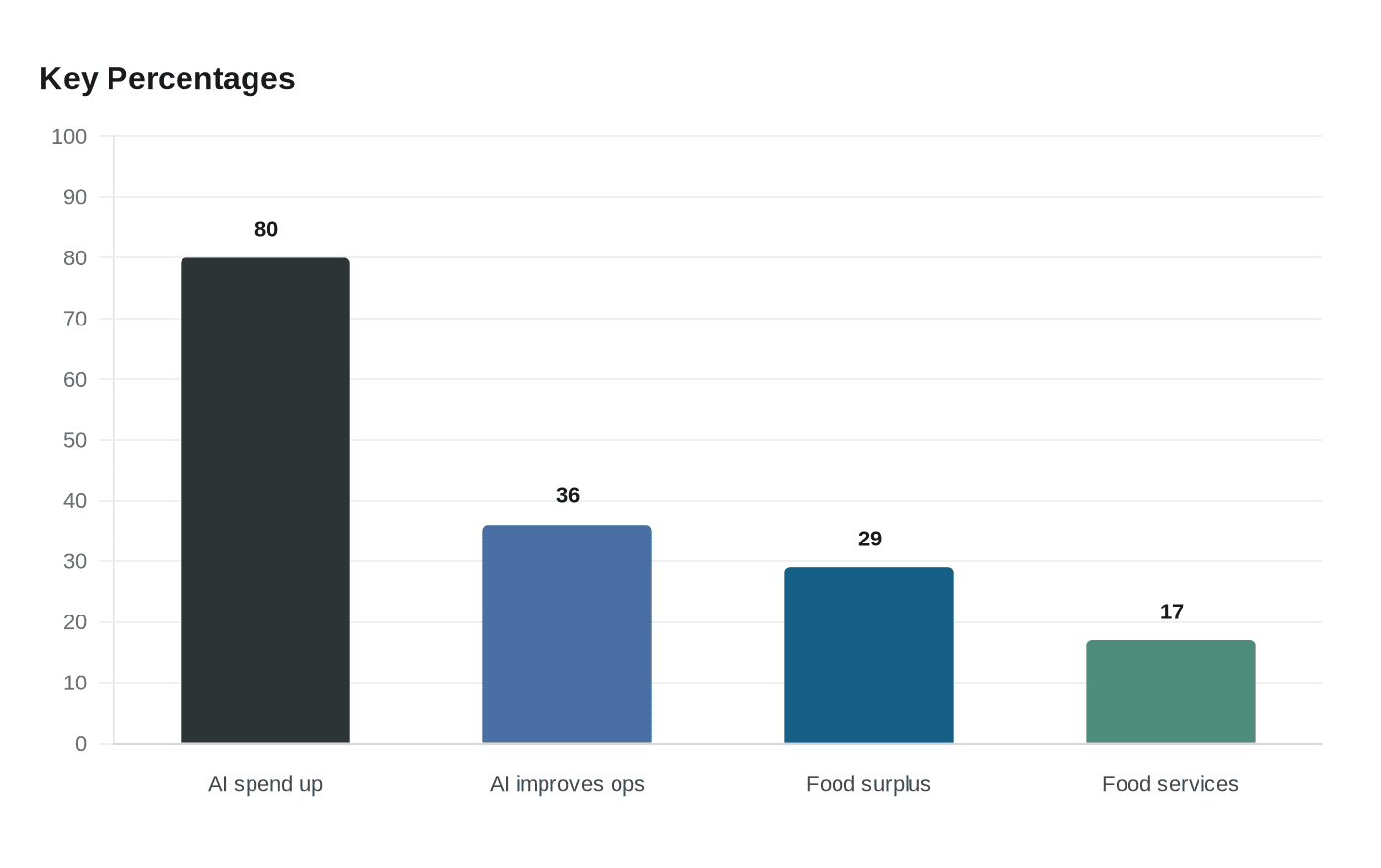
The pitch lands in a category restaurant leaders are already watching closely. Deloitte says eight in 10 restaurant executives surveyed expect AI investments to increase in the next fiscal year, and 36% expect AI to improve operations, loyalty and procurement or supply-chain management. The numbers suggest the money is moving toward tools that touch daily execution, not just customer-facing chatbots or marketing software.
The stakes are also real in waste and volume. ReFED’s 2026 U.S. Food Waste Report says U.S. surplus food in 2024 totaled 70 million tons, about 29% of the food supply, while the Food Waste Index estimates food services account for about 17% of global food waste. Din Tai Fung is a fitting test case for that pressure. The company says it was founded in Taiwan in 1958, converted into a full restaurant in 1972 and now has more than 200 outlets worldwide. A report on its U.S. business said its 16 U.S. locations averaged $27.4 million in annual revenue per store, which shows why a few points of forecasting accuracy can matter well beyond the prep sheet.
This article was produced by Prism’s automated news system from verified source data, official records, and press releases, then run through automated quality and moderation checks before publishing. The system is built and supervised by the people who set the standards it runs under. Read our full AI policy.
Did this article answer your question?