Starbucks union accuses company of bad-faith bargaining in revived talks
The union said Starbucks walked back seven agreed items and returned with punitive proposals, deepening a fight over wages, staffing and store protections.
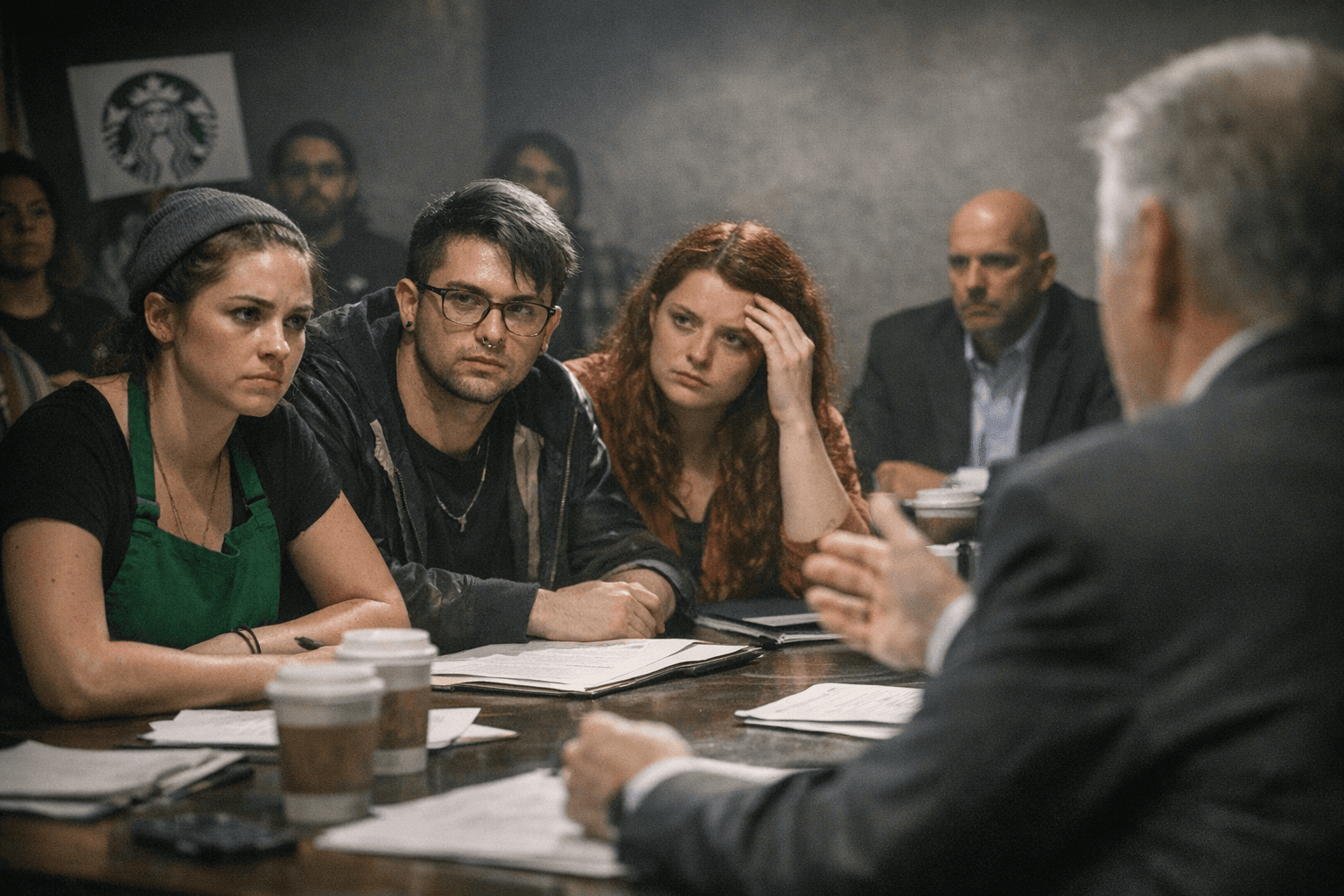
Starbucks Workers United has accused Starbucks of bargaining in bad faith, saying the company backed away from seven items it had already agreed to and returned to the table with proposals the union said were punitive and designed to block any deal. The complaint, filed with the National Labor Relations Board, landed after about a year without meaningful bargaining and set a combative tone for talks that had been expected to move baristas closer to a first contract.
At stake are the day-to-day issues that shape a shift behind the bar: a proposed $17 hourly wage floor, 4% annual raises, a grievance process, protections against store closures, and a rule requiring at least three workers on the floor at all times. The union also wants open hours offered to existing workers before new hires are brought in, plus a resolution of hundreds of pending unfair labor practice charges. For restaurant and cafe workers, those are the kinds of terms that determine whether a schedule is stable enough to plan a second job, whether staffing is thin enough to push service into chaos, and whether pay keeps up with the workload.
Starbucks and the union last held formal negotiations in December 2024. Starbucks said it had proposed resuming in-person bargaining on March 30 and remaining available through April, while also saying it had reached more than 30 tentative agreements on full contract articles. The company has argued that its overall wage-and-benefits package is worth about $30 an hour on average for hourly partners, and in early April it announced weekly pay, expanded tips and bonuses for U.S. store workers.
The dispute has stretched well beyond the bargaining room. Workers United’s 2025 strike began Nov. 13 with more than 1,000 workers at 65 unionized locations, then peaked in December at more than 4,500 baristas at 230 stores before tapering to about 1,000 baristas at fewer than 50 stores by early February. Starbucks has said the union represents about 6% of company-owned U.S. locations, while the company says it employs more than 240,000 partners in over 10,000 company-operated coffeehouses and nearly 7,000 licensed stores.
The legal pressure has also intensified. The NLRB revived a consolidated refusal-to-bargain case in March covering hundreds of Starbucks stores, and union allies failed in an effort to press shareholders to oppose the re-election of two board members tied to labor relations. For baristas, the question is no longer whether Starbucks can say it supports worker voice. It is whether the company will accept a contract that changes staffing, scheduling and store-level protections in practice.
This article was produced by Prism’s automated news system from verified source data, official records, and press releases, then run through automated quality and moderation checks before publishing. The system is built and supervised by the people who set the standards it runs under. Read our full AI policy.
Did this article answer your question?