Third-party delivery strains restaurant margins, operators say
Apps can charge restaurants 30% or more per order, while New York capped fees at 15% after operators said delivery was draining margins.

Third-party delivery can fill more seats, but it also leaves restaurants with thinner margins, more ticketing headaches and a heavier load for staff already stretched by labor costs. Operators say the complaints are familiar: theft, aggressive app discounts, customer service problems that land on the restaurant even when the restaurant was not at fault, and fees that cut into revenue when profitability is already tight.
The channel’s rise traces back to McDonald’s testing Uber Eats in about 200 Florida restaurants in December 2016 before expanding delivery to cities including Orlando, Tampa and Miami. That early signal helped make delivery look like a growth engine. Nearly a decade later, operators are describing something closer to an operational squeeze. The work changes on the floor as soon as delivery demand climbs. Front-of-house staff have to keep up with in-person guests while handling digital orders. Kitchen teams manage separate ticket streams and packaging. Managers are left to sort out missing items, late drivers and customer complaints without letting service inside the restaurant fall apart.
That added burden lands in a business with little room to absorb it. The National Restaurant Association’s 2024 Operations Data Abstract said salaries and wages, including benefits, represented a median 36.5% of sales for full-service restaurants in 2022. In that environment, every percentage point lost to a third-party platform is hard to replace. Operators pulling back on delivery, renegotiating contracts or trying to push guests toward direct ordering are making a simple calculation: more sales are not worth much if the work comes with less profit and more stress for the team.
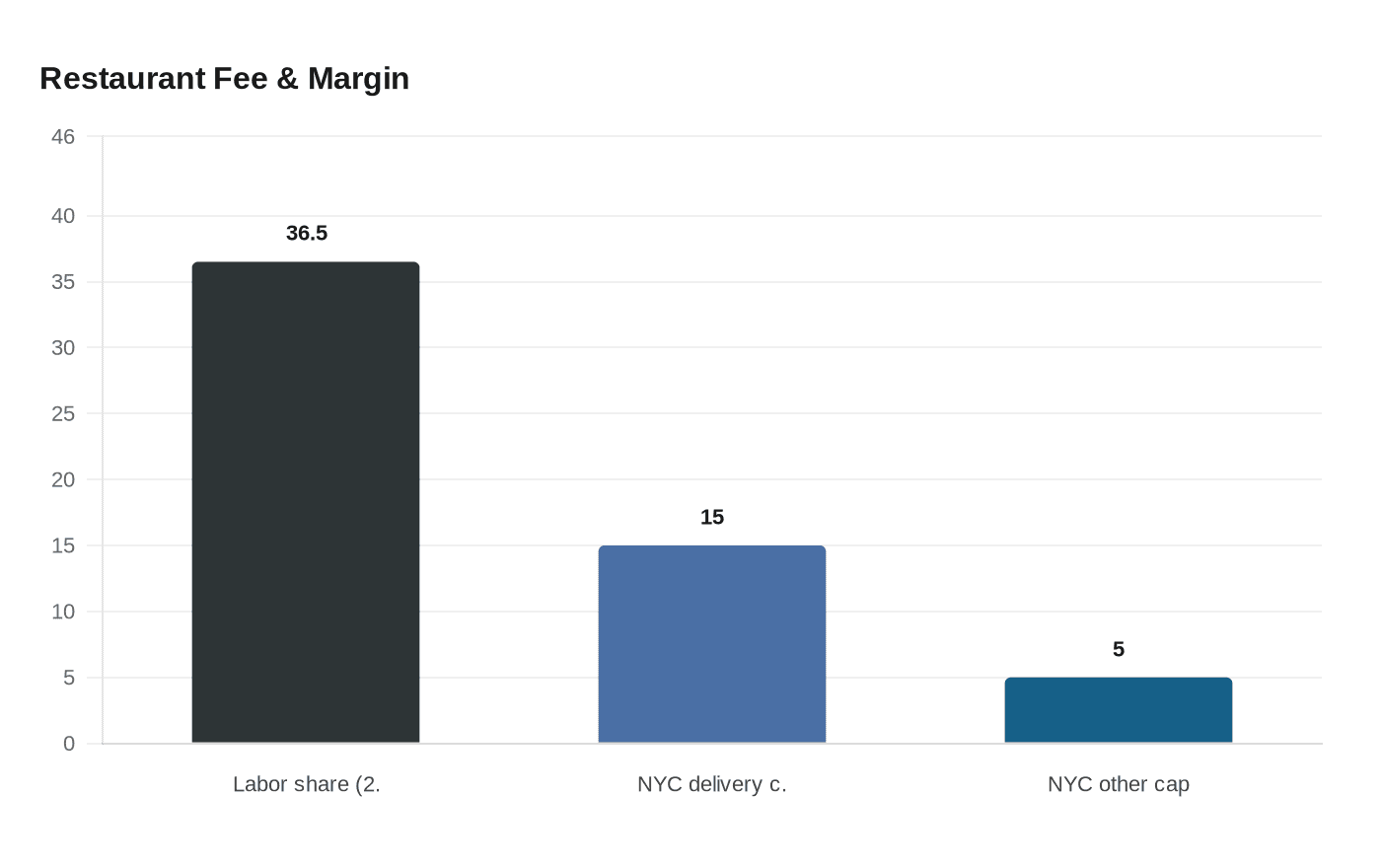
New York City moved aggressively after restaurants said the economics were getting out of hand. The city first capped third-party delivery fees in 2020 at 15% for delivery and 5% for certain other charges during the pandemic, then made the caps permanent in 2021. Before that, the City Council said some delivery packages charged restaurants 30% or more per order. For many operators, that gap is the entire story. Delivery can add volume, but if the platform takes the margin and the store absorbs the fallout, the extra business becomes another burden for cooks, servers and managers to carry.
Consumer habits make the channel hard to unwind. USDA research found that restaurant customers shifted toward apps for carryout and delivery during the pandemic. A Purdue Consumer Food Insights Report said around two-thirds of consumers had used a food-ordering app at least once for takeout, delivery or both as of September 2024, and more than half had used one for delivery. That demand helps explain why delivery stays on the menu. It also explains why workers keep feeling the strain when the economics do not match the workload.
This article was produced by Prism’s automated news system from verified source data, official records, and press releases, then run through automated quality and moderation checks before publishing. The system is built and supervised by the people who set the standards it runs under. Read our full AI policy.
Did this article answer your question?