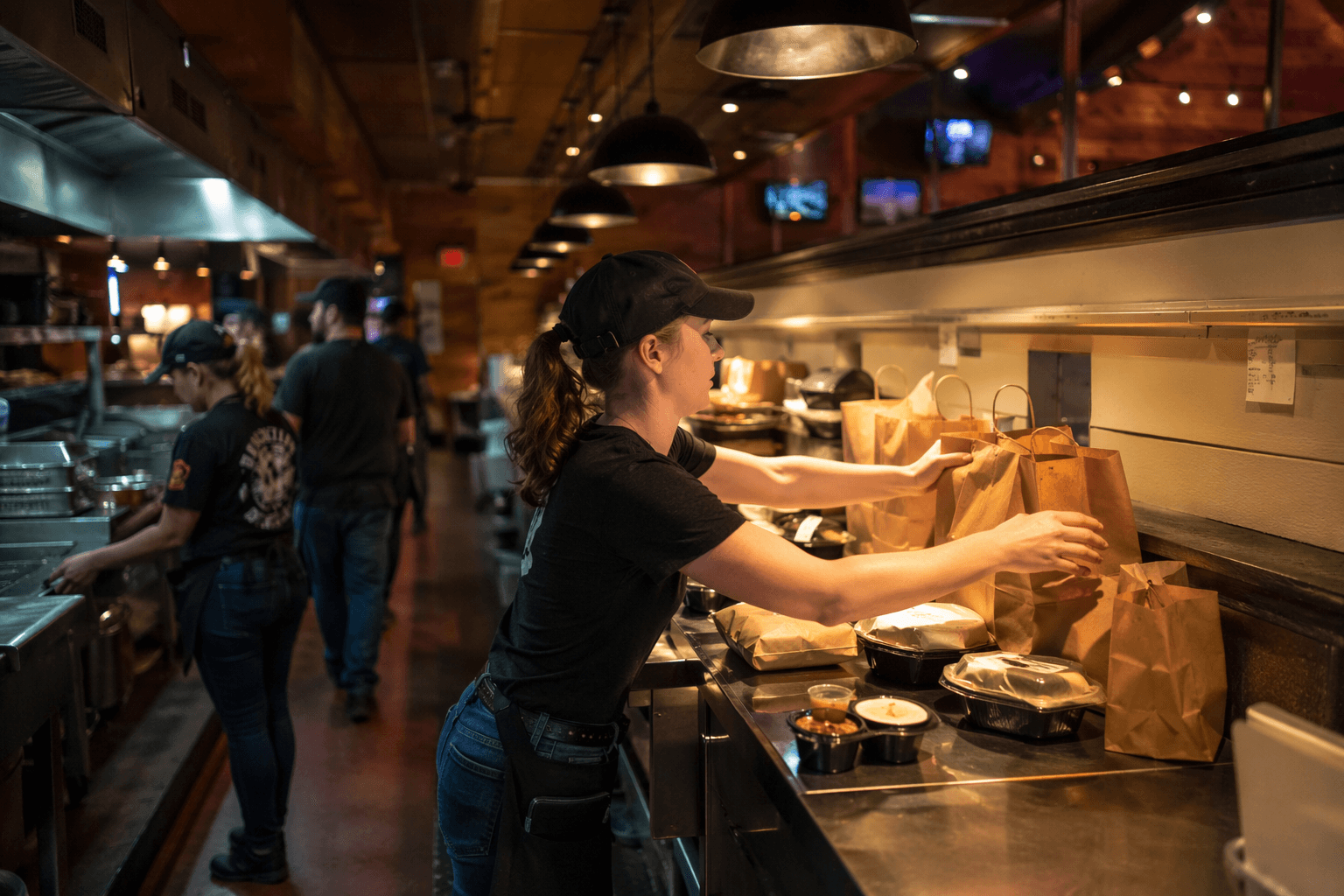
What restaurant managers do all day, according to Indeed
Restaurant managers own staffing, safety, inventory, payroll, and customer recovery. The pay is higher, but so is the stress.
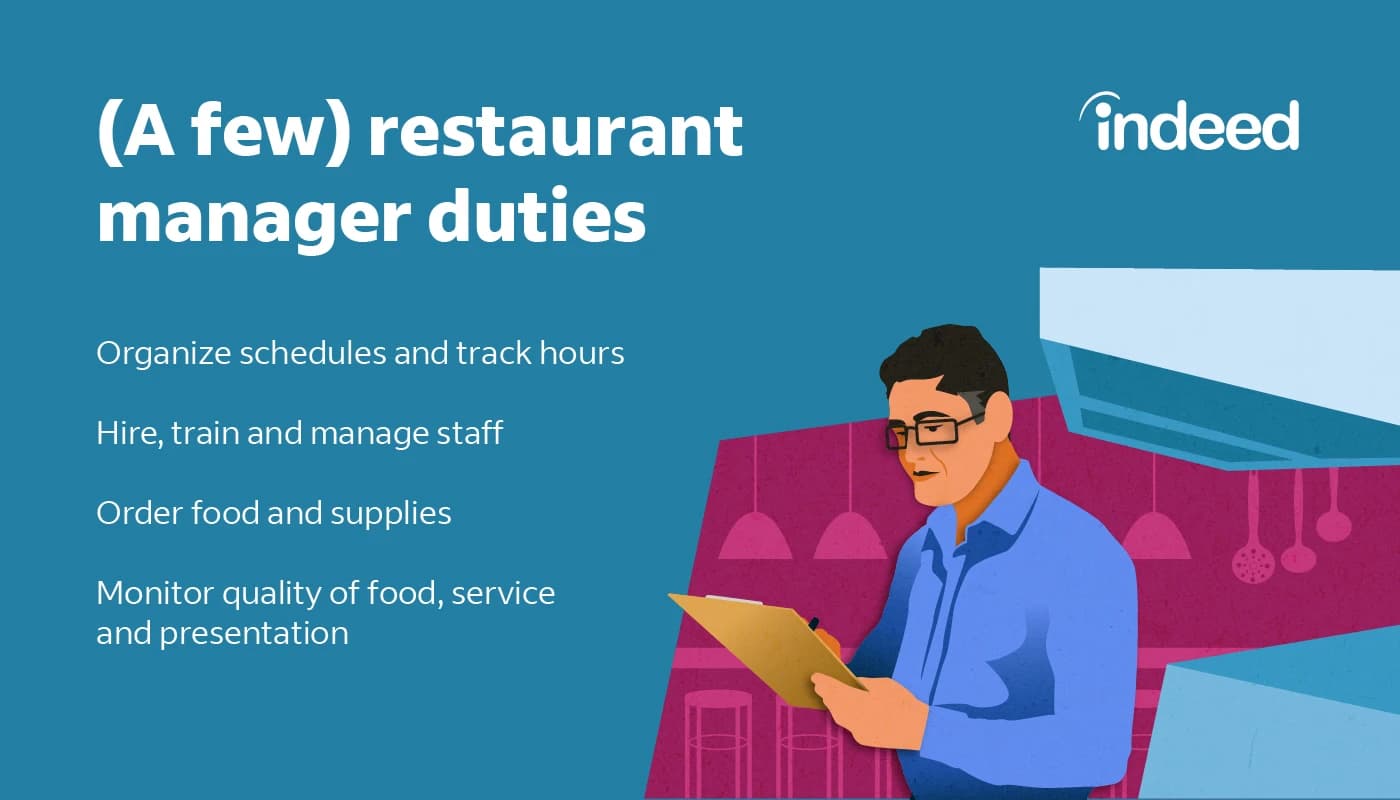
Restaurant managers own the daily operation of restaurants and similar food-and-beverage establishments. Indeed’s updated 2026 job description places the role in daily operational command.
What the job actually owns
The core of the job is staffing. Restaurant managers hire and train employees, manage schedules, supervise every area of the restaurant, and handle problems as they come up, which means the role stretches from the host stand to the dish pit and from the lunch rush to the close. If you are trying to move up from line cook, server, bartender, or host, that is the first shift in thinking: you stop focusing only on your section and start watching the whole floor.
The rest of the job is just as hands-on. Keeping customers happy, handling complaints, recording payroll data, ordering food and supplies, maintaining safety and food quality standards, controlling costs, and monitoring both front-of-house and back-of-house operations all sit inside the role. In practice, that means a manager is not only smoothing out a bad table or a late prep list, but also deciding whether labor, pars, and purchasing line up with the night’s sales.
That mix is why management is really a business role disguised as a service job. The manager has to turn what happens on the floor into staffing choices, prep choices, and cash-flow choices, while keeping the dining room calm enough that guests do not see the strain.
The pressure is part of the title
The day is not clean or predictable. Food service managers often work evenings, weekends, and holidays, and the job can be hectic, with stress from dissatisfied customers. That is the tradeoff for authority: when the fryer breaks, a server walks out, or a guest wants a fix right now, the manager is the person expected to solve it without making the rest of the shift fall apart.

That is also why the skills that matter most are not flashy. Communication, calm decision-making, time management, and the ability to keep people productive under pressure are central to the job. A strong shift lead, expeditor, or assistant manager usually already has some of that muscle memory, because they know how to move tickets, settle personalities, and keep the room working when the pace turns ugly.
The role also includes a coaching layer that hourly staff rarely see. Managers often train and retrain employees, which means the job is part teacher, part accountability system, and part emergency brake. When staff are new, short, or inconsistent, the manager becomes the one who has to correct the mistake, protect the guest experience, and keep the team moving.
What the money and career path look like
The pay is higher than hourly work, but not magically easy money. Indeed’s restaurant manager salary page, updated July 5, 2026, lists an average U.S. salary of $61,240 based on 35.4k salaries from job postings in the prior 36 months. Indeed’s job description also put the average at about $61,089 per year in June 2026, while the Bureau of Labor Statistics reported a 2024 median annual wage of $65,310 for food service managers.
Management can move you out of the volatility of section tips or hourly scheduling, and it can open the door to higher-level operating jobs, but the raise comes with financial accountability, longer hours, and the pressure of being on call when the floor goes sideways. For workers who want a long-term career in restaurants, the upside is not just a bigger paycheck, but a better shot at building a path into general manager, multi-unit leadership, or operations roles.
The occupation also has a defined labor market, not just a vague promotion title. Food service managers typically need a high school diploma plus several years of work experience in food service, and some get additional training through community colleges, technical or vocational schools, culinary schools, or four-year colleges.

How the industry trains managers now
The National Restaurant Association has built more structure around the path. Its ManageFirst Program was developed with input from more than 400 academics, operators, trainers, hiring managers, and executives during an 18-month job task analysis, and it has been adopted by more than 350 colleges and universities. The Restaurant Management Professional credential requires four core exams, one elective exam, and 800 hours of industry-related work experience.
ManageFirst turns the role into something with skills, credentials, and documented experience, which helps explain why some operators treat assistant manager jobs as training grounds for future general managers.
Why the timing is so tight right now
Restaurant management is being asked to do all of this in an unpredictable market. The National Restaurant Association’s 2025 State of the Restaurant Industry report identified elevated inflation, value-seeking consumers, and broader operational pressure, which means managers are balancing labor, menu costs, and guest expectations at the same time. In that environment, scheduling and inventory are not back-office chores, they are survival tools.
Eating and drinking establishments added 27,800 jobs in January 2026 and had gained a net 172,000 jobs over the previous eight months. Full-service restaurants added a net 55,000 jobs in 2025 but still remained below pre-pandemic employment levels, with 18 states and Washington, D.C. still lagging. That is why managers spend so much time on staffing and retention: if the crew is thin, every other part of the shift gets harder.
This article was produced by Prism’s automated news system from verified source data, official records, and press releases, then run through automated quality and moderation checks before publishing. The system is built and supervised by the people who set the standards it runs under. Read our full AI policy.
Did this article answer your question?