FDA hygiene handbook offers Starbucks workers basic food-safety guidance
Starbucks stores run on speed, but the FDA says the habits that matter most are basic: wash up, stay home sick, and keep food and drink handling clean.
The busiest Starbucks shifts are where food safety either holds up or slips into the background. The FDA’s employee health and personal hygiene handbook is a plain-language reminder that handwashing, illness reporting, glove use, and clean handling of ready-to-eat food are not side tasks, they are part of the job.
Why this handbook fits a Starbucks floor
Starbucks may feel like a coffeehouse first, but it still operates as a retail food environment. Partners handle sandwiches, bakery items, dairy, utensils, and beverage prep in close quarters, which means the same basic controls that keep a deli or counter service kitchen safe also apply behind the bar. The FDA’s handbook is designed to help food employees prevent bacteria and viruses such as Salmonella and norovirus from spreading, and that makes it useful well beyond formal compliance language.
For Starbucks workers, the value is practical. A clean routine protects customers, but it also protects coworkers from having one sick partner turn into a problem for the whole shift. That matters in stores where coverage is already tight and every hour of labor is doing more than one job. In a workplace where workers are pressing for better staffing, more predictable hours, fair pay, and in many stores stronger contract terms through Starbucks Workers United bargaining, the basics still determine whether a shift runs smoothly.
Handwashing is the first real line of defense
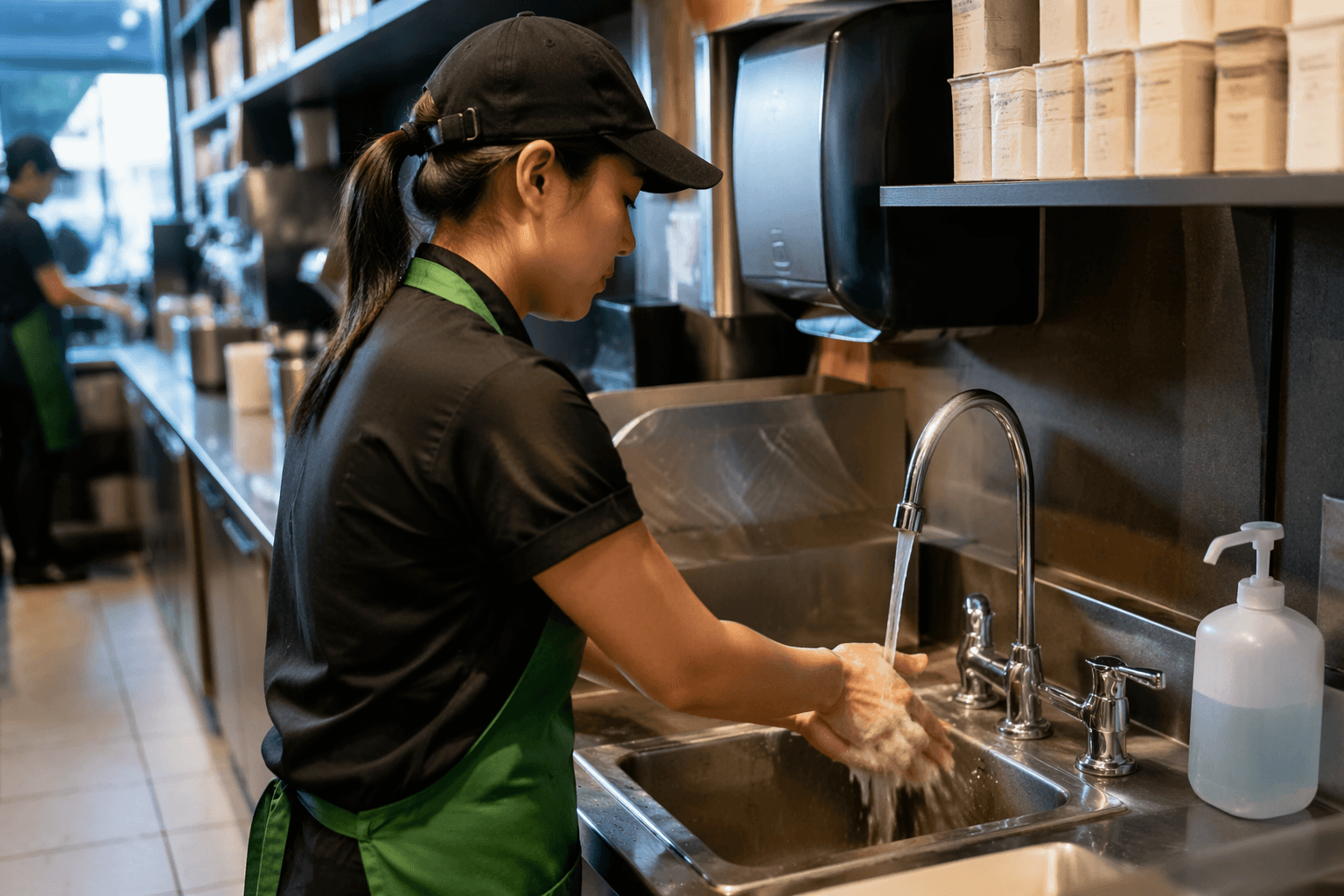
Handwashing sounds obvious until the floor gets busy. A partner moves from cash handling to milk steaming, from the cold bar to pastry case restocking, or from the back area to the handoff plane, and each of those transitions creates a chance to spread germs if hands are not washed at the right time. The FDA guidance is built around stopping that kind of spread before it starts.
At Starbucks, the most important habit is to wash hands between tasks, not just once at the start of a shift. That means washing after using the restroom, after touching trash or dirty dishes, after wiping surfaces, after sneezing or coughing, and before returning to food or beverage prep. A quick rinse does not count; the point is to remove contamination before it reaches a lid, a sandwich, a pastry sleeve, or a blender part.
For shift supervisors, this is more than a reminder to police the sink. The floor has to make the habit possible, which means giving partners time to wash without making them feel like they are slowing the line. If the store culture treats handwashing like an interruption, the policy becomes weaker than the rush.
When to stay home and when to speak up
The handbook’s illness guidance is especially important in a high-contact environment like Starbucks. The FDA’s broader retail food-protection framework stresses keeping sick workers from spreading bacteria and viruses, and that starts with being honest when symptoms show up. A partner who comes in while vomiting, feverish, or dealing with stomach illness can put coworkers and customers at risk long before the end of the shift.
That is where communication matters as much as policy. Partners need a clear expectation that illness reporting is not a personal failure and should not be treated as one. Managers need to know how to respond quickly, reschedule safely, and avoid pressure that turns a sick call into a guilt trip. In stores already stretched by labor shortages, every sick-day decision has staffing consequences, but the FDA’s message is blunt: public health comes first.
This is also one of the places where workplace culture shows through. A store that is always chasing coverage can quietly reward people who show up sick. A store that takes food safety seriously sets a different tone: no sandwich, latte, or pastry sale is worth turning a minor illness into a wider problem.
Glove use should support hygiene, not replace it
Gloves are useful in Starbucks, but only if partners understand what they do and do not do. A glove is not a substitute for washing hands, and it does not make it safe to keep moving from one job to another without changing pairs. If a partner touches a phone, a trash bin, or a non-food surface and then goes back to ready-to-eat items, the glove becomes part of the contamination chain instead of a barrier.
That is why glove use has to be paired with task discipline. A partner assembling food, handling bakery items, or working around utensils should change gloves when switching from dirty to clean tasks, and should wash hands before putting on a fresh pair. In a Starbucks store, the real issue is not whether gloves exist on the shelf. It is whether the team knows when they help and when they create a false sense of safety.
Managers can make this easier by building the routine into how stations are staffed. If the person on warming is also the person clearing tables and grabbing supplies, the store is asking for cross-contact unless glove changes and handwashing are built into the flow. Safety should follow the work, not fight it.
Cross-contact is the hidden risk on a crowded bar
Starbucks teams think a lot about speed, but cross-contact is what happens when speed outruns separation. A hand that touches a sandwich wrapper and then a beverage lid, a utensil that is reused without cleaning, or a prep area that shifts from food to drink work without being reset can move contamination from one item to another. The FDA handbook’s warning about preventing spread applies directly to these everyday moves.
This is especially important for ready-to-eat foods, which are handled in ways customers may never see. Once a bakery item, sandwich, or other prepared food is touched, there is no cooking step to fix a lapse. The same logic applies to milk pitchers, tongs, knives, and other shared tools that can carry contamination if they are not cleaned and handled correctly.
The best Starbucks stores make these boundaries visible. Clean and dirty surfaces are treated differently. Food is handled with purpose. Beverage prep does not borrow casually from food prep. Those small distinctions are what keep a rush from becoming a sanitation problem.
Personal hygiene is part of the uniform, even when it is not printed on it
The FDA’s handbook also points to personal hygiene standards that go beyond sinks and sanitizer. Clean hands matter, but so do habits like keeping hair, clothing, and overall presentation from becoming a food-safety issue. For Starbucks partners, that means treating personal cleanliness as part of the job, the same way apron readiness or register accuracy is part of the job.
In a store where people move quickly and work shoulder to shoulder, personal hygiene protects more than the individual. It reduces the chance that one partner’s habits create discomfort, contamination, or extra cleaning work for the rest of the team. That becomes even more important in stores where workers are already fighting over scheduling, hours guarantees, and the day-to-day strain of short staffing, because nothing magnifies tension faster than avoidable health lapses.
The FDA’s larger retail food-protection framework gives managers a reason behind the rules, not just a list of rules. The Food Code and related guidance used by state and local regulators are part of the system that keeps food-service standards from becoming optional from store to store. For Starbucks teams, that means the basics are not housekeeping. They are operating standards.
What Starbucks workers should take from it
The strongest lesson from the handbook is that food safety is built from ordinary habits repeated under pressure. Wash hands between tasks. Speak up when you are sick. Use gloves correctly. Keep food and drink work from touching each other when they should not. Stay disciplined about personal hygiene even when the line is long and the manager is asking for speed.
That is the kind of guidance that fits Starbucks better than any glossy training slogan. In a workplace where every shift is a balancing act between customer expectations and labor realities, the smallest habits are often the ones that keep the store steady.
This article was produced by Prism’s automated news system from verified source data, official records, and press releases, then run through automated quality and moderation checks before publishing. The system is built and supervised by the people who set the standards it runs under. Read our full AI policy.
Did this article answer your question?