Fifth Circuit says Starbucks union talk can become labor evidence
A Fifth Circuit ruling over a Sylmar Starbucks union drive shows how a manager’s talk about pay, benefits and bargaining can later become labor evidence.

A Fifth Circuit ruling on June 23 turned a 2022 union campaign at a Starbucks in Sylmar, California, into a warning for store leaders: routine talk about wages, benefits and working conditions can later become part of a federal labor case.
The court record focused on manager statements about unionization, pay increases and benefits, including whether workers were led to believe benefits might be paused or lost during bargaining. In a store where conversations happen between rushes, during a pre-shift huddle or in a quick text thread, those words can be read later as evidence of what management meant and what partners understood.
For Starbucks, that matters because labor disputes are usually built from repeated exchanges, not one dramatic moment. Hours, scheduling, pay, benefits and fairness are the subjects that come up again and again between baristas, shift supervisors and store managers, especially when a campaign is active. In Sylmar, that everyday store-level back and forth became the center of a legal fight over whether management crossed a line while organizing was underway.
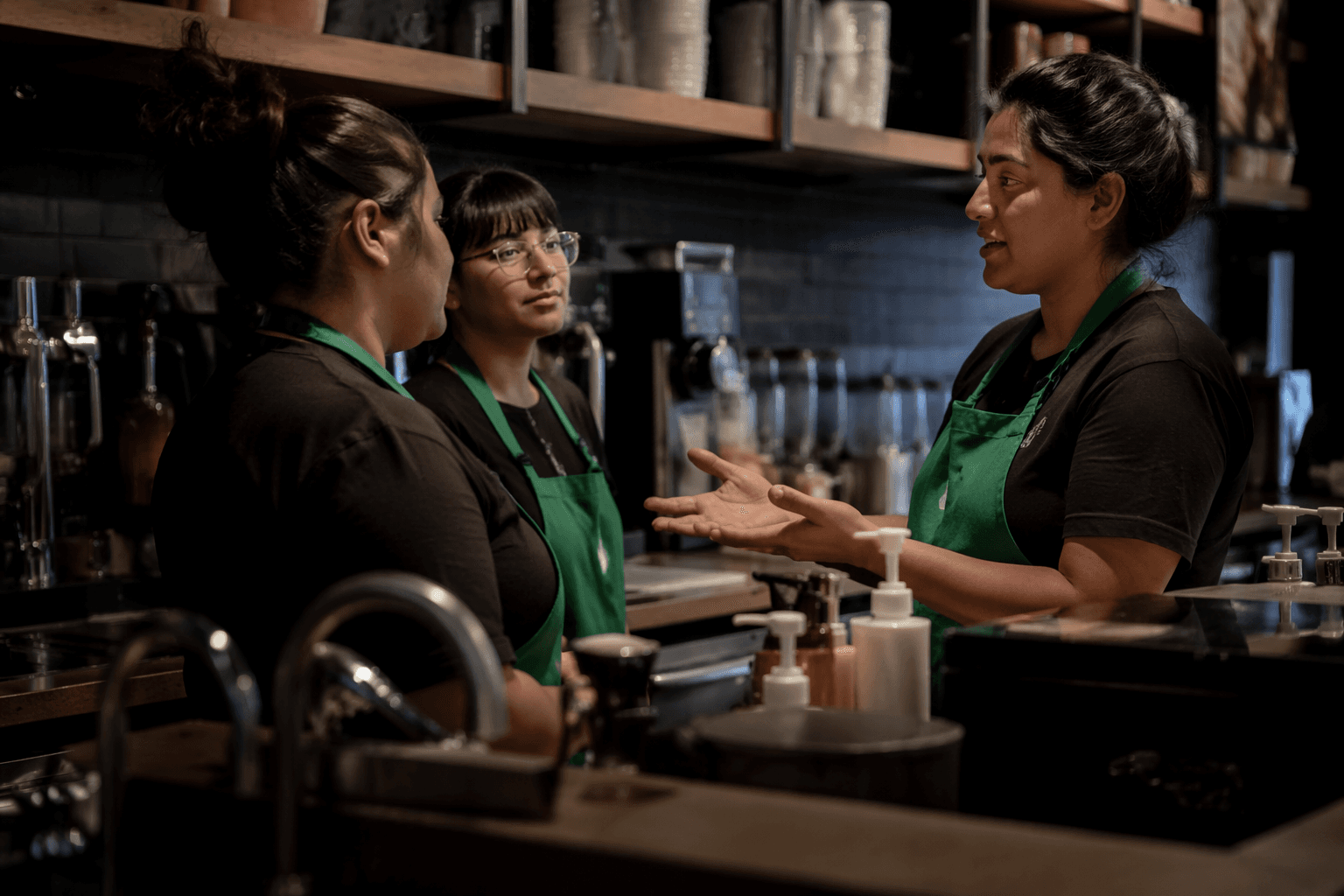
The practical risk for supervisors is straightforward. Comments about benefits, raises or what bargaining might do to existing terms need to be handled carefully and consistently. A remark that sounds like a quick explanation on the floor can later be treated as coercive, retaliatory or misleading if it is made in the middle of a union campaign. The same is true for texts, meeting comments and one-on-one conversations that might seem informal at the time.
For partners, the ruling is a reminder that union talk at Starbucks does not stay abstract for long. The company’s recurring labor battles have made pay, hours and working conditions a constant point of friction, and court decisions like this one keep pushing managers to think twice about how they talk when a store is organizing. Even outside a unionized store, the case is likely to shape training, policy language and the caution leaders use when discussing partner issues.
This article was produced by Prism’s automated news system from verified source data, official records, and press releases, then run through automated quality and moderation checks before publishing. The system is built and supervised by the people who set the standards it runs under. Read our full AI policy.
Did this article answer your question?