High barista turnover is raising costs and pressure at Starbucks
Starbucks’s turnover problem is now a store-floor problem: it slows service, strains training, and collides with contract fights and scheduling violations.
Why retention is now an operations issue, not an HR side note
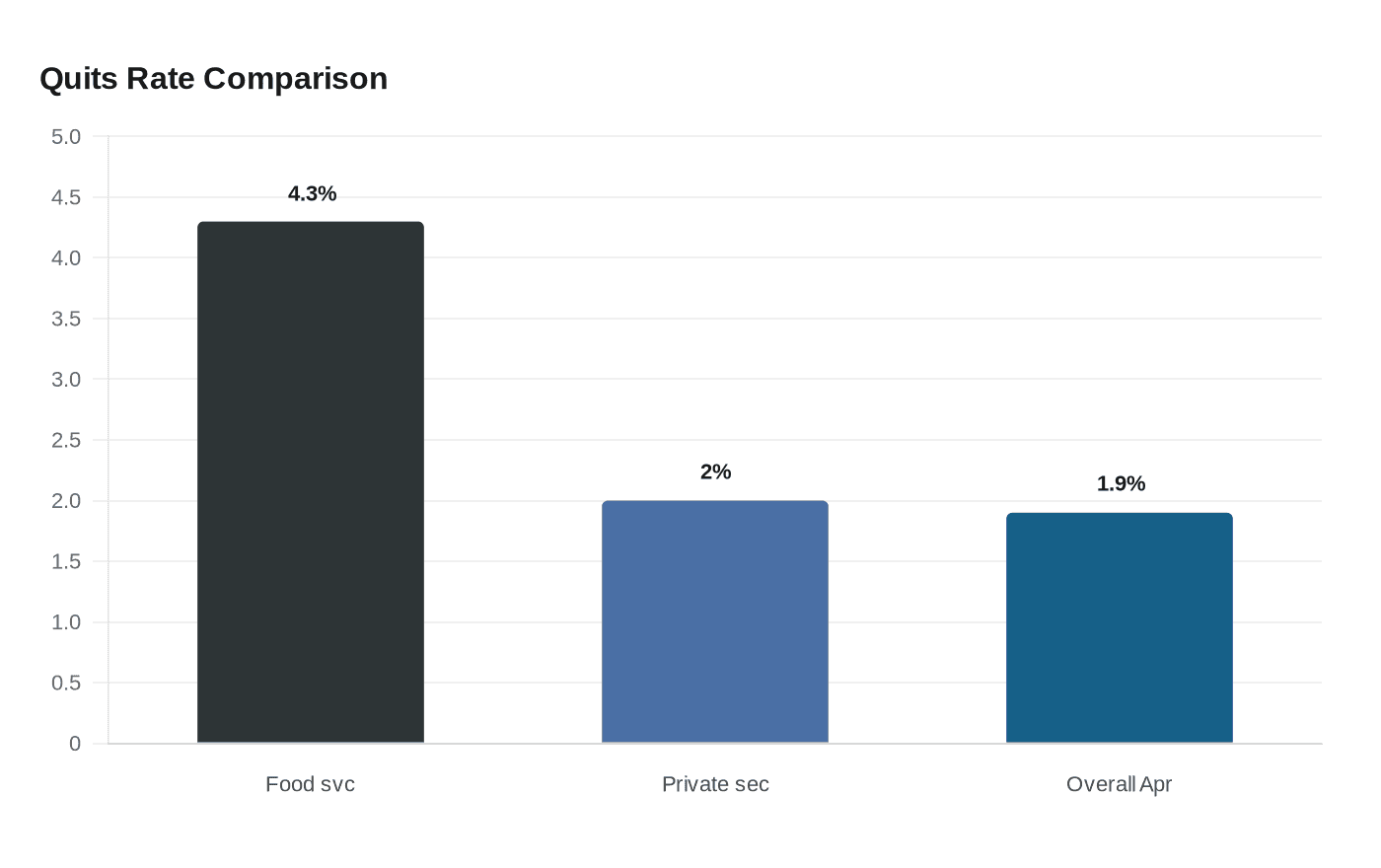
Barista turnover at Starbucks is not just about headcount. It changes how fast drinks get out, how long training takes, how steady the schedule feels, and how much pressure lands on the people who stay. A June 3 Coffee Intelligence analysis makes that case by pointing to a 4.3 percent quits rate in accommodation and food services in March 2026, nearly double the private-sector average, and by arguing that churn shows up as a direct cost on the floor.
That matters at Starbucks because the company’s business depends on consistency during peak periods. When a store is rebuilding its team, every new hire has to learn sequencing, drink builds, mobile order pacing, cleaning standards, and the unwritten ways stores survive a rush. The result is not just a staffing gap. It is slower service, more mistakes, more coaching for supervisors, and a harder shift for the partners who have to carry the load.
The data shows food service is still running hotter than the rest of the economy
The U.S. Bureau of Labor Statistics reported that quits across the total private sector were 2.0 percent in March 2026. Its latest numbers page later showed an overall quits rate of 1.9 percent in April 2026. Against that backdrop, the 4.3 percent quits rate in accommodation and food services looks less like normal churn and more like an industry still struggling to keep workers in place.
For Starbucks workers, that gap is familiar. Food-service turnover rarely stays neatly in the HR lane because stores feel the consequences immediately. A team that is constantly replacing people spends more time teaching and recovering than serving, and that is especially true in a chain where speed, consistency and connection are part of the brand promise.
Why Starbucks feels the pressure more sharply
Starbucks ended fiscal 2025 with 40,990 stores globally, including 16,864 in the U.S. At that scale, even a modest retention problem becomes a systemwide operations problem. Starbucks also disclosed 627 store closures as part of its September 25, 2025 restructuring plan, with more than 90 percent of those closures in North America, underscoring how much the company has been trying to reset its footprint while still maintaining service standards.
The company said its FY2025 operating margin contraction was driven in part by investments in support of “Back to Starbucks,” largely in labor hours. That is the key tension for managers and workers alike: Starbucks has been spending to stabilize the business, but labor is both the cost center and the fix. If hours are too thin, the store burns people out. If staffing is stronger, the company absorbs more expense up front in exchange for steadier service and less churn later.

What keeps partners staying, and what pushes them out
The Coffee Intelligence argument lines up with what Starbucks workers already know from the floor. People usually do not leave because of one bad shift. They leave when the schedule is unreliable, when the staffing model expects too much from too few people, or when training never catches up with the speed of the café. Career pathways matter too, but only if the day-to-day job feels survivable long enough for anyone to use them.
That is why retention at Starbucks is about more than pay alone. Workers notice whether coaching is real, whether shift coverage is stable, and whether managers can protect the floor when business spikes. The difference between a manageable shift and a chaotic one often comes down to whether a store has enough experienced partners to absorb the rush without wearing everyone down.
Starbucks says it is leaning harder on development
Starbucks has tried to frame its answer in terms of career paths and service recovery. In EMEA, the company highlighted a 13-month store-manager program announced on July 7, 2025, as part of its broader approach to building internal talent. That kind of pipeline can help if it produces stronger supervisors who know how to coach, schedule and hold a floor together.
But development programs only go so far if the underlying store conditions keep churning people out. A store can recruit better and still lose workers if the day-to-day load is too heavy. For Starbucks, the real test is whether career messaging is matched by enough labor hours, workable schedules and a pace that does not burn out the people the company is trying to retain.
The union fight keeps putting staffing back on the table
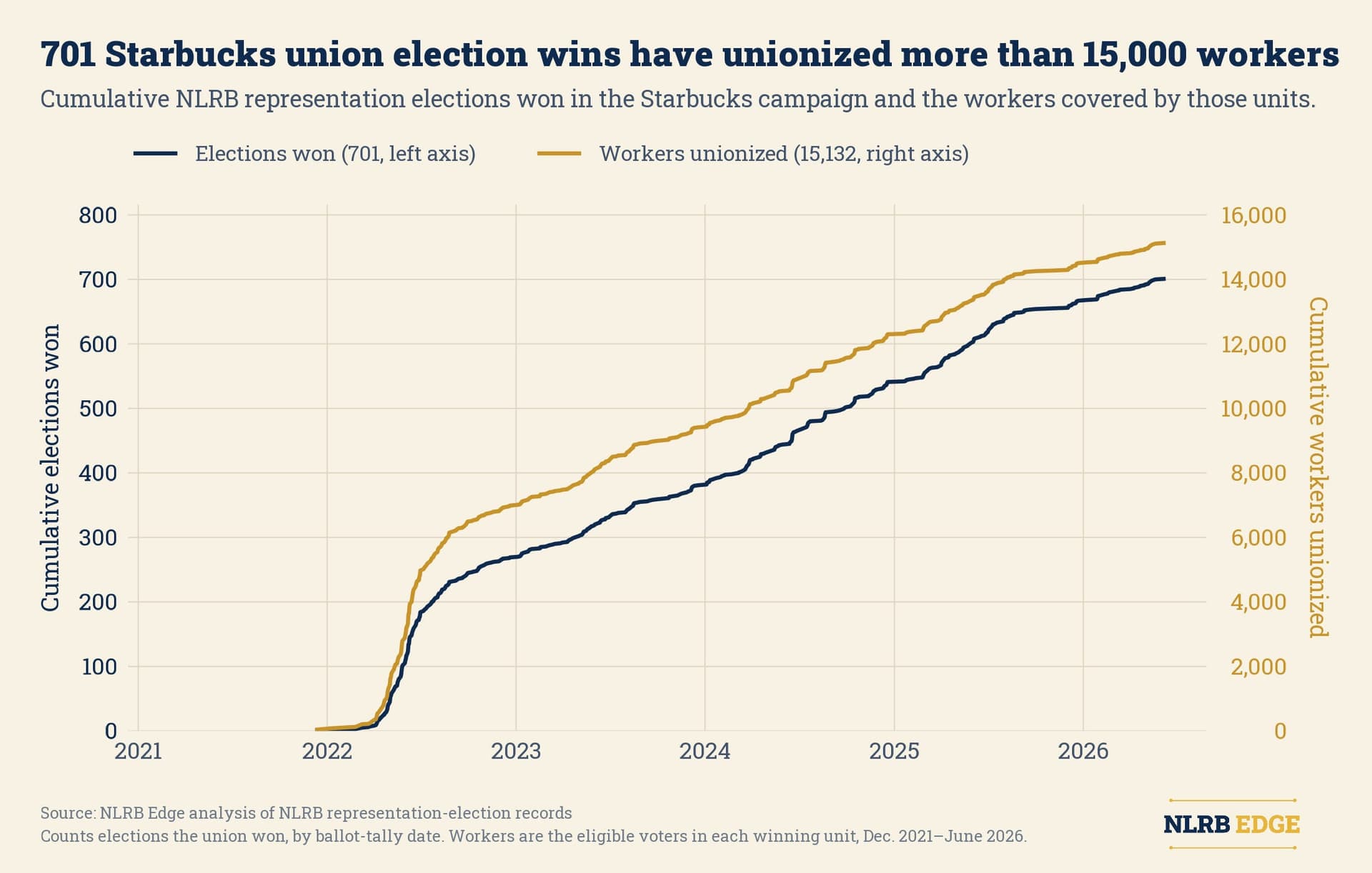
The labor pressure is not theoretical. Starbucks Workers United said more than 1,000 union baristas at 65 U.S. stores launched a Red Cup Rebellion unfair labor practice strike on November 13, 2025, with better staffing, higher pay and resolution of unfair-labor-practice charges among their demands. That strike made the retention question visible in the strongest possible way: workers were not only asking for a contract, they were asking for conditions that make the job sustainable.
Starbucks said in May 2025 that it had reached more than 30 tentative agreements on full contract articles and was ready to continue talks if the union returned to the table. Then CNBC reported in March 2026 that Starbucks and Workers United had last held formal negotiations in December 2024, even as the union sent the company a contract proposal. That gap tells workers a lot. When bargaining stalls, the issues that drive turnover do not disappear. They just stay bottled up on the floor.
Scheduling reliability is part of retention too
In New York City, Starbucks agreed to a $38.9 million settlement over more than half a million Fair Workweek Law violations affecting more than 15,000 employees. That is more than a legal headline. It is a reminder that scheduling is not a soft issue or a morale issue only. It is an operations issue that shapes whether partners can plan childcare, second jobs and basic life outside the store.
For baristas and shift supervisors, that matters as much as any brand campaign. Stable schedules help keep experienced people in the building. Unpredictable hours push them out, and once they leave, the store pays again in training, service breakdowns and managerial churn.
What Starbucks has to solve next
If Starbucks wants to make “Back to Starbucks” more than a slogan, it has to treat retention as a floor-level operating problem. That means enough labor hours to cover real demand, enough coaching to turn new hires into reliable partners, and enough schedule stability that experienced workers do not keep walking out the door.
At a company with 16,864 U.S. stores and a business built on speed, the cost of turnover is not hidden. It shows up in the line, in the drive-thru, in the mobile queue, and in the pressure on the people left to hold the shift together.
This article was produced by Prism’s automated news system from verified source data, official records, and press releases, then run through automated quality and moderation checks before publishing. The system is built and supervised by the people who set the standards it runs under. Read our full AI policy.
Did this article answer your question?