Labor Department tip rules clarify wages for Starbucks workers
Tip money at Starbucks is not a free-for-all. Federal rules set the wage baseline, and the company’s digital tipping rollout is changing who gets paid, when, and how.

What the Labor Department actually means by a tipped employee
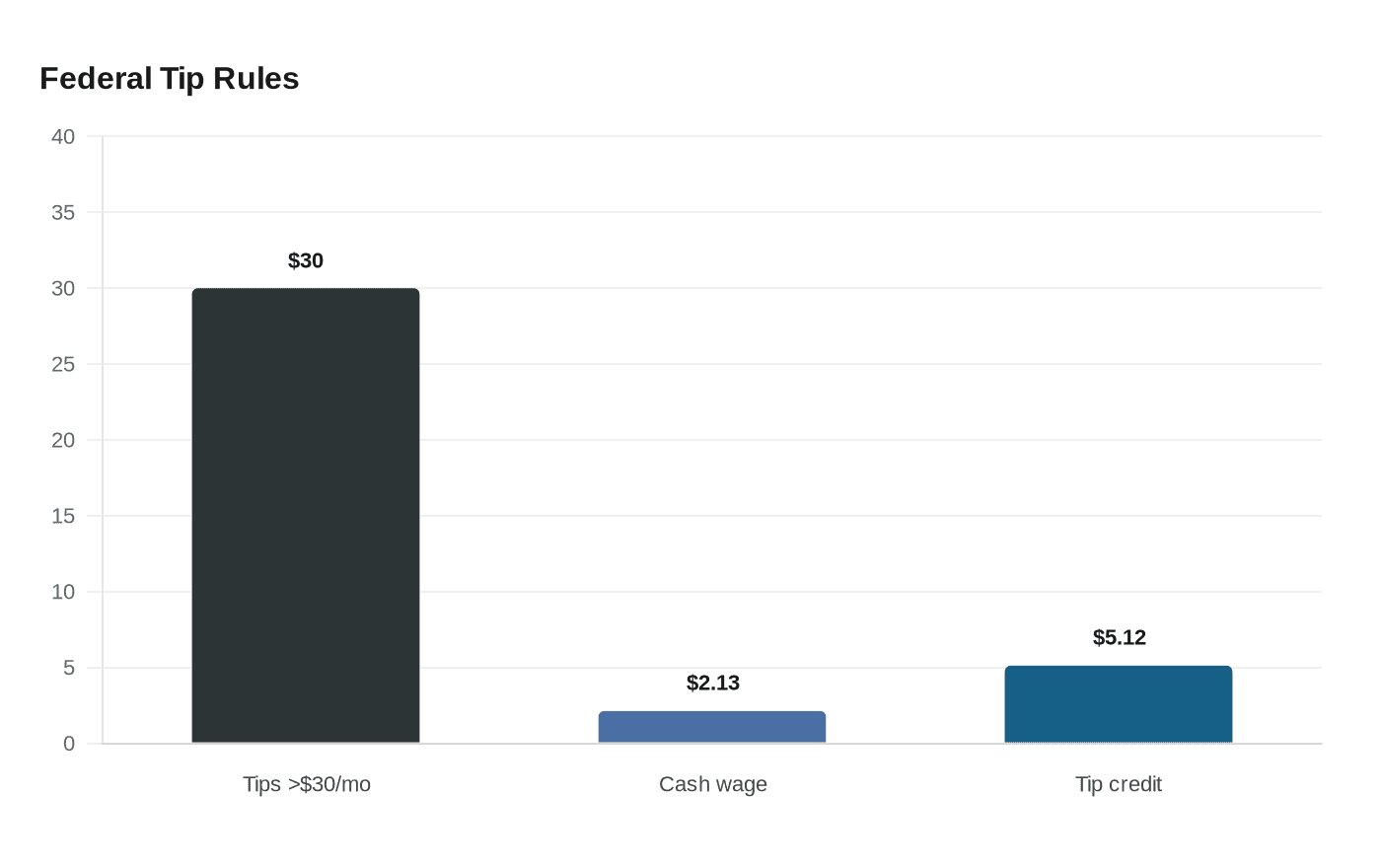
The federal baseline is narrower than a lot of workplace chatter makes it sound. Under the Labor Department’s guidance, a tipped employee is someone who customarily and regularly receives more than $30 a month in tips. That definition matters because it is the starting point for whether an employer can claim a tip credit under the Fair Labor Standards Act, not a blanket rule that applies to every café worker who sees a jar or a digital prompt.

The other key number is the one workers should remember if tip-policy debates get confusing: under current federal rules, the cash wage for tipped employees is $2.13 an hour, and the maximum tip credit is $5.12 an hour. In plain English, a tip credit lets an employer count a portion of an employee’s tips toward the federal minimum wage obligation, but only within the limits the law allows.
Why that baseline matters at Starbucks
Starbucks is not a classic tip-credit restaurant, and that is the first myth to clear up. Most Starbucks workers are not being paid like servers in a full-service dining room where base pay is structured around tips. Still, the Labor Department’s rules are useful because Starbucks sits inside the same food-service labor market, where tipping systems, pooled tips and wage structures vary wildly from one concept to the next.
That matters more now that tipping is increasingly tied to digital ordering. Starbucks says customers can order and pay through the app, and the company has expanded scheduled ordering across North America where Mobile Order & Pay is available. In 2026, Starbucks also said it would expand tipping options to more channels, including Mobile Order & Pay and Scan & Pay at the register. For workers, that shifts tipping from a jar at the handoff counter to a system that is built into the transaction itself.
The federal rules do not just set a dollar amount, they set boundaries
The biggest myth is that tips can be used however the company wants once a store starts accepting them. Federal rules are more specific than that. If an employer uses a tip credit, it has to make sure that tips plus direct wages reach at least the federal minimum wage in a workweek. If they do not, the employer has to make up the difference.
The rules also require notice. Employers taking a tip credit have to tell workers about the wage arrangement before using it. And they draw a hard line on who can share in tip money: managers and supervisors may not share in employees’ tips. For Starbucks workers, that is especially important because store teams are layered, with baristas, shift supervisors and store managers often working in close proximity on the same floor.
There is also an overtime piece that gets overlooked. The Labor Department’s guidance says employers must still meet wage and overtime requirements, so tip rules do not cancel out overtime obligations or replace them with a vague promise that tips will even things out.
Why tip distribution at Starbucks has been such a live issue
Starbucks’ tipping setup has been a moving target for years. In 2022, Associated Press reported that the company’s tipping option initially applied only to roughly 7,000 of its about 11,000 U.S. company-owned stores. The same reporting said app customers could leave 50 cents, $1 or $2 within two hours of a transaction. That detail matters because it shows how limited the early digital rollout was, and how closely it was tied to the app rather than every point of sale.
That rollout also happened against a background of lawsuits over how tip-jar money was divided among workers. So when workers debate whether a digital tip is “extra,” they are not just arguing about etiquette. They are talking about a pay system that has already been the subject of legal and labor conflict.
Union stores changed the politics of tipping
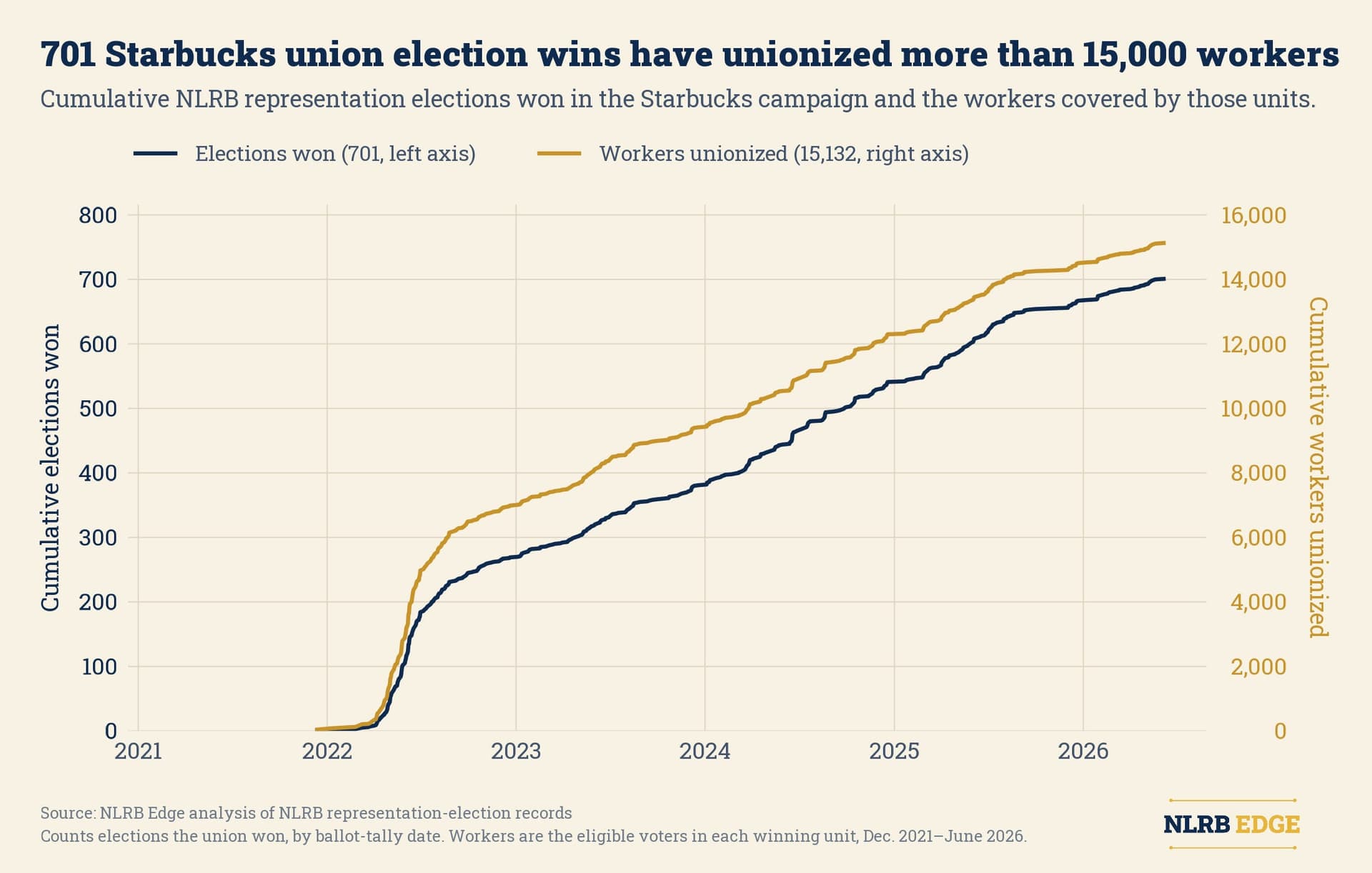
The issue became even more visible after Starbucks’ 2024 agreement with Workers United. Starbucks said it would extend the May 2022 benefits package, including credit card tipping, to represented partners. That was a meaningful shift because union stores had previously been left out of the initial credit-card tipping rollout, and labor reporting described that exclusion as a source of conflict between the company and the union.
Starbucks and Workers United also said in February 2024 that they would begin discussions on a foundational framework for collective bargaining and litigation resolution. That means tip policy is not just a back-of-house payroll question. It is part of the broader bargaining picture, alongside wages, working conditions and the uneven treatment of represented and non-represented stores.
What changed in the law around tipped work
The legal landscape is not frozen either. The Fifth Circuit struck down the Labor Department’s 2021 tip rule on Aug. 23, 2024, and the department later published a final rule on Dec. 17, 2024 restoring pre-2021 language for the dual-jobs regulation governing tipped employees. That regulatory tug-of-war matters because it affects how much non-tipped work a tipped employee can do before the legal analysis changes.
For Starbucks workers, the practical takeaway is simple: do not assume that “tipped” means the same thing everywhere. The line between tipped and non-tipped work keeps moving in the law, and Starbucks’ café model, where baristas can bounce between register, drinks, food, mobile orders and cleanup, does not map neatly onto the classic restaurant tip-credit model.
The questions workers should ask when a tip policy feels unclear
When tip distribution is fuzzy, the right response is not guesswork. It is to ask for the details that federal rules make relevant.
- Is the store using pooled tips, app tips, credit card tips, or some combination of all three?
- Who is included in the pool, and are managers or supervisors excluded as federal rules require?
- How are tips tracked against direct wages, and is there a true-up if earnings do not reach the minimum wage in a workweek?
- What notice was given about the wage arrangement before any tip credit or tip-sharing system was put in place?
- If the store uses digital tips, how long after a transaction can a customer tip, and how are those tips assigned to the shift?
Those questions matter whether you are a barista trying to understand your paystub, a shift supervisor trying to explain the policy to a new hire, or a store manager trying to keep the store compliant. They also matter because Starbucks has layered new compensation changes on top of the tipping debate. In 2026, the company said it would give baristas and shift supervisors a quarterly reward worth up to $1,200 a year, alongside weekly pay for U.S. partners. That kind of pay change does not make tip rules disappear. It just makes it more important to separate base pay, rewards and tips cleanly.
The bottom line is that Starbucks tipping is not a side issue anymore. As the company widens digital tipping and the union fight continues, the Labor Department’s rules offer the clearest baseline workers have: who counts as tipped, who cannot share tips, what notice is required, and when the company has to make up the difference.
This article was produced by Prism’s automated news system from verified source data, official records, and press releases, then run through automated quality and moderation checks before publishing. The system is built and supervised by the people who set the standards it runs under. Read our full AI policy.
Did this article answer your question?