Starbucks boosts 401(k) appeal with immediate vesting, 100% match
Starbucks’ 401(k) can add real money fast: eligible partners get a 100% match on the first 5% they save, and that match is fully vested right away.

Why the 401(k) matters in a Starbucks job
At Starbucks, the Future Roast 401(k) Savings Plan is not just a retirement perk tucked into benefits paperwork. For baristas, shift supervisors, and store managers trying to judge a job by its long-term value, it is part of the real compensation picture alongside hourly pay, benefits, and the company’s newer partner rewards.

The key idea is simple: if you put money in, Starbucks puts money in too. The company says it matches 100% of the first 5% of eligible pay that a partner contributes, and that match is immediately 100% vested. In plain English, that means the company’s money belongs to you right away, even if you leave later. For workers who move between stores, step into management, or do not expect to stay forever, that detail makes the plan much more valuable than a retirement account with a waiting period.
Who can join and when
Eligibility starts at age 18 and after 90 days of employment. Starbucks also says newly eligible partners can enroll online up to 75 days before their eligibility date, which gives workers a head start if they want their contributions ready to go as soon as they qualify.
That matters because the 401(k) is not automatic compensation unless you use it. If you wait too long, you can miss out on employer money in the earliest pay periods after you become eligible. For hourly workers, those first months often overlap with the most uncertain stretch of the job, when schedule stability, training, and cash flow are all still settling in.
How the match actually works
The plan allows partners to contribute from 1% to 75% of eligible pay each pay period, using pre-tax dollars, Roth after-tax dollars, or a mix of both. Starbucks says the match is determined on a pay-period-by-pay-period basis. That means the company is not looking at your savings once a year and then doing a catch-up payment later.
The practical rule is easy to miss: if you make no eligible contribution in a pay period, you get no match for that period. That can become a costly oversight for workers who pause contributions during tight months and assume they will “make it up later.” With this kind of plan, later does not recover the match you skipped today.
Here is the worker takeaway:
- Contribute at least enough to capture the full match.
- Keep contributions going in every eligible pay period if you can.
- Check whether you want pre-tax, Roth after-tax, or a mix, based on your tax situation.
- Log in through Fidelity NetBenefits so you know your settings are active and correct.
Even small percentages can add up. For someone working regular hours, the match can quietly become one of the strongest pieces of compensation in the package, especially when compared with the short-term cash value of a tiny shift in hourly pay.
Why immediate vesting changes the math
Immediate vesting is one of the biggest reasons this benefit deserves attention. A lot of workers understand a match in theory but underestimate vesting, which decides whether they keep the employer’s money when they leave. Starbucks says its match is immediately 100% vested, so the company’s contribution is yours right away.
That is meaningful in a company with a large workforce and frequent movement between stores, roles, and even employers. Workers in food service often think in short horizons because schedules change, store staffing shifts, and life circumstances shift too. An immediately vested match turns the 401(k) from a promise about some distant future into compensation you can actually keep.
The IRS cap and what it means for higher earners
Starbucks says the maximum amount of eligible pay considered for 401(k) contribution and match calculations in calendar year 2026 is subject to Internal Revenue Service limits of $360,000. That ceiling matters more for store managers and higher-paid partners than for entry-level baristas, but it still signals how the plan is structured.
The limit is not a target or a guarantee; it is the pay cap used in the calculation. For most hourly workers, the more useful question is not whether they are near that ceiling, but whether they are contributing consistently enough to capture the match on the pay they already earn.
How this fits into Starbucks’ broader compensation pitch
Starbucks has been pushing a wider total-compensation message. The company says it has invested more than $500 million in partners and coffeehouses through its Back to Starbucks transformation plan, and in 2026 it introduced new hourly-partner rewards worth up to $1,200 per year through quarterly partner rewards.
That framing matters because it shows how the company wants workers to evaluate the job: not just by the posted hourly rate, but by the stack of pay, benefits, and rewards layered on top of it. For employees who are deciding whether Starbucks is a temporary stop or a place to build a career, the 401(k) is one of the clearest examples of that long-game approach.
Why the benefit matters in union stores too
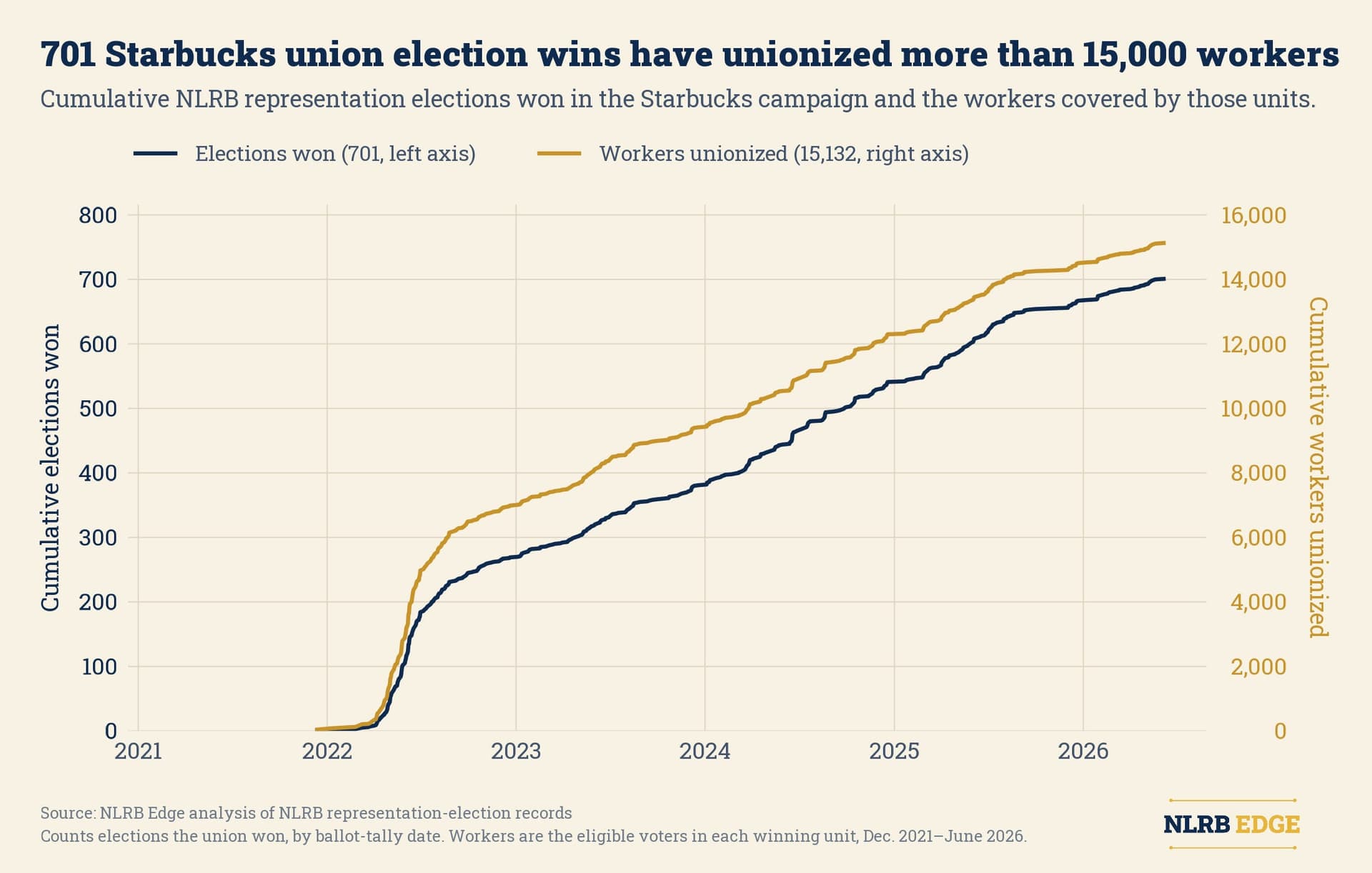
Starbucks has said it engages in good-faith collective bargaining where partners have chosen union representation. It has also said Workers United represents only 4% of its partners and that the union chose to walk away from the bargaining table. However workers view that dispute, the retirement plan still sits inside the larger conversation over compensation, scheduling, and job quality.
That is especially true in a workplace where organizing has put pay and benefits under a brighter spotlight. A solid 401(k) does not replace better schedules, more hours, or higher wages, but it does change the value of each paycheck. In a retail job where turnover can be high, the difference between ignoring the plan and using it consistently can amount to meaningful money over time.
For Starbucks workers trying to judge whether the job pays off in the long run, the lesson is straightforward: the 401(k) is one of the company’s most durable forms of compensation, and the match is strongest when you stay enrolled, stay contributing, and make the most of the money Starbucks is already willing to put on the table.
This article was produced by Prism’s automated news system from verified source data, official records, and press releases, then run through automated quality and moderation checks before publishing. The system is built and supervised by the people who set the standards it runs under. Read our full AI policy.
Did this article answer your question?