Starbucks closes Kroger kiosks in Ohio, highlighting licensed-store risk
Four Kroger-hosted Starbucks kiosks in central Ohio closed, showing how quickly licensed jobs can disappear even as other Starbucks-branded sites keep opening.

Four Starbucks kiosks inside Kroger stores in Dublin and Columbus shut down, a reminder that not every Starbucks job sits on the same footing as a company-operated café. In central Ohio, the closures came alongside a recent Starbucks opening inside Kroger’s new Powell store, showing how fast a licensed placement can disappear even as another one takes its place.
For workers, the distinction matters. A Starbucks sign in a grocery store does not carry the same permanence, staffing structure, or corporate backing as a stand-alone store. Licensed locations rise and fall with the host retailer’s floor plan, customer traffic, and contract choices, which means shifts can vanish with little warning and applicants can lose an entry point into the brand. That is a different kind of risk from the one baristas and shift supervisors face in company-operated stores, where the chain controls more of the business and labor model.
Starbucks has said its retail mix varies based on access to desirable retail space, store complexity, profitability, expected market size, and support infrastructure. The company also describes licensed coffeehouses as part of its reach into grocery stores, airports, hotels, hospitals and campuses. In practice, that gives Starbucks a broad footprint, but it also leaves grocery-based kiosks especially exposed when a host retailer changes priorities or trims space.
The closures in Dublin and Columbus fit into a larger retrenchment that Starbucks announced in September 2025. The company said it would close about 1% of North American stores, cut about 900 non-retail jobs and spend roughly $1 billion on the restructuring. Starbucks said the review identified coffeehouses where it could not create the physical environment customers and partners expect or where it did not see a path to financial performance. By the end of fiscal 2025, Starbucks said it had closed 627 stores under the plan.
The company ended fiscal fourth quarter 2025 with 40,990 stores worldwide, including 16,864 in the United States. It also said North America revenue growth in fiscal 2025 was partly offset by a decline in the licensed store business, a sign that the segment feeding many grocery kiosks is not insulated from pressure even when the core brand is still expanding elsewhere.
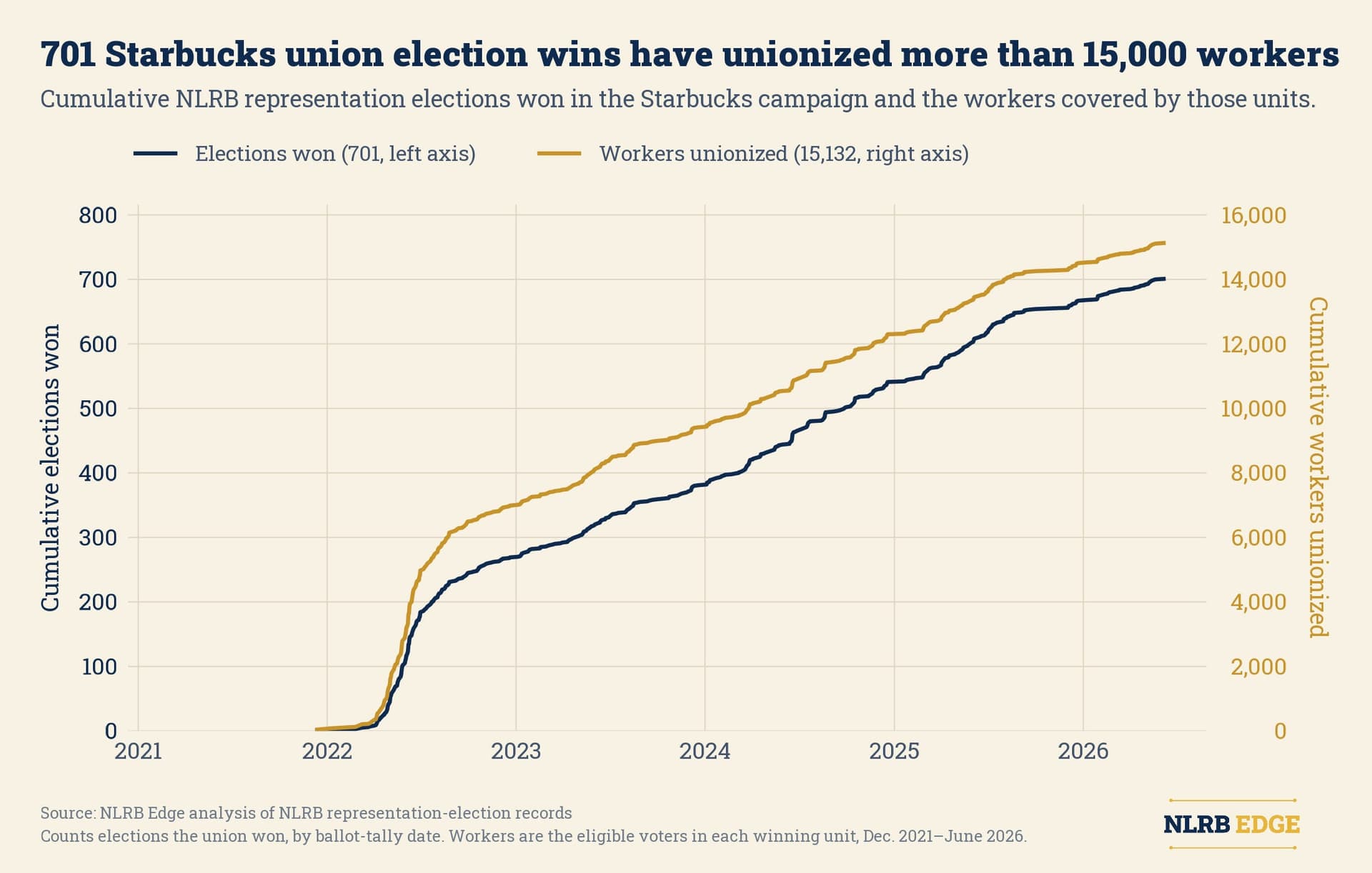
For Starbucks workers, including those watching organizing and contract bargaining through Starbucks Workers United, the central Ohio closures underline a basic divide that is easy to miss from the outside. A licensed store can be part of the Starbucks ecosystem without offering the same job security, scheduling stability or corporate support as a company store. In that gap, workers often find the real power dynamics of the brand.
This article was produced by Prism’s automated news system from verified source data, official records, and press releases, then run through automated quality and moderation checks before publishing. The system is built and supervised by the people who set the standards it runs under. Read our full AI policy.
Did this article answer your question?