Starbucks cuts 300 jobs while posting external software engineer roles
Starbucks cut 300 corporate jobs and closed regional offices while software engineer postings stayed live, intensifying questions about who stays and who goes.

Starbucks cut 300 U.S. corporate jobs and closed or consolidated regional support offices in Atlanta, Burbank, Chicago and Dallas even as software engineer openings continued to surface on external job boards. For workers inside the company, the message is hard to miss: the turnaround is still trimming overhead, but not all hiring has stopped.
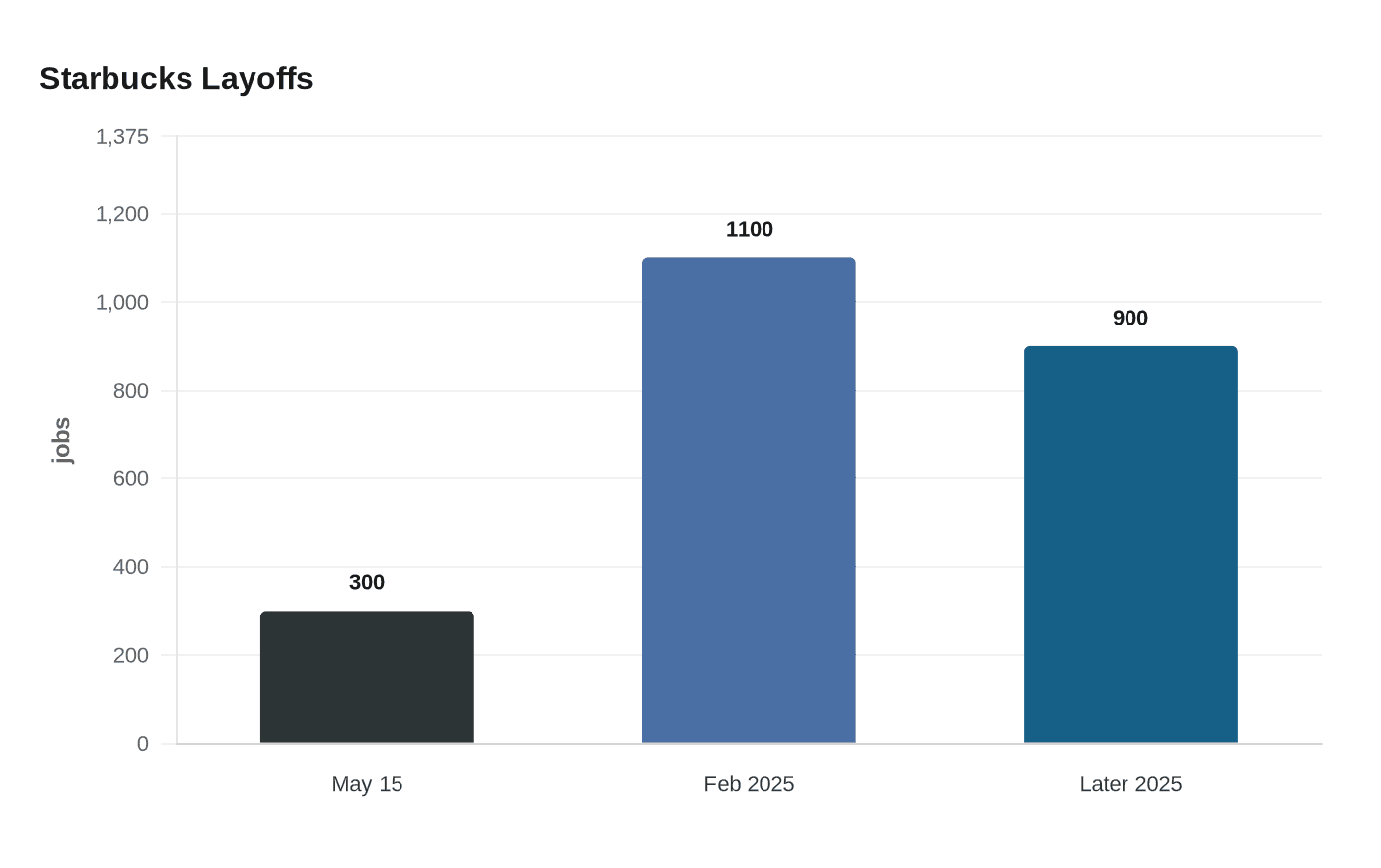
The cuts, announced May 15, were the third round of layoffs under CEO Brian Niccol, who joined Starbucks in 2024. The company had already eliminated 1,100 jobs in February 2025 and 900 more corporate positions later that year as part of a $1 billion restructuring plan. Starbucks said the latest reduction was meant to support a return to “durable, profitable growth,” language that now sits alongside repeated cuts to nonretail staff.
The company also said it was reviewing its international support organizations and expected additional job cuts outside the United States. As of Sept. 28, 2025, Starbucks had 9,000 U.S. nonretail workers and 5,000 international employees in regional support operations, a reminder that the squeeze is not limited to one office or one country. Starbucks has said the 2026 restructuring will bring roughly $400 million in charges, including about $280 million in impairments and $120 million in severance costs.
At the same time, Starbucks’ technology careers page still describes a separate hiring lane. Starbucks Technology says it operates out of Seattle, Toronto and North American regional offices, and that some roles are 100% remote while others are 100% in-office. External job sites have also shown active Starbucks software engineering postings, even though the company’s own website maintains a careers portal and a separate job search system. That split feeds the criticism now following the layoffs: if the company is still looking for engineers, which jobs are truly expendable, and which teams are still being built?
The scrutiny is sharper because Starbucks has a documented history of H-1B visa sponsorship, with visa-tracking sites showing dozens of filings in fiscal 2026 and hundreds of related applications over recent years. Critics say that history makes the gap between layoffs and outside recruiting harder to ignore, especially when employees are being told the company is tightening its structure for long-term stability.
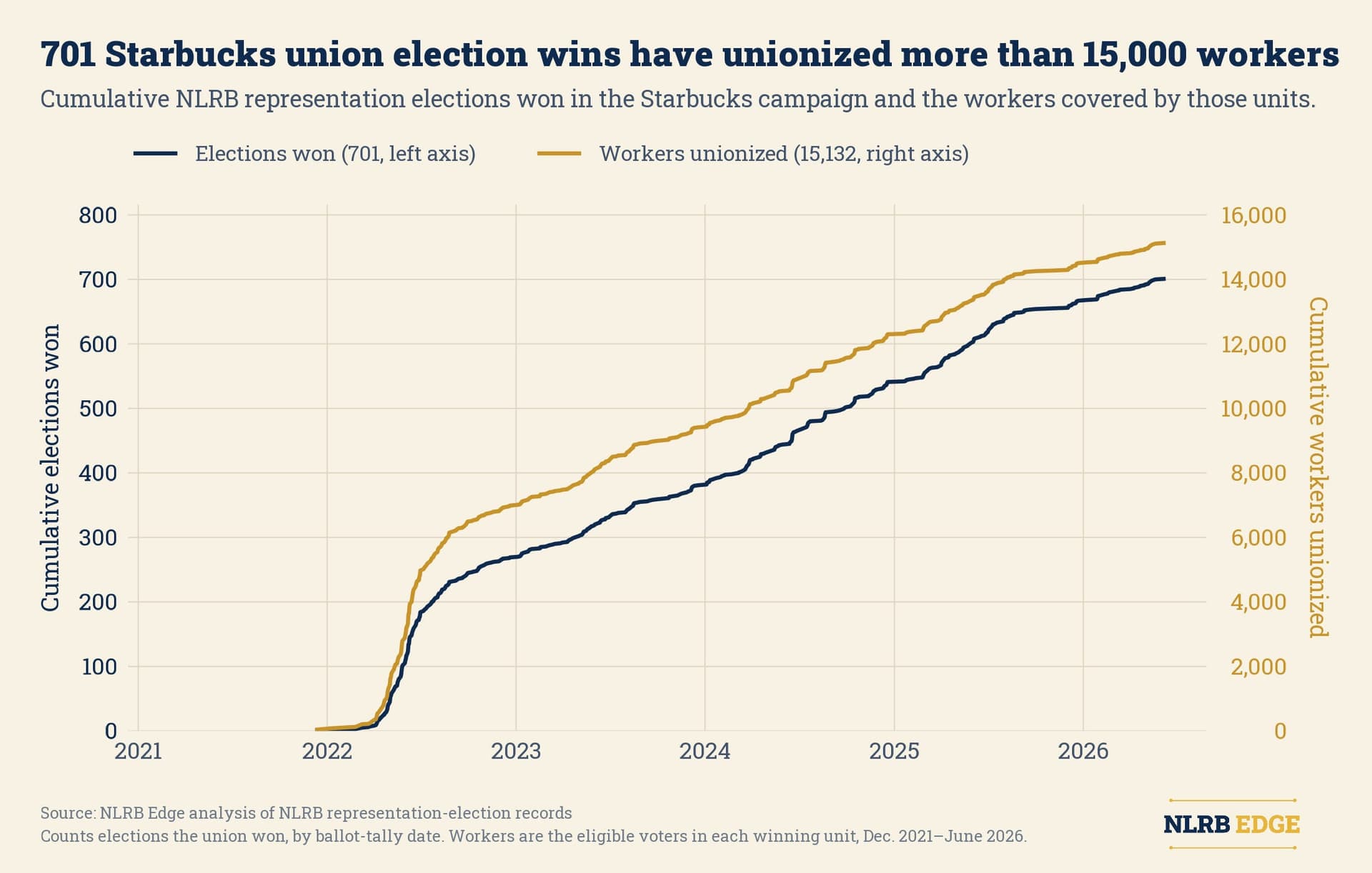
The cuts also land in the middle of continuing labor conflict. United Nations human-rights experts asked Starbucks and the U.S. government to respond to allegations of years-long anti-union conduct, and Starbucks Workers United has repeatedly attacked the company’s labor practices. For store employees watching from the counter and the back room, the corporate retrenchment sends a clear signal: during this turnaround, management is still making hard bets on where the company’s future is, and whose jobs can be cut to get there.
This article was produced by Prism’s automated news system from verified source data, official records, and press releases, then run through automated quality and moderation checks before publishing. The system is built and supervised by the people who set the standards it runs under. Read our full AI policy.
Did this article answer your question?