Starbucks explains peaberries, the rare round coffee bean
Starbucks is using a simple coffee-science lesson to help baristas explain why peaberries are round, rare and worth noticing. For partners, it is a quick way to answer questions with confidence.
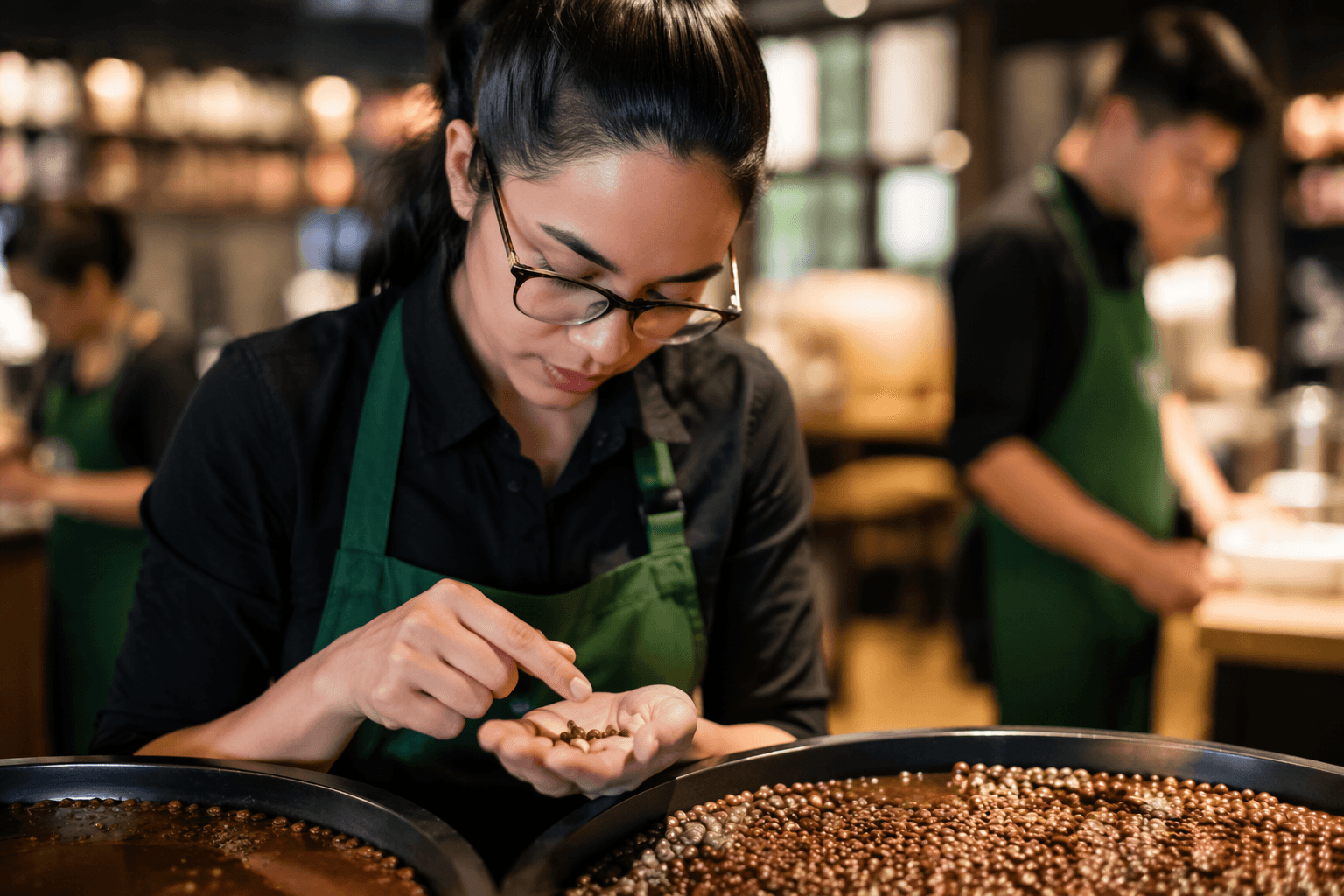
Starbucks' latest coffee science explainer turns a small production quirk into something partners can actually use on the floor. Peaberries are not a separate kind of coffee, but a natural variation that forms when only one seed develops inside a coffee cherry instead of the usual two. That single seed tends to be round rather than flat, which makes it stand out in a bag and gives baristas a clean, memorable fact to share with curious guests.
What a peaberry is, in plain language
Coffee starts as fruit. Most coffee cherries develop two seeds inside, and those seeds become the flat beans customers are used to seeing. A peaberry forms when only one seed develops in the cherry, and that single seed grows into a rounder bean instead of a pair of flat halves.
That basic biology matters because it gives partners a simple explanation that sounds informed without being technical. When someone notices a different-looking bean, asks why one bag seems unusual, or wants to know what makes a coffee rare, the answer does not have to be complicated. Coffee is fruit, most cherries carry two seeds, and a peaberry is the one-seed version.
The round shape is the part people notice first. In a bag, peaberries can stand out because they look different from the flatter beans around them. That visual difference is what turns a behind-the-scenes detail into a front-of-house conversation.
Why this matters in the café
For baristas, information like this is more than trivia. It gives you a way to talk about sourcing and craft in a way that feels natural at the register, at the handoff plane, or in a drive-thru lane where you have only a few seconds to make an impression. When a customer asks why one batch or one bag looks different, you can answer with confidence instead of guessing.
That confidence matters for customer trust. Guests do not need a lecture on coffee botany, but they do notice when the person serving them can explain what is in the cup or bag in clear, direct language. A short, accurate answer can change the tone of the interaction from routine service to a small moment of expertise.
It also matters for partner pride. The more you can connect the cup to the cherry, the more you can speak like a coffee professional rather than just an order taker. That is especially valuable in stores where speed is constant and attention is pulled in every direction. A good coffee fact gives you something useful to say without slowing the line down.
How to use the explanation on shift
The point of knowing about peaberries is not to memorize a script. It is to have a simple, usable story ready when a customer wants one. In practice, that means keeping the explanation short, friendly and grounded in what the customer is actually asking.
A few ways to use it:
- If a guest asks what a peaberry is, explain that most coffee cherries develop two seeds, but a peaberry forms when only one seed develops.
- If someone notices the bean shape, point out that the single seed is usually round rather than flat.
- If a customer wonders why it stands out, mention that the shape can make it more noticeable in a bag or batch.
- If the conversation opens up, use the moment to talk about sourcing and how coffee starts as fruit before it ever reaches the store.
That kind of answer works whether you are on drive-thru, on the café floor or covering a busy rush. It is quick enough for a high-volume shift, but still specific enough to make the customer feel like they learned something from the visit.
A small lesson with bigger value
Starbucks is using the peaberry explainer to do something practical: give partners a compact way to talk about coffee education in everyday terms. The company is not just describing a rare round bean. It is reinforcing the idea that product knowledge should be usable on the floor, not locked away in a training binder or buried in coffee jargon.
That is where this story has real value for workers. Frontline service gets easier when the facts are simple, accurate and relevant. A barista who can explain why a peaberry is different can handle a question smoothly, keep the interaction moving and still sound informed.
For partners, that kind of knowledge is a small advantage that adds up. It helps you answer questions more confidently, makes the conversation feel more professional and gives customers a clearer sense that Starbucks understands what happens long before the drink reaches the cup. In a job where the details move fast, knowing how a coffee cherry becomes a peaberry is one more way to turn routine service into a better coffee experience.
This article was produced by Prism’s automated news system from verified source data, official records, and press releases, then run through automated quality and moderation checks before publishing. The system is built and supervised by the people who set the standards it runs under. Read our full AI policy.
Did this article answer your question?