Starbucks highlights grants and giving match to boost community impact
Starbucks' community work runs through partner-nominated grants, matching funds, and food rescue. The real leverage for workers is local, not corporate-sounding.
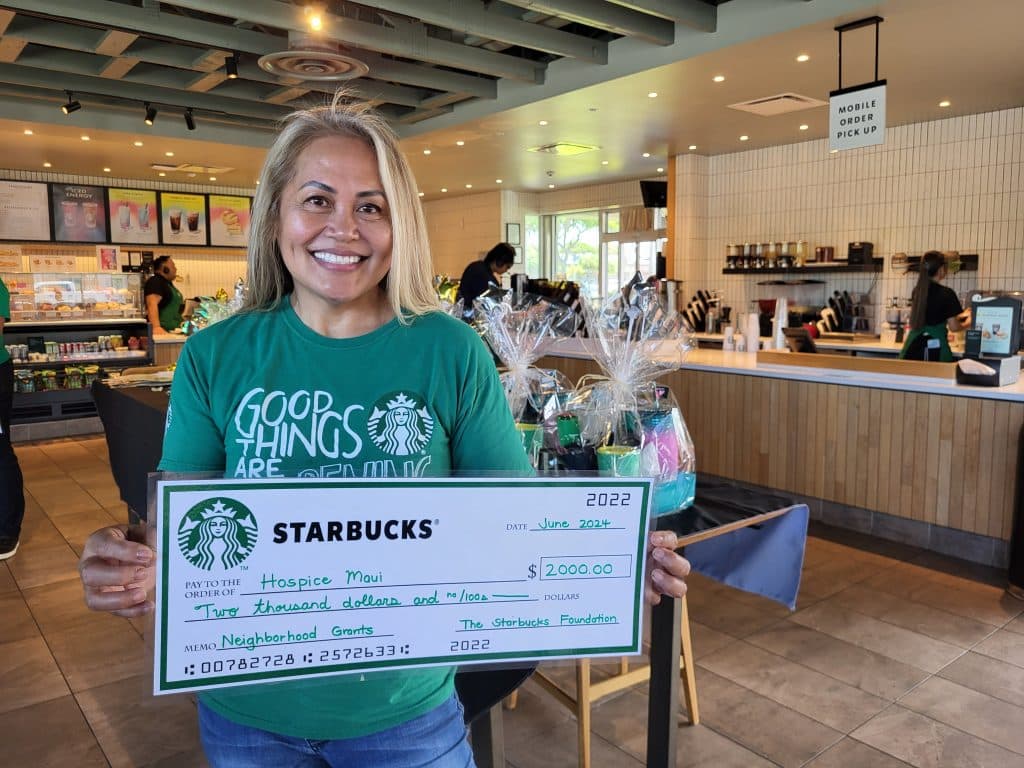
Starbucks is making its community pitch through programs partners can actually touch: local grants they can nominate, match money they can unlock, and food rescue they help carry out from the store floor. That is a different claim than broad corporate philanthropy. It ties community impact to the same people who are already living the realities of pay, tips, schedules, and union bargaining inside stores.
What partners can actually influence
The most concrete entry point for store workers is Neighborhood Grants. Starbucks says partners nominate grassroots, community-led nonprofits for these grants, which are meant to build sustained local impact and keep partners engaged with nonprofits throughout the year. In practice, that means a barista, shift supervisor, or store manager is not just watching money flow out of Seattle, but can help decide which neighborhood organizations get a boost.
Starbucks has also said the program has generated more than $15 million since 2019, later describing the effort as more than 16,000 awards since 2019. In 2024, the company said it selected more than 2,800 organizations across the United States and Canada for the program’s tenth round. That scale matters because it shows the grants are not a one-off headline, but a recurring route for local nonprofits to get support from stores and the partner network.
For workers, this is the difference between abstract community language and something visible on the ground. If a store team nominates a food pantry, youth program, or mutual-aid group, the impact can be felt locally, and the store can see a direct connection between its own workforce and the neighborhood around it. That also gives partners a way to shape what Starbucks means by being part of a community, instead of leaving that definition to corporate messaging alone.
How the giving match works for employees
The other piece partners can use is Giving Match. Starbucks’ 2024 social-impact reporting says all active full- and part-time partners can request up to $1,000 in matching funds per fiscal year, using any combination of volunteer hours and financial donations. That is a meaningful lever because it turns individual effort into a larger donation, whether the partner gives money, time, or both.
Starbucks reported 153,000 employee volunteer hours in 2023, which suggests the match is not just a perk sitting on a website. It is part of how the company tries to turn volunteerism into a measurable part of partner culture. For employees trying to figure out whether Starbucks’ community talk has any practical value, this is the clearest answer: it can expand the reach of personal giving and make volunteer work count twice, once in time and again in matched support.
That said, the benefit is only as visible as the store’s access to it. Partners who are already stretched thin by labor, hours, or schedule instability are not likely to experience community impact as a grand corporate promise. They are more likely to see it if their store actively shares grant opportunities, encourages nominations, and makes room for volunteer participation.
Food rescue is part of the operating model too
Starbucks says its community strategy does not stop at grants. FoodShare operates in 100% of its U.S. company-operated stores, and the company says it works with Feeding America and other hunger-relief organizations to donate ready-to-eat meals while diverting surplus food from landfills. That matters because it puts philanthropy inside daily store operations, not just in a foundation press release.
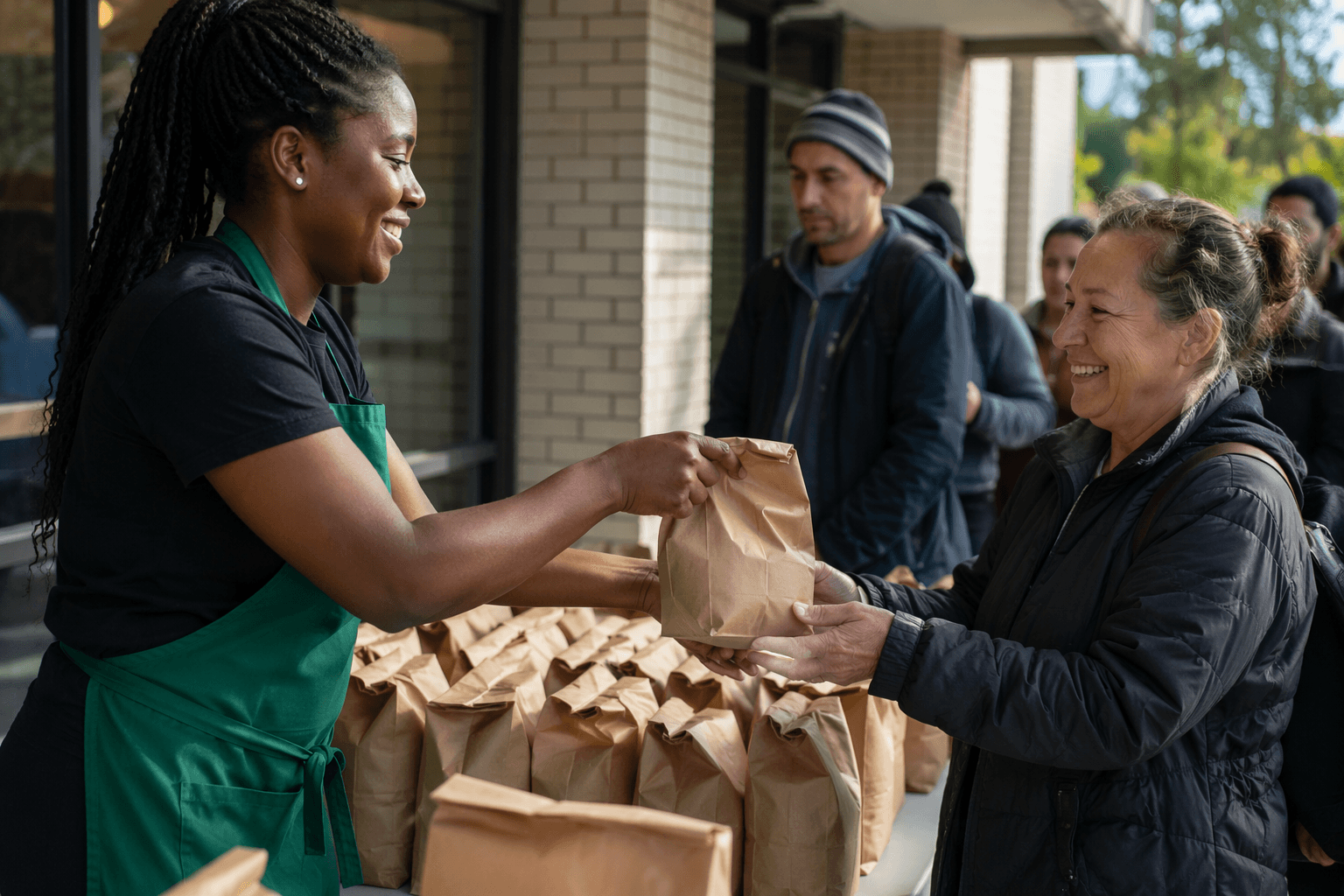
For store teams, FoodShare is a concrete example of how community work gets built into the rhythm of closing procedures, donation handling, and waste reduction. It is also a reminder that Starbucks is trying to connect social impact with operational choices, not just external donations. In a workplace where waste, speed, and compliance already shape the day, food rescue becomes one more task that links the store to the neighborhood beyond the transaction counter.
The foundation is bigger than one grant program
The Starbucks Foundation itself dates back to 1997, when it was established as a Section 501(c)(3) charitable organization. That matters because it gives the company a long-running vehicle for philanthropy that is separate from day-to-day store sales. The foundation is the hub for the grants and partnerships Starbucks uses to frame its wider community strategy.
In March 2022, the foundation announced a $30 million commitment by 2030 for Global Community Impact Grants. Starbucks says those grants are meant to drive locally relevant impact in the markets where it operates around the world. The point here is not just that the company gives money, but that it wants to route that money through place-based projects that can be adapted to local needs rather than handed down as a single universal program.
The global side: women, girls, and disaster response
Starbucks has also built a global impact narrative around women and girls in coffee-, tea-, and cocoa-growing communities. The company said it set a 2018 goal to positively impact 250,000 women and girls by 2025, then said it reached that target three years early in 2022. It reset the goal to 1 million women and girls by 2030, which signals that the company is using milestones to keep the program moving outward rather than treating the first target as the finish line.
Its disaster-response work follows a similar pattern. Starbucks says the focus is preparedness, response, and resilience, and it has cited World Central Kitchen as a nonprofit partner since 2019 in disaster relief efforts. The company has tied that work to places including Morocco, Türkiye, Japan, and Hawaii. That broad geographic spread shows how the foundation’s reach goes well beyond U.S. store communities, even if the story is still about the same operating logic: money, partnerships, and volunteer energy flowing through a Starbucks-branded channel.
What this means for partners on the floor
For partners, the important takeaway is not that Starbucks has a large philanthropy stack. It is that the company is using partner nominations, volunteer hours, local food rescue, and matching funds as part of its operating model. That can create real neighborhood value, especially when store teams are invited into the process instead of being told about it after the fact.
It also reveals the gap between corporate community language and everyday store life. A grant or a matched donation does not fix staffing, scheduling pressure, or labor tension, and it does not settle the fights over tips, hours, or the bargaining table with Starbucks Workers United. But it does show where Starbucks wants partners to fit in its culture: not only as labor, but as a network of local actors who can steer grants, amplify giving, and make the company’s community claims visible outside the store.
This article was produced by Prism’s automated news system from verified source data, official records, and press releases, then run through automated quality and moderation checks before publishing. The system is built and supervised by the people who set the standards it runs under. Read our full AI policy.
Know something we missed? Have a correction or additional information?
Submit a Tip