Starbucks publishes workforce diversity data and EEO-1 reports through 2024
Starbucks now points workers to nine years of EEO-1 reports, including a 2024 filing that lists 189,419 U.S. workers.
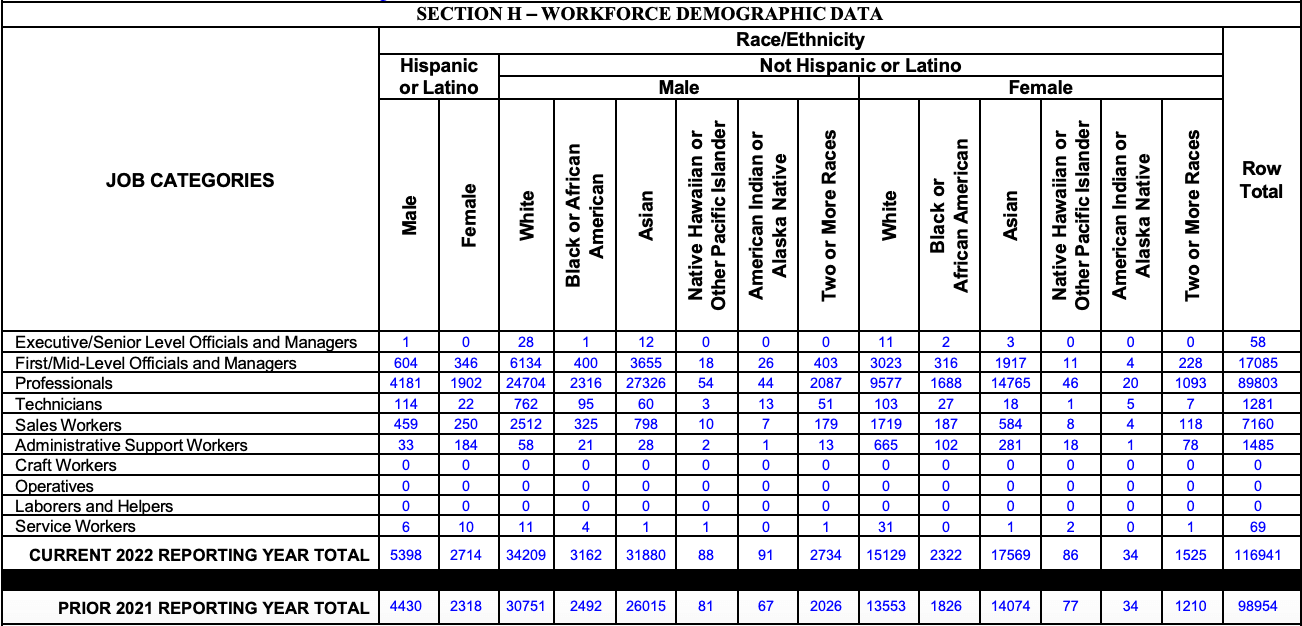
Starbucks’ workforce diversity page gives partners a narrow but concrete place to check what the company actually publishes about representation: EEO-1 reports covering 2016 through 2024, plus a 2024 consolidated filing that lists 189,419 U.S. workers. For baristas, shift supervisors, and store managers trying to separate broad inclusion language from hard numbers, that matters.
The company says it is dedicated to being an inclusive and accessible employer, but the value for workers is in the paperwork, not the slogan. The U.S. Equal Employment Opportunity Commission treats EEO-1 Component 1 reports as mandatory annual filings for private employers with 100 or more employees and certain federal contractors with 50 or more employees. Those reports collect workforce data by job category, sex, race, and ethnicity, which gives Starbucks a public baseline that employees can compare with hiring patterns, promotion paths, and who gets access to development opportunities.
Starbucks has also used its annual and impact reporting to make broader claims about pay and workplace conditions. In its FY24 annual report, the company said it had achieved and maintained racial and gender pay equity for U.S. partners performing similar work. It also said it was working toward gender pay equity for partners performing similar work in all company-operated markets globally. In its FY24 Global Impact Report, Starbucks said it improved partner pay and added earlier paid vacation accrual for hourly retail partners, enhanced financial well-being programs, career mobility opportunities, and more flexible scheduling.
That last point hits the floor where labor problems usually show up. Better scheduling, earlier vacation accrual, and career mobility are the kinds of promises workers judge by their next shift, not by a corporate deck. For store managers, the filings and report language offer one more reference point when talking about training pipelines and advancement. For shift supervisors and baristas, they offer a way to measure whether the company’s inclusion claims show up in hours, promotions, and access to better roles.
Starbucks has made inclusion part of its public identity since the 2018 Philadelphia incident involving two Black men at a Starbucks store. The company later cast that moment as a turning point and launched companywide racial-bias training. In an October 29, 2024 update, Mark Brown, then Starbucks’ senior vice president of talent and inclusion, said the company remained committed to building a more inclusive, equitable, accessible and diverse Starbucks.
The public record cuts both ways. In February 2025, Missouri Attorney General Andrew Bailey filed suit against Starbucks alleging race- and sex-based discrimination in hiring and training practices, with CBS News also covering the complaint. Starbucks’ own reporting and the Missouri case sit side by side now: one shows what the company says it measures, and the other tests whether its internal practices match the public message. For workers, that is the real transparency audit, because the EEO-1 pages show the company’s chosen baseline while the stores keep revealing how those promises land on the floor.
This article was produced by Prism’s automated news system from verified source data, official records, and press releases, then run through automated quality and moderation checks before publishing. The system is built and supervised by the people who set the standards it runs under. Read our full AI policy.
Know something we missed? Have a correction or additional information?
Submit a Tip