Starbucks S.I.P. lets partners buy stock at a 5% discount
S.I.P. gives eligible partners a 5% stock discount after 90 days, but the benefit only works if you can spare payroll deductions. Quarterly windows make timing matter.
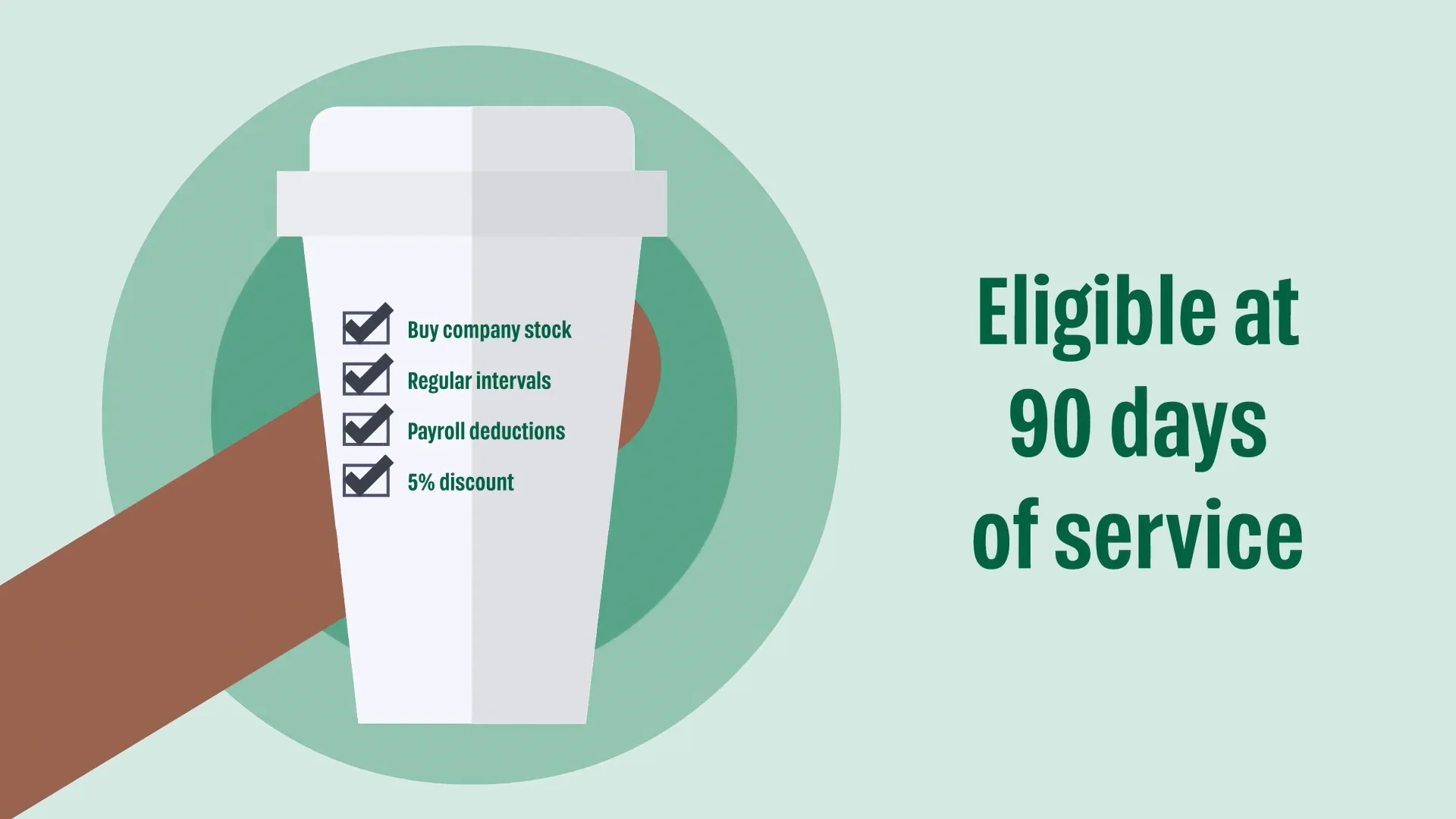
Starbucks’ Stock Investment Plan, or S.I.P., turns part of a partner’s paycheck into company stock at a 5% discount. The real tradeoff is more personal: the plan can help you build wealth over time, yet it also asks you to give up cash from a paycheck that may already be stretched by rent, groceries, and unpredictable hours.
How S.I.P. works
Eligible partners can join after 90 days of service, contribute between 1% and 10% of base pay through payroll deductions, and buy Starbucks stock on a quarterly schedule. Enrollment, contribution changes, and withdrawals are only allowed during windows that run from the 1st through the 15th of March, June, September, and December.
S.I.P. is not a free-floating perk you can adjust every week. If you want to raise your contribution after a good month, or dial it back after a rough one, you have to wait for one of those quarterly windows. For a barista or shift supervisor trying to manage a tight budget, those windows determine when contributions can go up or down.
What the 5% discount really changes
A 5% discount lowers the price you pay for each share, which means you begin each purchase slightly ahead of where the market sets the price that quarter. If the stock rises after the purchase, that discount can magnify the gain. If the stock falls, the discount softens the blow but does not erase the risk.
S.I.P. works best as part of a broader savings plan, not as a substitute for cash you need right now. A partner with an emergency fund and some room in the budget may be able to treat S.I.P. as a slow, steady way to build ownership. A partner living closer to the edge may see the same payroll deduction as money that has to come out of today’s take-home pay.
Who gets the most value
The workers most likely to benefit are the ones who can keep contributing for long stretches without missing the money in their weekly pay. The plan’s 1% to 10% range gives some flexibility, but that flexibility cuts both ways. A 1% election may be easier to absorb, while a 10% election can move a paycheck enough to matter.
If hours are thin or the paycheck already feels fragile, even a small contribution can be hard to sustain. If hours are steadier and the budget has room, S.I.P. can become one of the few built-in ways to buy company stock gradually without needing a lump sum.
How S.I.P. fits with Starbucks’ other benefits
S.I.P. sits inside Starbucks’ broader Stock & Savings lineup, alongside Bean Stock, the Future Roast 401(k), and Financial Well-Being resources. The company is not offering just one stock-related perk. It is building a package that mixes equity, retirement savings, and short-term money tools.
The Financial Well-Being toolkit covers budgeting, short-term savings, retirement, and investing guidance. My Starbucks Savings lets eligible partners save from paychecks and may provide up to $250 in incentives. For workers deciding where to put limited dollars, the choice is between stock ownership through S.I.P. and paycheck savings through My Starbucks Savings.
Starbucks Careers describes its package as “industry leading benefits.” S.I.P. will appeal most to workers who want exposure to Starbucks stock and can handle the payroll hit.
Why Bean Stock still shapes the story
S.I.P. sits inside a longer company habit of linking pay with ownership. Starbucks says Bean Stock gives partners shares of Starbucks stock and is the reason it calls employees “Partners.” A Bean Stock brochure says the program was created in 1991, and Starbucks says it was the first of its kind in the retail industry.
Starbucks went public on June 26, 1992, at $17 per share and closed its first trading day at $21.50. The stock now trades on Nasdaq under the symbol SBUX, and Starbucks’ stock history lists six 2-for-1 splits, including one announced March 18, 2015, with a March 30 record date and an April 8 payable date.
This article was produced by Prism’s automated news system from verified source data, official records, and press releases, then run through automated quality and moderation checks before publishing. The system is built and supervised by the people who set the standards it runs under. Read our full AI policy.
Did this article answer your question?