Starbucks ties store work to connection, values and shared ownership
Starbucks’ values page is also a store playbook, setting expectations for hospitality, teamwork and promotion while union fights expose the strain behind the language.

Starbucks’ mission and values page reads like inspiration, but on the floor it works more like a checklist for how the company expects stores to feel. The language about human connection, craft, belonging and joy helps explain why baristas are pushed to remember names, personalize orders, keep the café welcoming and turn routine transactions into something that feels neighborhood-based.
What the mission language asks from the floor
Starbucks says its mission is “to be the premier purveyor of the finest coffee in the world, inspiring and nurturing the human spirit - one person, one cup and one neighborhood at a time.” That is not just branding for customers. For workers, it translates into daily expectations around hospitality, conversation, speed and the kind of atmosphere a store creates during a rush.
The company’s five core values on its careers site are craft, courage, results, belonging and joy. In practice, that is the framework store leaders can use when they coach teams, evaluate performance and explain why one shift felt successful while another did not. A barista who moves quickly but skips the warm greeting may be told the work missed the “human spirit” part of the job, while a shift supervisor may be asked to hold the line on both efficiency and tone.
Why Starbucks calls workers partners
Starbucks says employees are called partners because of Bean Stock, its annual stock grant that gives workers ownership in the company’s future success. That ownership language matters because it places store employees inside the company story rather than outside it, and it helps explain why Starbucks ties culture to loyalty, performance and retention.
The careers pages also say Starbucks wants to create a “culture of connection” where success is shared. That message is reinforced by the company’s growth pitch, which says it is committed to hiring 90% of retail leader roles internally and that more than 60% of store managers started as baristas. More than 60% of coffeehouse leaders also started their careers there as baristas, which gives the values language real weight for anyone trying to move from bar to supervision to management.
Starbucks also says it is committed to 100% upfront tuition for a first-time bachelor’s degree online as part of its growth message. Taken together with Bean Stock and internal promotion, that creates a clear corporate script: stay, develop, move up, and think of yourself as invested in the business. For workers, the flip side is that values language can become a standard by which effort, flexibility and “leadership presence” are judged.
Belonging is part of the work, not a side note
Starbucks’ belonging materials make explicit what the company wants stores to look like from the inside. It says there are 14 partner networks in the United States, more than 100 regional chapters, and that 80% of partner-network members work in retail stores. That tells you belonging is not aimed only at headquarters or office teams, but at the store-level workforce that lives the company’s culture every day.
That matters on a café floor where teamwork is not abstract. A shift supervisor is often expected to keep the handoff smooth, protect morale during peak volume and make sure newer workers are not left to absorb the most stressful parts of the day alone. When Starbucks talks about belonging, it is also defining what good teamwork should look like in the store: inclusion, consistency and enough support that the café can stay warm even when the line is not.
From the first store to the “third place”
Starbucks says its first store opened in Pike Place Market in Seattle in 1971, and the company has spent decades framing itself as more than a caffeine stop. The mission reflects that heritage, but so does the old “third place” idea, the coffeehouse space between home and work that Starbucks has explicitly used to describe its role.
That idea showed up again in 2024, when Starbucks described efforts in the United Kingdom to “rediscover the magic of third places” by rethinking community stores. The same logic was behind a change that became standard in 2012, when baristas began wearing name tags and writing customers’ names on cups. It is a small operational detail, but it shows how Starbucks turns a hospitality philosophy into a script workers are expected to perform, cup by cup.
Starbucks said in January 2025 that it was focused on getting “Back to Starbucks,” meaning a welcoming coffeehouse where people gather over handcrafted coffee. For workers, that phrase matters because it signals what the company wants stores to prioritize: the feel of a café, the pace of service and the human contact that makes the brand different from a generic quick-service stop.
Social impact is part of the same message
Starbucks also ties its values to social impact, saying its environmental vision is to become resource positive, giving back more than it takes from the planet. That places sustainability alongside customer service and workplace culture, as if the company’s responsibility extends from the coffee bar to sourcing, waste and broader community impact.
The company’s mission language connects that to coffee sourcing and neighborhood identity. In other words, Starbucks is not just telling workers to make drinks well. It is asking them to help enact a brand story in which the store is friendly, ethical and locally rooted, even when the line is long and labor is tight.
Why the labor backdrop changes how the values page reads
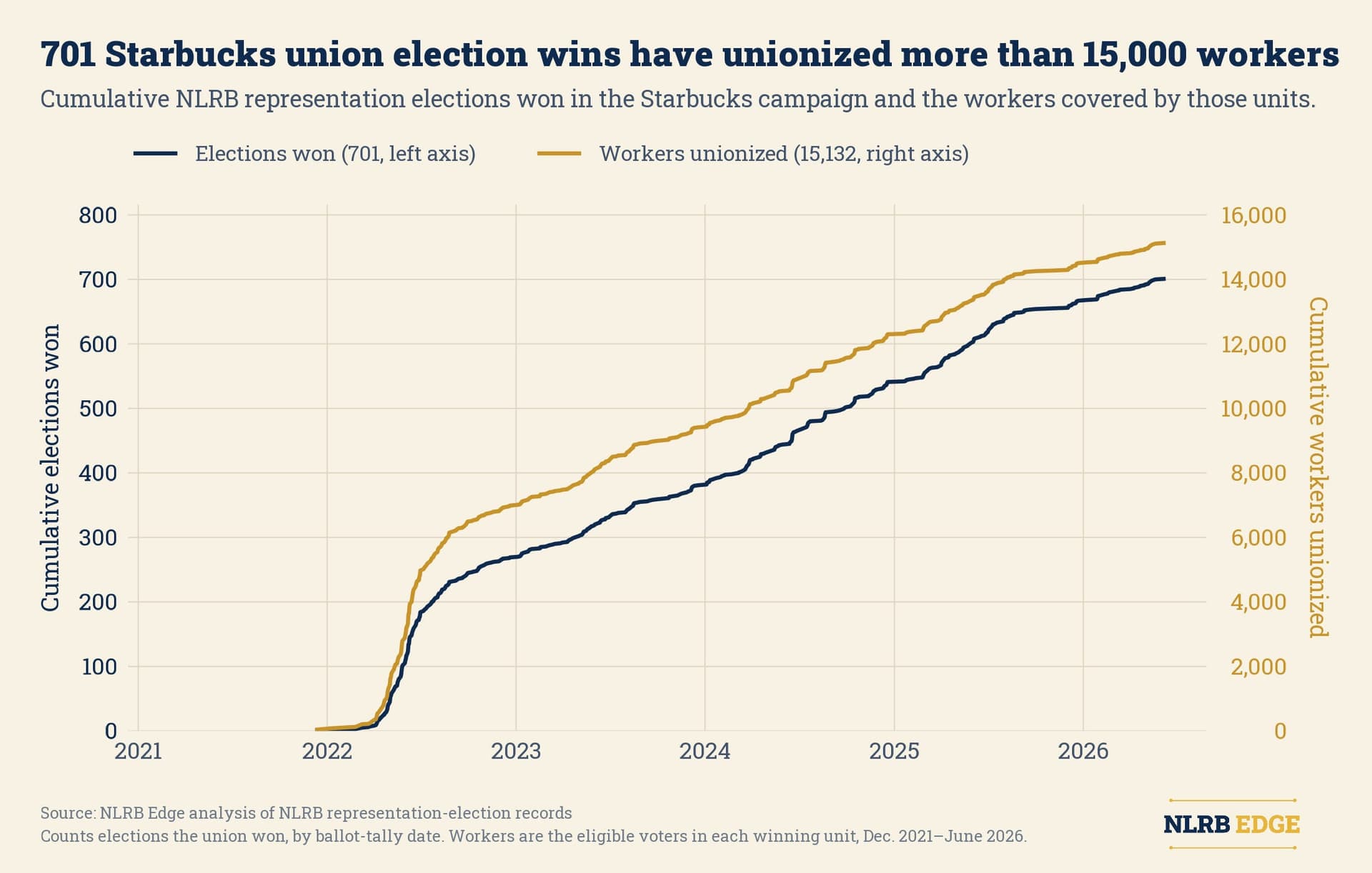
That people-first language lands differently against the company’s labor record. Starbucks Workers United began organizing stores in Buffalo, New York, in 2021, and Reuters reported that Starbucks and the union started bargaining in February 2024 after years of conflict. By December 2024, workers at more than 300 stores had walked out over pay, staffing and scheduling issues, a reminder that the company’s values can be read very differently from the crew side of the counter.
Reuters also reported that in January 2025 Starbucks and the union agreed to bring in a mediator to help stalled contract negotiations. Labor advocates have argued that this tension exposes the gap between the company’s talk of connection and the realities of understaffing and pressure on the floor. That is why the mission-and-values page is more than a statement of ideals: it is part of the language Starbucks uses to define the job, justify expectations and shape the culture workers are asked to join.
For baristas, shift supervisors and store managers, the code is straightforward. Starbucks is telling you that hospitality, belonging, personal connection and shared ownership are not extras. They are the job description, the management lens and the story the company will keep using as it negotiates what store work should look like next.
This article was produced by Prism’s automated news system from verified source data, official records, and press releases, then run through automated quality and moderation checks before publishing. The system is built and supervised by the people who set the standards it runs under. Read our full AI policy.
Did this article answer your question?