Starbucks workers can request union reps in discipline meetings
Unionized Starbucks workers can stop an investigatory meeting and ask for a rep before answering questions that could trigger discipline.
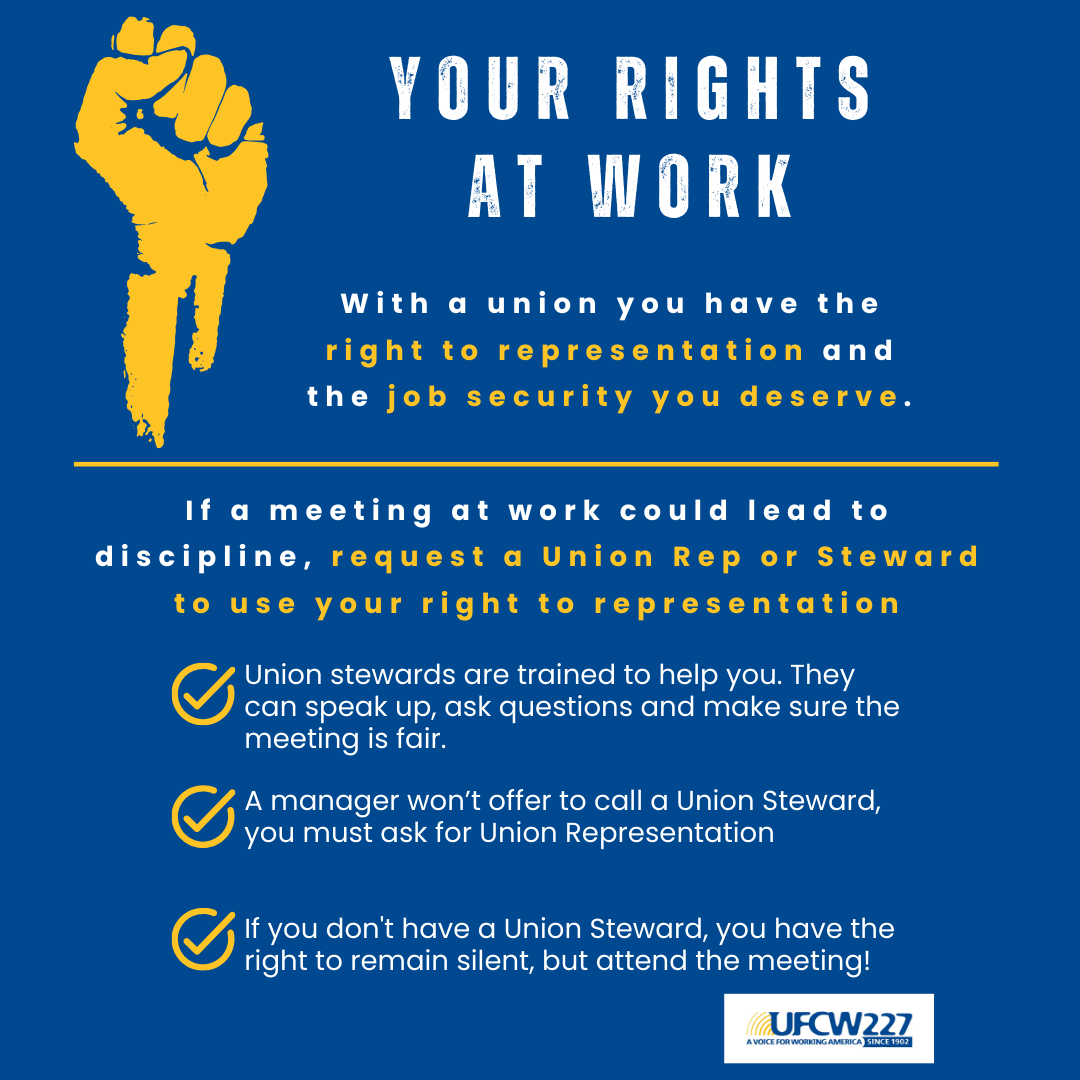
If management pulls you into a back-room meeting at Starbucks and the questions start sounding like they could lead to a write-up, suspension, or firing, you do not have to guess your way through it alone. Under Weingarten rights, union-represented workers can ask for a representative before answering, and that protection can make the difference between a routine check-in and a meeting that shapes your job.
When Weingarten rights turn on
The key question is not whether the meeting feels tense. It is whether management is questioning you as part of an investigation into performance or work conduct, and whether you reasonably believe the outcome could be discipline, demotion, discharge, or another adverse consequence. The National Labor Relations Board says that is an investigatory interview, and that is the point at which the right applies.
That distinction matters in a Starbucks store because not every conversation is covered. A casual coach-on-the-floor moment, a routine shift check-in, or a quick status conversation is not the same thing as a meeting where a manager is trying to pin down what happened after a customer complaint, an attendance problem, or a policy issue. If the conversation starts to feel like evidence-gathering, treat it as an investigatory interview and slow it down.
Current NLRB guidance says only union-represented employees have Weingarten rights under current Board law. The agency’s General Counsel is also asking the board to restore the broader rule that would extend the right to all workers, union or nonunion. For Starbucks partners in union stores, that means the protection is real right now, but it still has to be invoked clearly.
Say the request out loud
The safest move is to make the request plain and direct. Say that you want a union representative present before you answer any questions. Do not hedge, joke, or bury the request inside a long explanation, because the NLRB says the request must be clear.
That clarity matters because employers do not have to warn union members about Weingarten rights before an interview starts. The board compares the protection to Miranda rights in one important way: it is a request-and-response safeguard, not an automatic warning. If you do not ask, the company may keep going.
If a supervisor keeps pressing, repeat the request and stop answering substantive questions. The right is tied to the interview itself, not to every conversation you have with a manager, so the safest script is simple: you want a representative, and you will wait. In a Starbucks setting, that can keep a heated moment from turning into an accidental admission or a rushed answer you did not mean to give.
What to do while you wait for the rep
Once you ask for representation, the goal is to stop talking about the facts of the investigation until the rep arrives. You can confirm that you are requesting union representation, ask whether the meeting is investigatory, and then pause. You do not have to fill silence, speculate, or try to explain yourself into a better outcome.
A practical way to handle the moment is this:
- State that you want union representation before answering questions.
- Ask whether the meeting is investigatory if that is unclear.
- Do not keep talking about the incident, the customer complaint, or the policy issue.
- Wait for the rep to arrive before discussing the substance of the interview.
That is especially useful in food service, where discipline can move fast and the difference between a coaching conversation and a formal investigation is not always obvious at first. Starbucks workers know how quickly a floor issue can become a written warning, and the right to stop and ask for backup gives you a little breathing room before the company locks in its version of events.
A union representative has a role, but it is not to derail a legitimate investigation. The NLRB says the representative must remain civil and cannot interfere with the process. Think of the rep as a witness and a guardrail, someone who can help keep the meeting fair without turning it into a shouting match.
Why Starbucks workers should know this now
This protection lands differently at Starbucks because discipline, attendance, customer complaints, and policy enforcement are everyday flashpoints. A worker may not know at the start of a meeting whether management is really just checking on a shift issue or building a record that could lead to something more serious. That uncertainty is exactly why a clear Weingarten request matters.
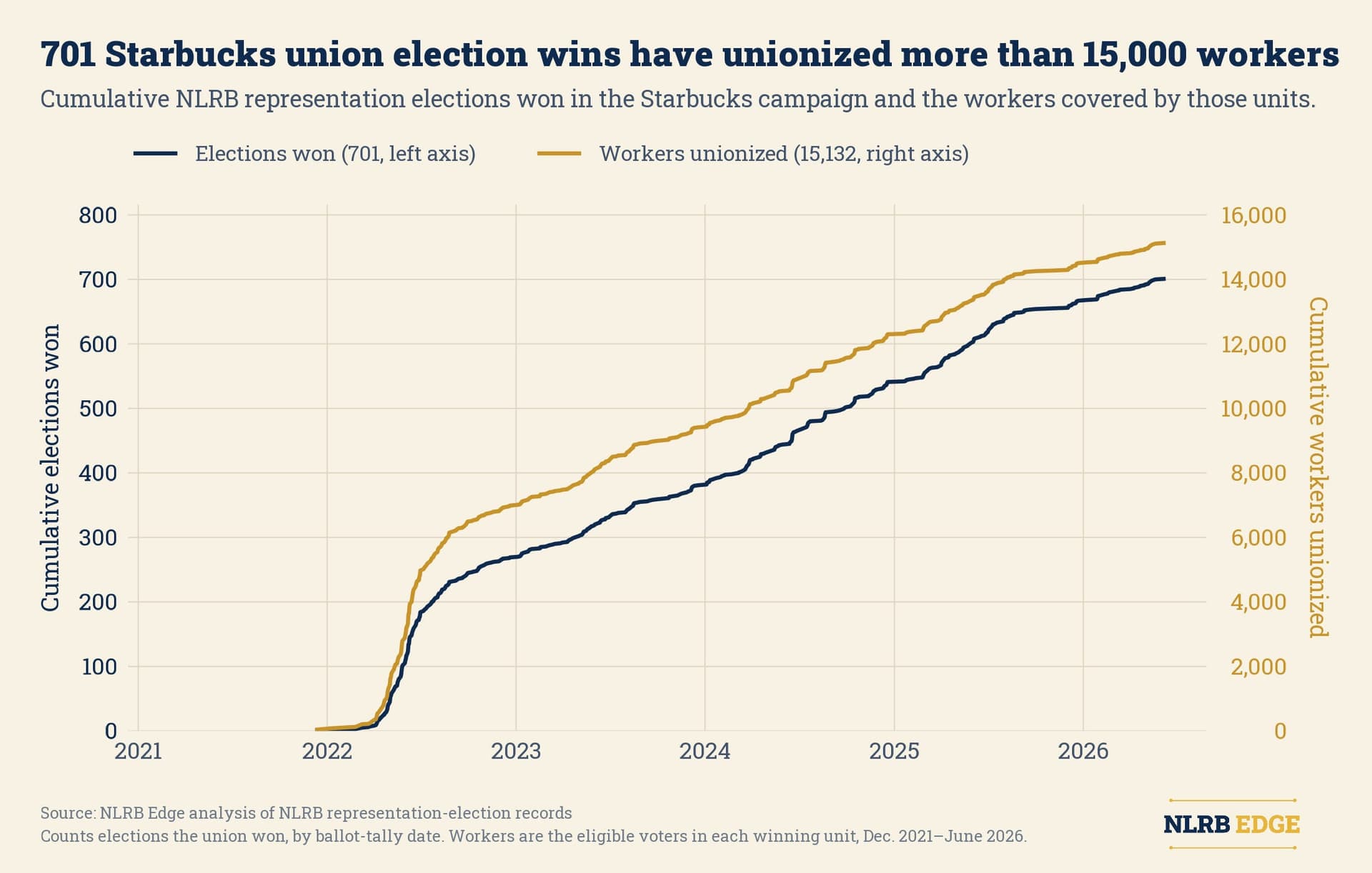
The broader labor climate at Starbucks makes the right even more practical. Starbucks Workers United says it has organized more than 12,000 baristas and won elections at nearly 700 locations, and a June 2026 update says the union has won 699 elections covering 15,122 employees and lost 135 elections covering 2,935 employees. The union also says the company still has not finalized a fair contract, which keeps bargaining pressure high in stores where workers are already balancing understaffing, scheduling strain, and fast-moving discipline.
The labor fight has also stayed active beyond bargaining talks. Starbucks Workers United says more than one thousand union baristas launched the open-ended Red Cup Rebellion unfair labor practice strike on Nov. 13, 2025, and that the action expanded in December 2025. A Starbucks union elections database shows new election cases continuing into June 2026, which is a sign that organizing and conflict are still very much alive inside the company.
What happens if the company crosses the line
If management ignores a valid request and pushes ahead with an investigatory interview, the NLRB says that can be an unfair labor practice. The board says a union-represented employee may not be disciplined or discharged for refusing, without a representative, to submit to an interview the employee reasonably believes may result in discipline.
The remedies can be meaningful. The NLRB says violations can lead to cease-and-desist orders, a repeat interview with a union representative present, or rescission of discipline tied to the violation. In other words, the process can be unwound when the right was denied.
That legal framework traces back to NLRB v. J. Weingarten, Inc., the Supreme Court’s 6-3 decision on Feb. 19, 1975. The case has lasted because the workplace problem it addresses has not gone away: when a manager is asking questions that could shape your record, you need a clean way to pause, call for help, and avoid talking yourself into trouble.
For Starbucks workers, that is the point of the right. It is not about picking a fight with management. It is about knowing the exact moment to stop the interview, ask for a rep, and make sure a stressful discipline meeting does not become a one-sided process.
This article was produced by Prism’s automated news system from verified source data, official records, and press releases, then run through automated quality and moderation checks before publishing. The system is built and supervised by the people who set the standards it runs under. Read our full AI policy.
Did this article answer your question?