U.S. jobless claims dip, signaling tighter hiring conditions for Starbucks
Fewer new jobless claims may sound like a macro blip, but for Starbucks it means tighter hiring, steadier worker leverage and more pressure on schedules.

Fewer Americans filed new jobless claims last week, and that matters on Starbucks floors where hiring, hours and turnover are already tightly linked. The U.S. Department of Labor said initial claims fell to 226,000 for the week ending June 13, down 4,000 from the prior week, a sign that hourly workers still have options when they look for the next shift or the next store.
The claims figure does not point to a labor market collapsing under layoffs. But it does point to a market where dependable workers are still scarce enough to matter, especially in food service. The department also revised the prior week’s claims up to 230,000, and continuing claims rose to 1.81 million for the week ending June 6. That combination suggests unemployed workers are taking longer to land another job, even as broad layoffs remain relatively low, a mix that can make staffing feel uneven from store to store.
For Starbucks, that tension runs straight through the basics of the job: who shows up, who stays, and how much control partners have over hours. The company said in its fiscal 2025 results that it invested in staffing and hours, expanded rosters, adjusted operating hours and launched Smart Queue. Starbucks also said partner turnover was at a record low, a sign that the company sees retention as central to keeping cafés running on time.
Starbucks has also tried to show employees that it is responding to schedule concerns. In a May 28, 2024 statement, the company said schedules were set three weeks in advance and that store leaders could allocate hours based on store needs and partner preferences. In 2026, Starbucks said it had invested more than $500 million in partners under its Back to Starbucks plan, and later said those investments improved staffing and scheduling, leadership stability and service standards.
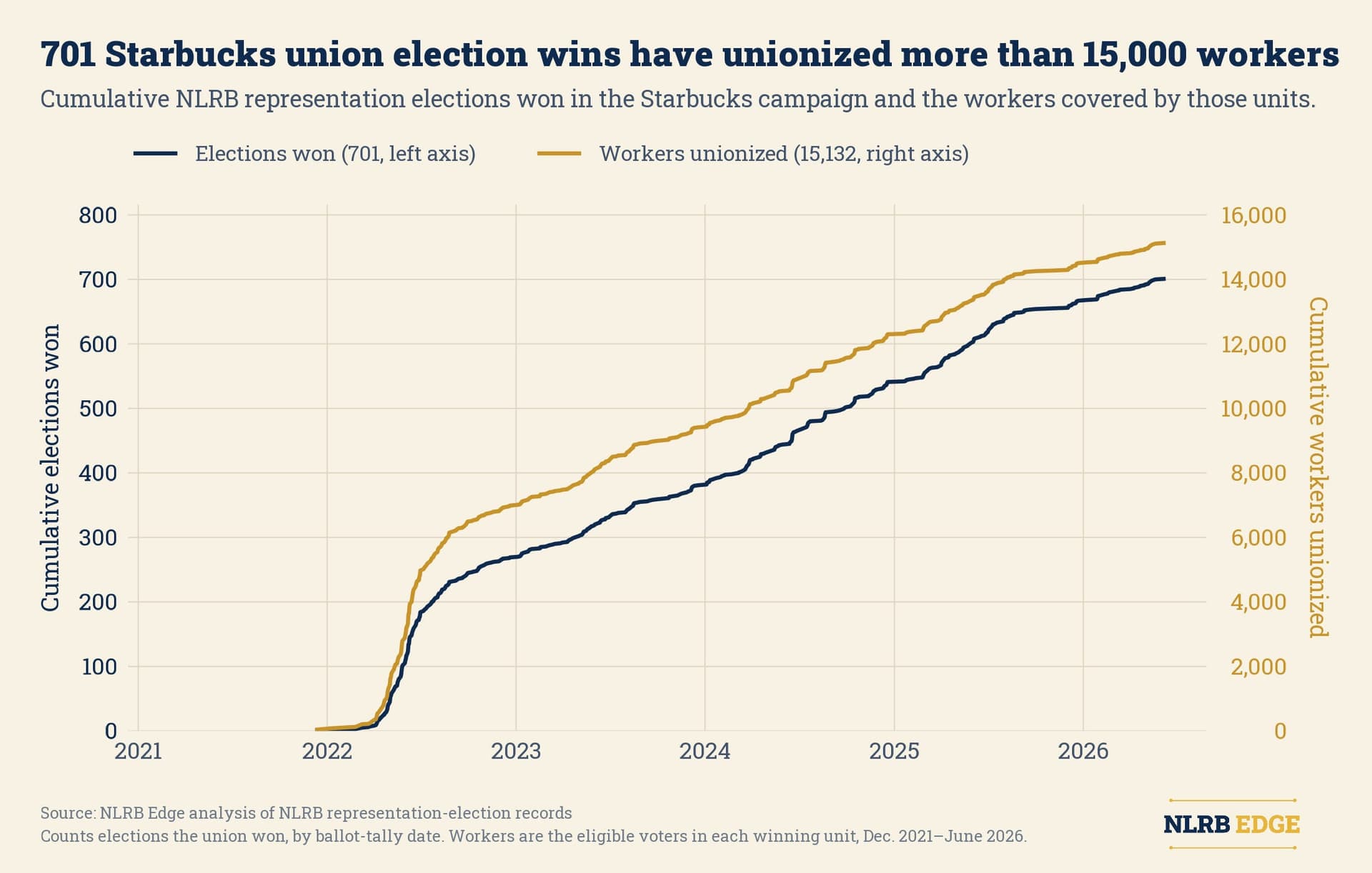
The labor backdrop still gives Starbucks Workers United room to press its case. CNBC reported in March 2026 that the union’s contract proposal called for at least three workers on the floor at all times, open-hours preferences for existing employees before hiring new baristas and a $17 starting wage floor. A June 2026 report said the union had grown to more than 700 stores and more than 12,000 workers, underscoring how widely these staffing fights are playing out. For Starbucks employees, the message is simple: a job market this tight can make every schedule change, hour cut and retention problem harder for the company to ignore.
This article was produced by Prism’s automated news system from verified source data, official records, and press releases, then run through automated quality and moderation checks before publishing. The system is built and supervised by the people who set the standards it runs under. Read our full AI policy.
Did this article answer your question?