Chicago keeps phased tip-wage hike after council fails veto override
Chicago kept its phased tipped-wage hike in place after Mayor Brandon Johnson’s veto survived, leaving workers on track for higher base pay and operators on the hook for the cost.
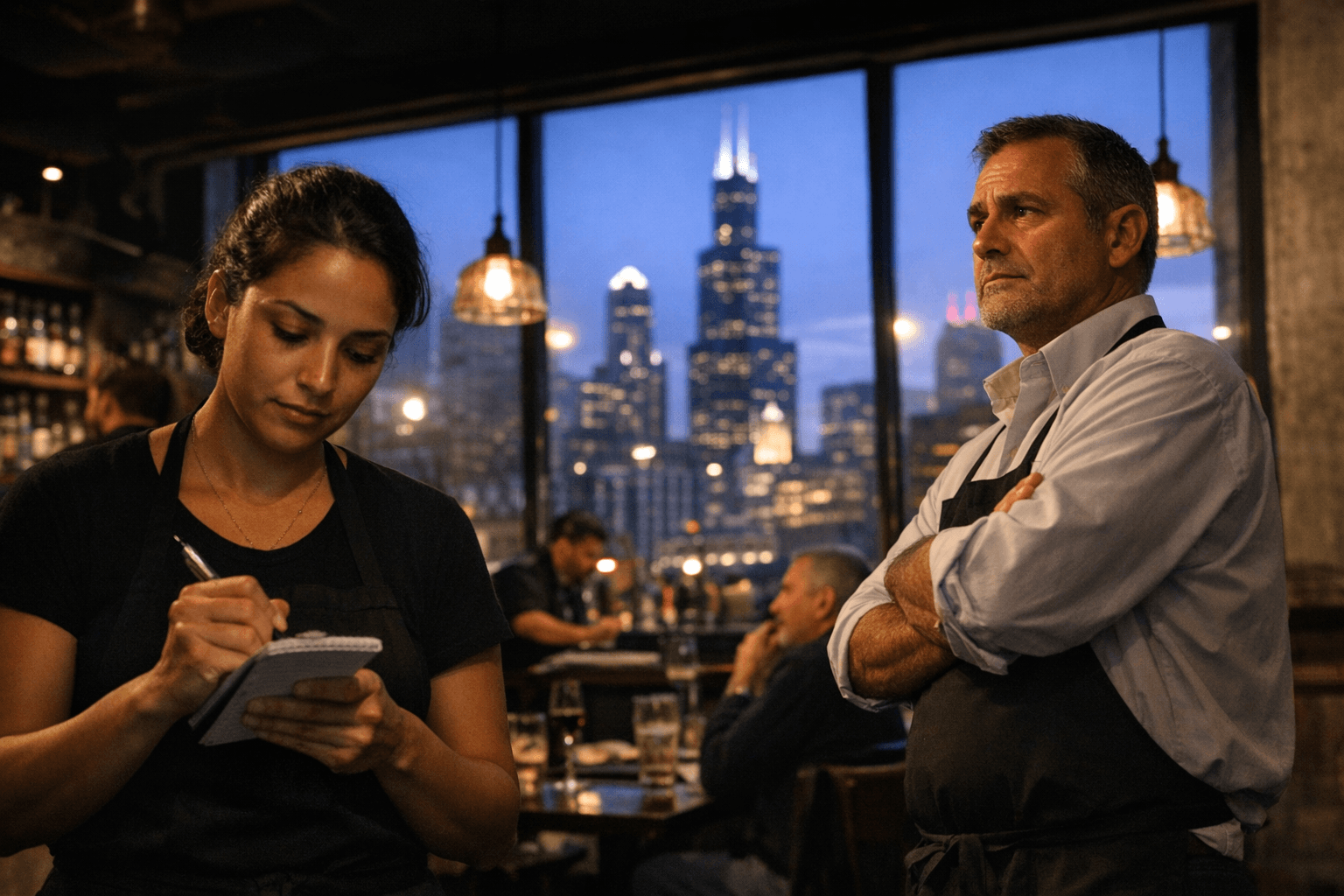
Chicago’s tipped workers will keep moving toward full parity with the city’s minimum wage after the City Council failed to override Mayor Brandon Johnson’s veto of a measure that would have frozen the phaseout. The failed override left the city’s current schedule intact, preserving a labor fight that now reaches directly into restaurant payrolls, staffing plans and menu pricing.
The council’s April 15 vote fell short of the 34 votes needed, after members had already backed a freeze on March 18 by a 30-18 margin. Johnson vetoed that move on March 25, calling it a reversal of one of his signature labor wins. The freeze was pushed by the Illinois Restaurant Association, which argued that the higher base pay has strained thin margins, forced some operators to trim staffing and slowed expansion.
At the center of the dispute is the 2023 One Fair Wage ordinance, which the council approved 36-10 on Oct. 6, 2023. The law set Chicago on a five-year path to end its tipped subminimum wage, starting July 1, 2024, with annual increases intended to bring tipped workers to the city’s standard minimum wage by July 1, 2028. Chicago’s Office of Labor Standards says the tipped wage credit began at 40% of the full minimum wage before the phaseout, then dropped to 32% on July 1, 2024.
The city’s regular minimum wage for employers with four or more workers was $16.60 an hour as of July 1, 2025. Under the current schedule, tipped workers were being paid $12.62 an hour before lawmakers tried to stop the increases. Labor supporters, including One Fair Wage and allied groups, have pressed to eliminate the tipped subminimum wage entirely, arguing that the system leaves restaurant workers dependent on unpredictable tips to make up the gap.
For Taco Bell workers, the direct effect is limited because most Taco Bell restaurants are not traditional tipped-service operations. But the politics still matter. Taco Bell’s careers site says franchisees and licensees are independent business owners and employers responsible for their own employment practices, which means local wage rules can land differently store by store. Taco Bell is part of Yum! Brands, whose portfolio also includes KFC, Pizza Hut and The Habit Burger Grill, and operators across that system still have to watch how cities like Chicago set labor standards.
The bigger lesson is that restaurant pay policy is still being set city by city. A decision in Chicago can become a reference point for other urban markets, especially where delivery, kiosk and hybrid service models blur the line between tipped and non-tipped work. For franchise managers, that means the details of local wage law are not abstract politics. They can change labor costs, scheduling assumptions and how fast a store can staff up or expand.
Know something we missed? Have a correction or additional information?
Submit a Tip