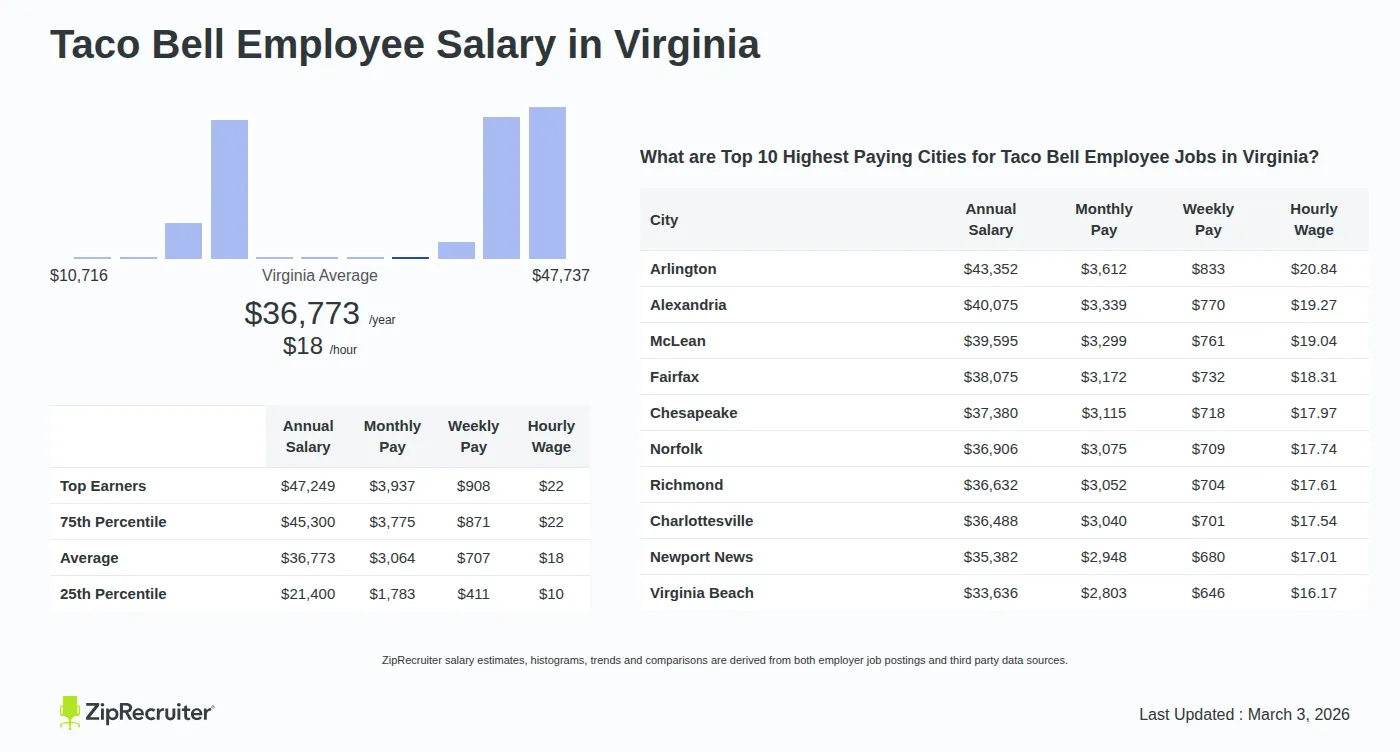
Kiosk Boom in 2026 Could Reshape Staffing and Roles for Taco Bell Crews
Industry analysts named 2026 the kiosk tipping point, citing 15-30% ticket lifts pushing operators to redeploy crews from the counter to the kitchen line.
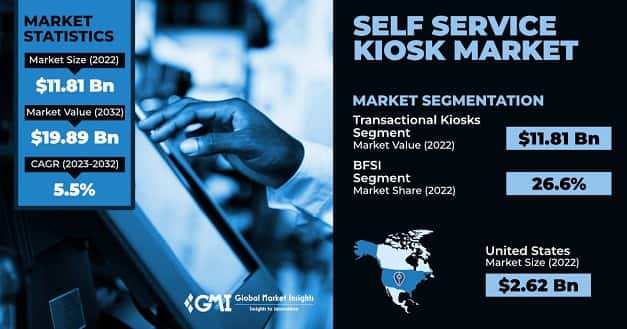
Industry analysts closed April's first week with a declaration that had been building for months: 2026 is the year self-order kiosks cross from pilot technology to standard quick-service infrastructure, driven by a 15 to 30 percent ticket lift that makes the investment case nearly automatic for high-volume operators. For Taco Bell, which already developed its kiosk platform in partnership with Deloitte Digital and has been running kiosk pilots in select markets, that declaration is less a warning than a timeline.
Multiple QSR industry outlets published convergent analysis in early April identifying the same inflection drivers: consumer preference for contactless digital ordering, wage cost pressure from minimum wage increases, and a compounding upsell effect when visual merchandising and automated prompts replace a crew member at the counter. The global kiosk market, worth an estimated $36 billion in 2025, is projected to exceed $64 billion by 2030. Operators across the sector reported average check increases of 20 to 30 percent on kiosk orders compared with counter transactions, with ticket lift showing up across demographic groups that previously resisted self-service.
The critical management question those numbers obscure is the difference between substitution and augmentation. Kiosks reduce the time staff spend taking counter orders during peak waves, but higher average tickets produce more complex orders that require longer kitchen assembly time. A redeployed crew member is not a headcount cut in most high-volume scenarios; that person moves to drive-thru support, food production, or pickup cubby management, where throughput demand actually rises when the average check climbs. At lower-volume locations the calculus shifts sharply. If kiosk conversion outpaces sales growth, counter order-taking hours can shrink without a redeployment slot to absorb them.
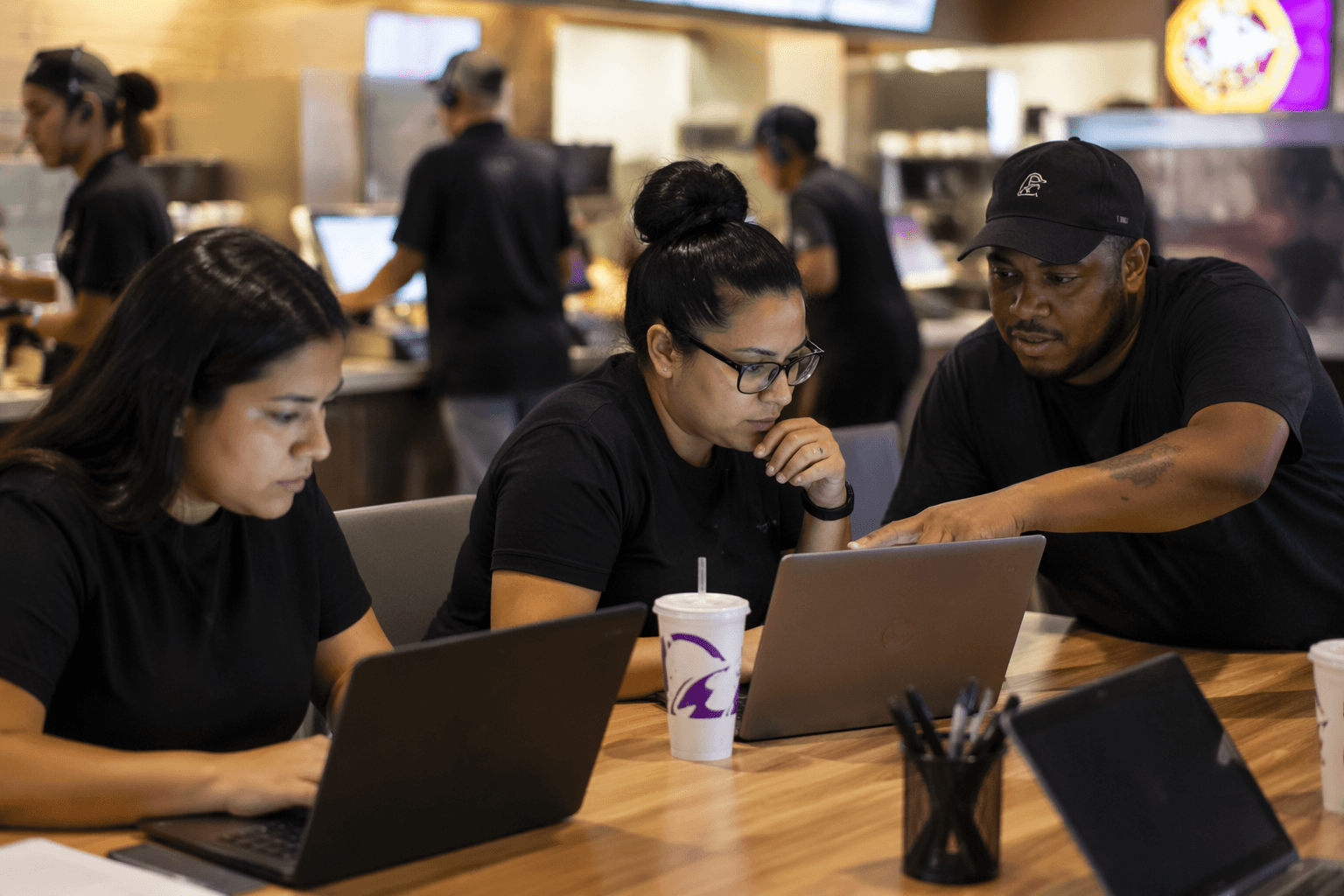
Managers should treat cross-training as an immediate operational priority. At minimum, two crew members per shift need competency in kiosk troubleshooting and line-busting, the practice of moving completed orders to customers fast enough that kitchen speed gains translate into actual service times rather than pickup bottlenecks. Kiosk failure modes, including software outages, payment declines, and customization errors that produce wrong orders, require faster crew intervention than a staffed counter would. Each incident left unmanaged during a peak period becomes a guest escalation and an entry in the manager's incident log.
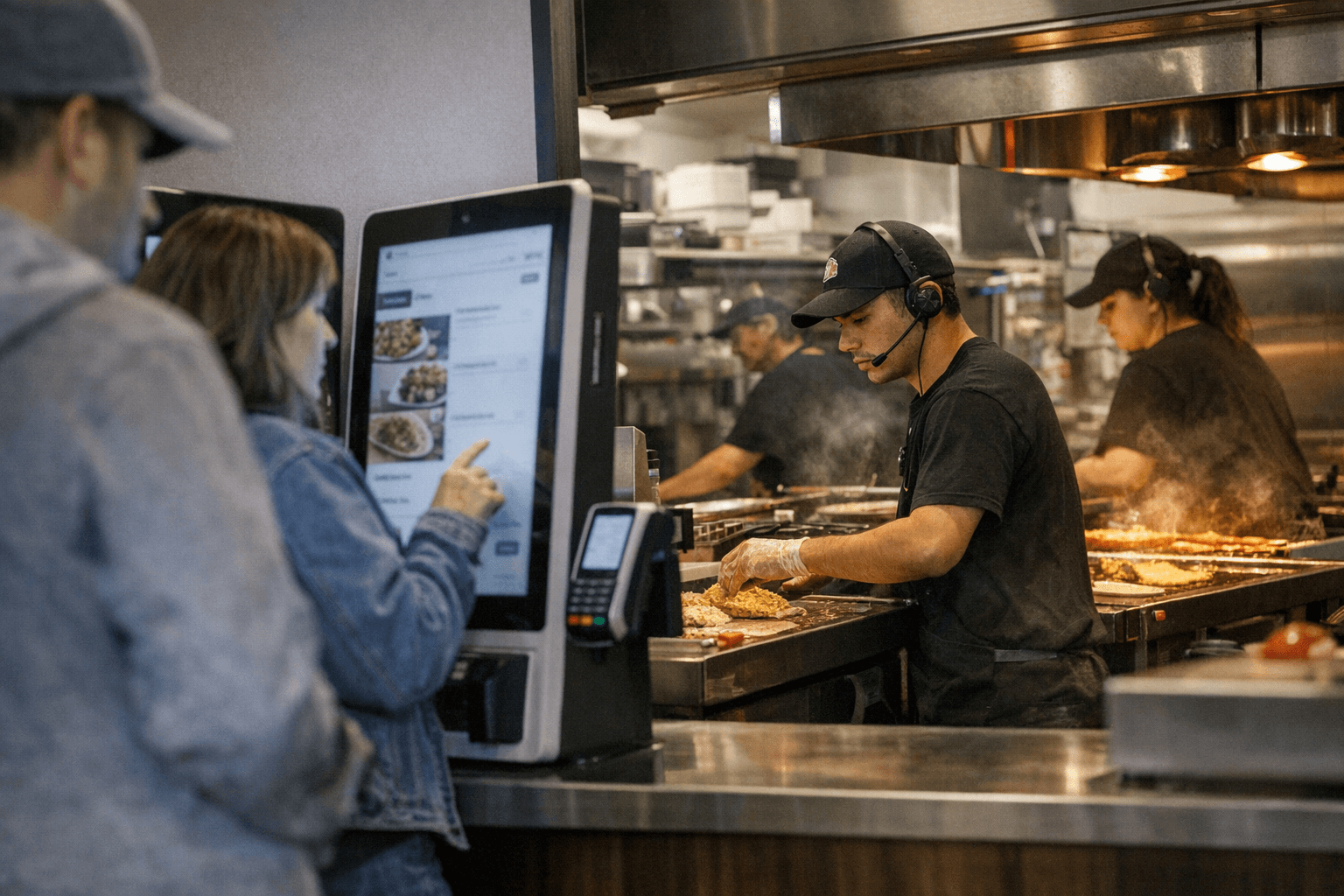
Scheduling will also require recalibration. Taco Bell's Byte platform includes labor forecasting modules, and those tools carry more weight as kiosks decouple counter headcount from kitchen production demand. A store running three kiosks through a Friday lunch rush needs a different labor distribution than the same store running one, and the math shifts again mid-service if a unit goes down.
Tip mechanics represent a compliance exposure that franchise operators cannot defer. Where digital tipping is active on kiosk orders, the prompts change how gratuity is captured, pooled, and reported. Restaurant managers should confirm with their payroll teams how local wage laws interact with kiosk-generated tip data before a pay period closes, not after a crew member flags a discrepancy.
The trajectory analysts described this week does not predict mass displacement. It predicts role redefinition at scale. Taco Bell crews who enter the expansion period already cross-trained and redeployable will be positioned to absorb that shift without losing hours. Managers who build solid kiosk monitoring protocols now will spend less time on guest recovery and more on the throughput metrics that increasingly define performance at the store level.
This article was produced by Prism’s automated news system from verified source data, official records, and press releases, then run through automated quality and moderation checks before publishing. The system is built and supervised by the people who set the standards it runs under. Read our full AI policy.
Did this article answer your question?