Taco Bell Workers Can Report Wage Violations Confidentially Through Federal Labor Agency
The DOL found wage violations in nearly 85% of restaurant investigations; here's how Taco Bell workers report confidentially and what managers must fix in 24 hours.
The federal government's track record in fast food is unambiguous: the U.S. Department of Labor's Wage and Hour Division found Fair Labor Standards Act violations in nearly 85 percent of its restaurant investigations in fiscal year 2021, recovering more than $34.7 million in back wages for over 29,000 workers and assessing employers $3.2 million in civil penalties. For Taco Bell crew members and franchise operators, those numbers define the enforcement environment they are already working inside.
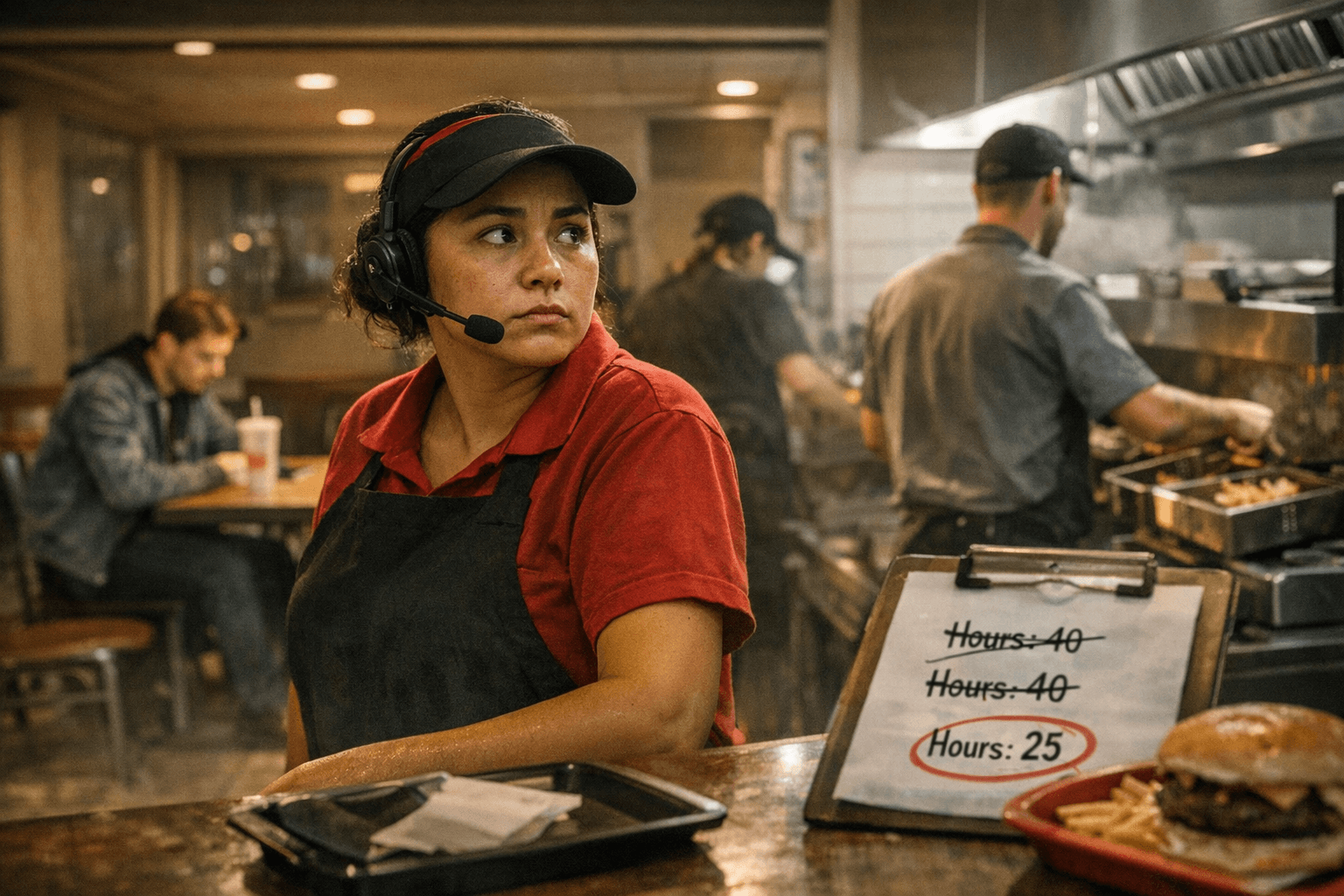
The violations that generate DOL complaints in quick-service restaurants follow recognizable patterns. Off-the-clock pre-shift and post-shift work, automatic time deductions for meal breaks that workers never actually took, mandatory training time that goes unpaid, and the misclassification of salaried assistant managers as overtime-exempt account for the bulk of cases. Taco Bell franchise operators have faced exposure on exactly these grounds. Class action lawsuits against Charter Foods, which operates a large portfolio of Yum! Brands restaurants including Taco Bell locations across Tennessee and Pennsylvania, allege that team members and shift leads were compelled to perform unpaid work before and after their scheduled shifts to meet production quotas, while assistant general managers were wrongfully classified as exempt from FLSA overtime requirements. In New York City, a March 2024 class action filed against MHF Ralph LLC, a Taco Bell franchisee, alleged that hourly employees missed spread-of-hours pay, received no compensation for clopening shifts, collected no extra pay when schedules changed at the last minute, and were required to maintain uniforms without the legally mandated uniform maintenance pay. A separate class action filed in June 2025 named more than a dozen affiliated MHF management entities operating Taco Bell franchises across New York for similar Fair Workweek Law violations.
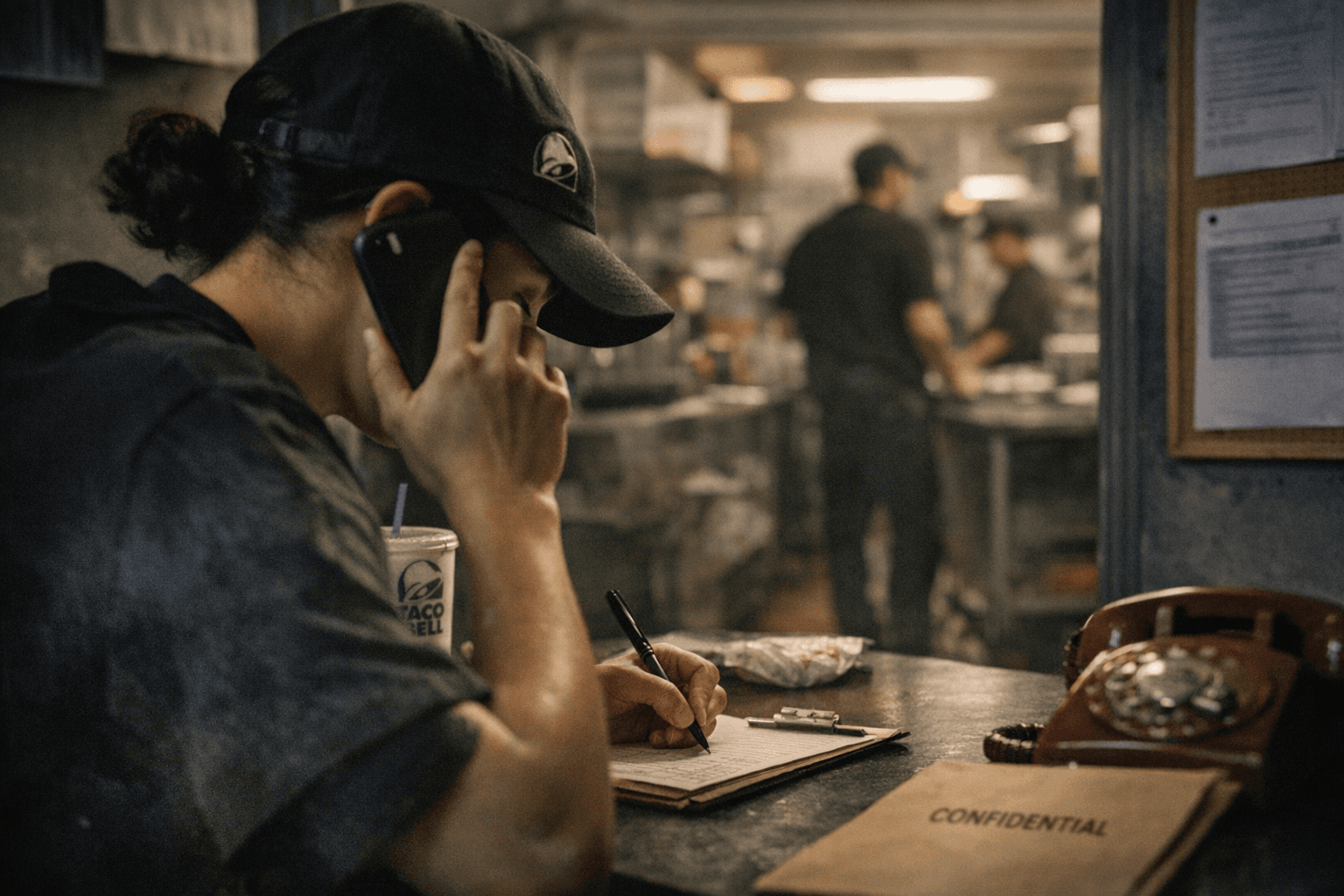
For crew members who suspect a violation, the Wage and Hour Division's complaint process is built to protect the person filing. Calling 1-866-487-9243 connects to WHD directly; the agency also accepts complaints online, by mail, and in person. All services are free and confidential, regardless of immigration status, and the division can investigate without ever disclosing the complainant's identity to the employer. Once a complaint is routed to the nearest field office, WHD makes contact within two business days to determine whether a full investigation is warranted. When investigators open a case, they hold an initial conference with the employer, interview employees privately, and review time and payroll records independently. The FLSA authorizes recovery of unpaid back wages plus an equal amount in liquidated damages, meaning a successful claim can effectively double what a worker recovers. Statute of limitations rules are critical: a two-year window applies to most FLSA violations, extended to three years when a violation is willful. Delaying a complaint shrinks the window of wages that can legally be reclaimed.
Documentation is the most important thing to preserve before calling. Pay stubs, printed or photographed schedules, time card records, and any text messages or written communications about hours or pay all become relevant during an investigation. If a payroll system makes automatic deductions for breaks regardless of whether a break actually occurred, that gap between the deduction and actual time worked is precisely what WHD investigators look for. Workers who may already be owed back wages from a prior DOL investigation can confirm their status through the Workers Owed Wages portal at webapps.dol.gov/wow; as of October 2025, the division moved all back-wage disbursements to electronic payment only, so payment details must be kept current.
Raising a concern through a franchise's internal HR escalation path can resolve payroll errors quickly, particularly for straightforward clock-in discrepancies. The statute of limitations, however, continues to run during any internal process, and extended waiting reduces recoverable wages. If a complaint involves threats, intimidation, or physical coercion, contacting local law enforcement takes priority alongside any DOL filing.
For managers and franchise operators, a wage complaint received today requires a specific sequence of actions within 24 hours. First, preserve all relevant time and payroll records without alteration; any destruction or modification of records after a complaint is filed substantially increases legal and regulatory exposure on its own. Second, pull the pay periods in question and run an independent audit against clock records to determine whether a payroll error actually occurred. If one did, the fastest path to reduced risk is to correct it, issue supplemental pay, and document both the error and the correction in writing before a WHD investigator makes contact. Third, notify franchise HR and legal counsel immediately rather than handling the matter at the store level; DOL investigations frequently expand beyond the original complaint when investigators identify systemic issues in time records. Fourth, audit assistant manager duties and pay classifications, specifically for salaried employees whose actual daily functions involve significant non-exempt work, since the Charter Foods litigation illustrates exactly how that classification gap becomes federal liability. Fifth, and without exception: any retaliation against the employee who raised the concern, including reduced hours, unfavorable schedule changes, or termination, is independently unlawful under the FLSA and converts a wage dispute into a substantially more serious enforcement matter.
The DOL's food service workers initiative was renewed as a multi-year federal priority precisely because the violation rate in this industry is so high. Franchise operators who conduct voluntary internal payroll audits now, before an investigator calls, build a documented record of good-faith compliance. Those who wait have already seen what the numbers look like: in the restaurant industry, investigators find something nearly nine times out of ten.
Know something we missed? Have a correction or additional information?
Submit a Tip