New Jersey contractor rules could reshape Taco Bell franchise labor strategies
New Jersey’s new contractor rules take effect October 1 and could push Taco Bell franchisees to rely less on outside labor for maintenance, deliveries and rush coverage.
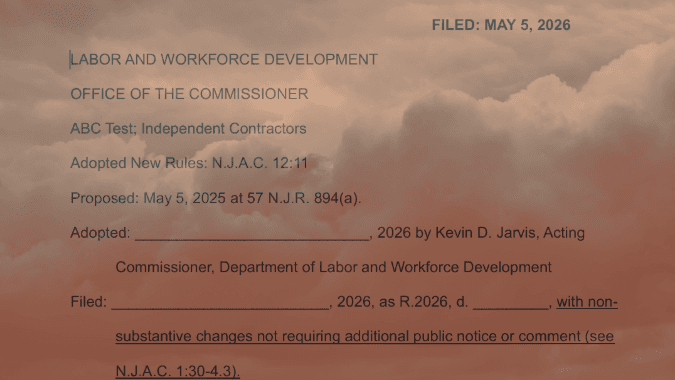
The workers most exposed are the outside hands that keep a shift moving: maintenance crews, construction teams, marketing vendors, dispatch services and app-based labor used to plug last-minute holes. New Jersey’s Department of Labor and Workforce Development finalized rules on May 5 that lock in the state’s ABC test for worker classification, and they take effect October 1 after a 120-day stay.
For Taco Bell managers, the checklist is blunt. Document who controls the work. Track whether the task is part of the restaurant’s normal business. Verify that any contractor is running an independently established trade. Under New Jersey’s framework, an employer generally has to prove all three parts to treat a worker as an independent contractor, and the state says misclassification is illegal even if it was unintentional.
That matters at a chain with 111 New Jersey locations, where franchise operators often depend on a mix of vendors, staffing agencies and digital labor tools to keep stores open during rushes, equipment breakdowns and short staffing. If workers doing core restaurant work are later classified as employees, the costs can ripple into minimum wage obligations, overtime, workers’ compensation coverage, payroll taxes and recordkeeping. The practical effect on shift can be simple and immediate: more tasks move in-house, more supervisors need to be on site, and more of the labor bill becomes fixed instead of flexible.
The department said it extended the public comment period from 60 days to 90 days, received thousands of comments and removed specific examples from the final rules after feedback from the business community. It also said the rules synthesize decades of New Jersey case law, including the state Supreme Court’s unanimous 2022 East Bay Drywall decision and the 1991 Carpet Remnant Warehouse case. In East Bay Drywall, the court upheld employee classification for a drywall installer that used workers per job, underscoring how hard it can be to meet the third prong of the ABC test.
Business groups immediately pushed back. Michele Siekerka of the New Jersey Business & Industry Association said more than 9,500 letters opposed the proposal last year and warned that the final rule still makes it harder to be an independent contractor in New Jersey. That reaction is a clue for franchisees: the October 1 deadline is not just a legal date on a calendar, but a cue to review vendor contracts, tighten scheduling records and decide which jobs belong to staff instead of outside labor.
This article was produced by Prism’s automated news system from verified source data, official records, and press releases, then run through automated quality and moderation checks before publishing. The system is built and supervised by the people who set the standards it runs under. Read our full AI policy.
Did this article answer your question?