Oregon predictive scheduling rules could change Taco Bell shift planning
A covered Taco Bell in Oregon must post schedules 14 days ahead, and last-minute changes can trigger extra pay for crews.
At a covered Taco Bell in Oregon, the schedule is not just a planning tool: it can be a legal document with payroll consequences. That matters on the grill, at the window, and for anyone trying to juggle school, a second job, or a bus ride home after a late close.
What predictive scheduling changes on the floor
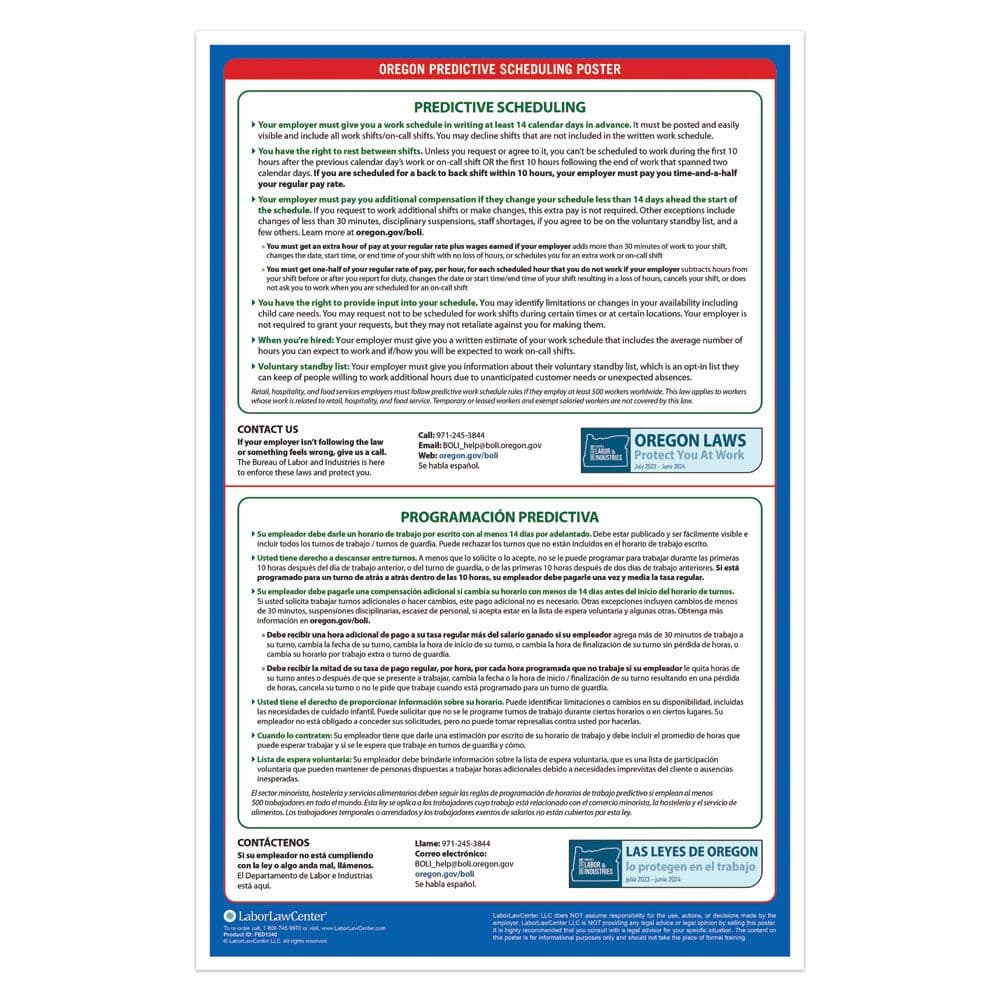
Oregon’s predictive scheduling rules turn shift planning into something much more formal than a group text or a clipboard by the clock-in station. Under the state’s worker guide, covered employers in retail, hospitality, and food services with at least 500 employees worldwide must give work schedules in writing at least 14 calendar days in advance and post them visibly. The schedule has to include all work shifts and on-call shifts, which means managers cannot treat those details as afterthoughts.
For crew members, the practical change is simple: notice is not just a courtesy if the store falls under the law. For shift managers, it is a reminder that a schedule is a record, not a rough draft. If a manager changes a shift informally but never documents it, the store can create payroll and compliance problems later.
When a Taco Bell location is covered
The law does not apply to Taco Bell just because the brand is familiar. Coverage depends on employer size and industry, and Oregon says the rules apply to large employers in retail, hospitality, and food services. That means the first question is not whether the store serves tacos and burritos. It is whether the employer meets the 500-employee threshold and fits the covered industry categories.
That coverage test gets more complicated in franchise systems. Separate corporate entities can sometimes be treated as an integrated enterprise when counting workers, which means the legal picture can depend on how the business is structured across locations and brands. Oregon guidance also says temporary or leased workers and exempt salaried workers are not covered in the same way as hourly employees, another detail that can matter when managers are building a staffing plan.
For Taco Bell workers, that distinction is important because it means one store’s labor practices may reflect a wider corporate footprint, not just the habits of a local general manager. For restaurant managers, it means the headcount and ownership structure are not bookkeeping trivia. They can determine whether the law reaches the store at all.
Why the 14-day notice matters
Oregon was the first state to enact a statewide predictive scheduling law, through Senate Bill 828. The measure was signed in 2017 and became effective July 1, 2018. The original advance-notice period was seven days, but Oregon later increased the written schedule requirement to 14 calendar days beginning July 1, 2020.
That shift tells crews something important: the state decided seven days was not enough time for workers to build a life around their shifts. A two-week lead time gives employees more room to arrange child care, school, transportation, and other jobs. It also gives managers more pressure to forecast demand earlier and hold the line on last-minute rewrites.
In restaurant work, the schedule often determines whether a paycheck is workable or barely usable. A Friday-night closing shift dropped at the last minute can force a worker to scramble for rides, swap child care, or lose hours they counted on. Oregon’s rule is designed to make that kind of disruption more expensive for employers and less arbitrary for workers.
When extra pay is triggered
Predictive scheduling is not only about timing. It is also about cost. Oregon law says covered employers must provide additional compensation when they make qualifying schedule changes without enough advance notice. In some cases, that extra compensation is one hour of pay at the employee’s regular rate.
- Adding more than 30 minutes to a shift
- Changing a shift’s date or start or end time with no loss of hours
- Adding an extra shift or on-call shift
The state’s rules identify several common triggers:
That means a manager cannot quietly slide a worker from a 4 p.m. to 5 p.m. start, tack on a late close, or add a new shift and assume nothing changes except the whiteboard. If the adjustment falls within the rule and the notice is short, the store may owe extra pay.
There are exceptions, too. Oregon allows some changes tied to staffing shortages, employee-requested changes, and minor changes under 30 minutes. So the law does not ban flexibility outright. It does, however, put a price on avoidable scrambling.
A Taco Bell week before and after the rule
Here is what the difference looks like in practice.
Before predictive scheduling, a crew member might get a text on Tuesday night saying Thursday’s 4 p.m. to 10 p.m. shift has become a 6 p.m. to 11 p.m. close, or that a Saturday lunch shift was added because someone called out. The worker may have already arranged transportation or child care based on the earlier plan. The change is sudden, and whether anyone is paid extra depends on the employer’s policies, not a clear state rule.
After predictive scheduling, a covered Taco Bell store has to post the week’s schedule in writing 14 calendar days ahead. A worker can see, for example, Monday 4 p.m. to 10 p.m., Wednesday 11 a.m. to 4 p.m., Friday 3 p.m. to 11 p.m., and Sunday on-call only if that was part of the posted schedule. If the manager later changes Friday to 5 p.m. to 11 p.m. with no loss of hours, or adds an unplanned Sunday shift, the store may owe additional compensation. If the worker asked for the change or the adjustment is under 30 minutes, the rule may be different.
That kind of predictability does not erase fast-food chaos, but it changes who absorbs the cost of it. A crew member gets more control over the week ahead, and management has less room to treat the schedule like a movable target.
Why the law still sparks tension
The Oregon Restaurant & Lodging Association says it worked with other business groups in 2017 to secure major changes to SB 828, and that most restaurants and lodging businesses were ultimately excluded from the bill’s requirements. That reaction shows the law was contested from the beginning. It also helps explain why many operators outside the coverage threshold are not bound by the same rules.
Still, the broader lesson reaches beyond Oregon. Predictive scheduling is about forecast discipline, written records, and the real cost of changing people’s lives at the last minute. In a Taco Bell system that depends on quick labor adjustments and unpredictable rushes, that can mean fewer no-shows, steadier morale, and fewer disputes over who was told what, and when. For workers, the rule is a reminder that a schedule can be enforceable power. For managers, it is a warning that staffing decisions have to be planned like payroll, not improvised like an emergency text.
This article was produced by Prism’s automated news system from verified source data, official records, and press releases, then run through automated quality and moderation checks before publishing. The system is built and supervised by the people who set the standards it runs under. Read our full AI policy.
Did this article answer your question?