Restaurant leaders urge immigration reform talks as labor pressures build
Restaurant leaders said immigration reform is now a labor problem, warning of higher food costs, weaker traffic and tougher staffing for Taco Bell operators.
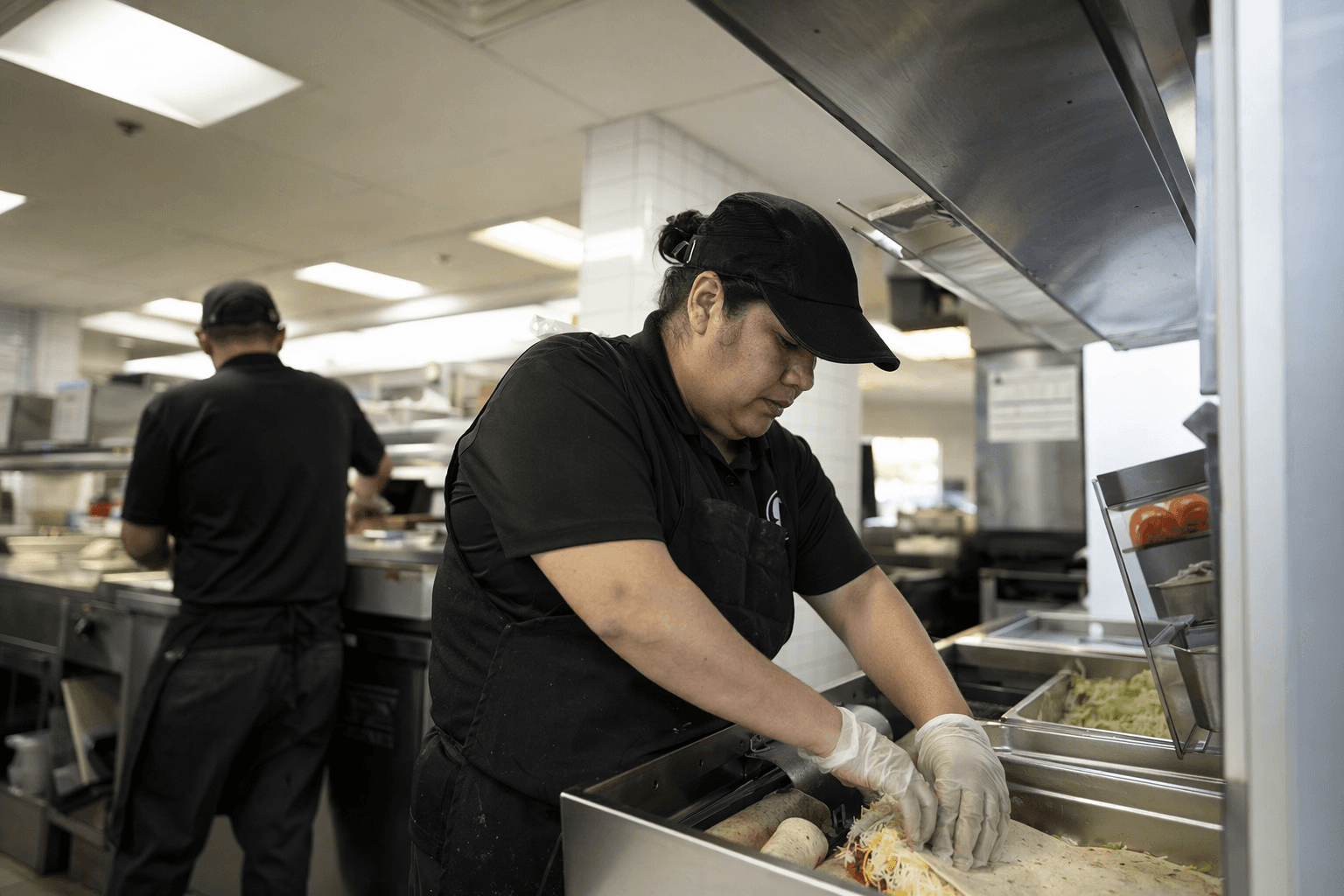
Immigration has moved from Washington talking point to restaurant-floor problem, and the pressure is showing up in the places Taco Bell managers feel first: crew availability, labor costs and the ability to keep every lane and line moving. At the National Restaurant Association Show, Emily Williams Knight, Aaron Frazier and Kevin Vaughan pushed operators to keep pressing the case for reform as an economic necessity, not a partisan fight.
Knight, the Texas Restaurant Association’s president and CEO, said aggressive deportation policies are already hitting the business in three ways: food costs are rising, sales and traffic are weakening in some Hispanic communities, and worker shortages are getting worse. Frazier, the National Restaurant Association’s vice president of public policy, and Vaughan, who leads Vaughan Hospitality Group, backed that view, arguing that immigration affects the restaurant supply chain, consumer traffic and labor availability all at once. For Taco Bell operators, that translates into tighter scheduling, more pressure on shift coverage and a thinner bench when stores need to flex fast.
That matters at a chain built on hourly frontline staffing. Taco Bell’s careers site still sells restaurant jobs on flexible scheduling and growth opportunities, but that promise depends on stores being able to hire and hold enough people to cover the rushes. Yum Brands said in April that Taco Bell’s same-store sales rose 8% in the first quarter and U.S. system sales climbed 10%, a reminder that labor stability is not just an HR issue. It is tied directly to service, throughput and revenue. When franchisees cannot fill crew slots, related reporting has shown some operators cutting hours, turning away sales or leaning on temporary contract workers to keep restaurants open.
The policy fight is spreading beyond slogans. The National Restaurant Association has been lobbying for a legal path for Dreamers and people with temporary protected status, along with a workable work-visa system. In 2026, the Seat the Table coalition launched Keep Food on the Table to push updated immigrant work permit legislation. The Migration Policy Institute says about 2.1 million immigrants work in jobs that grow, harvest, process and sell food in the United States, and that immigrants make up 21% of the food supply chain workforce. It also estimates there were 47.8 million immigrants living in the United States in 2023.

The customer side is part of the same story. Restaurant Business reported in 2025 that traffic weakened in ZIP codes where 40% or more of the population originates from Mexico, and that weakness had not recovered after the 2024 election. A Federal Reserve Bank of San Francisco economic letter this year found that declines in unauthorized immigrant workers can reduce local employment, which helps explain why restaurant leaders keep framing the issue as an operating risk, not just a policy debate. For Taco Bell managers, the bottom line is simple: fewer workers and softer traffic mean tougher shifts, tighter margins and less room for error.
Know something we missed? Have a correction or additional information?
Submit a Tip
%3Amax_bytes(150000)%3Astrip_icc()%2Far-TacoBell_ShreddedBeefNachoFries_800x469-42744d1b0b0945d48fa6b976df848651.jpg&w=1920&q=75)