Taco Bell drive-thru workers face higher demands for speed and accuracy
Taco Bell’s five-year speed lead now carries a sharper operational cost: crews have to move faster, fix fewer mistakes, and keep the drive-thru feeling human.
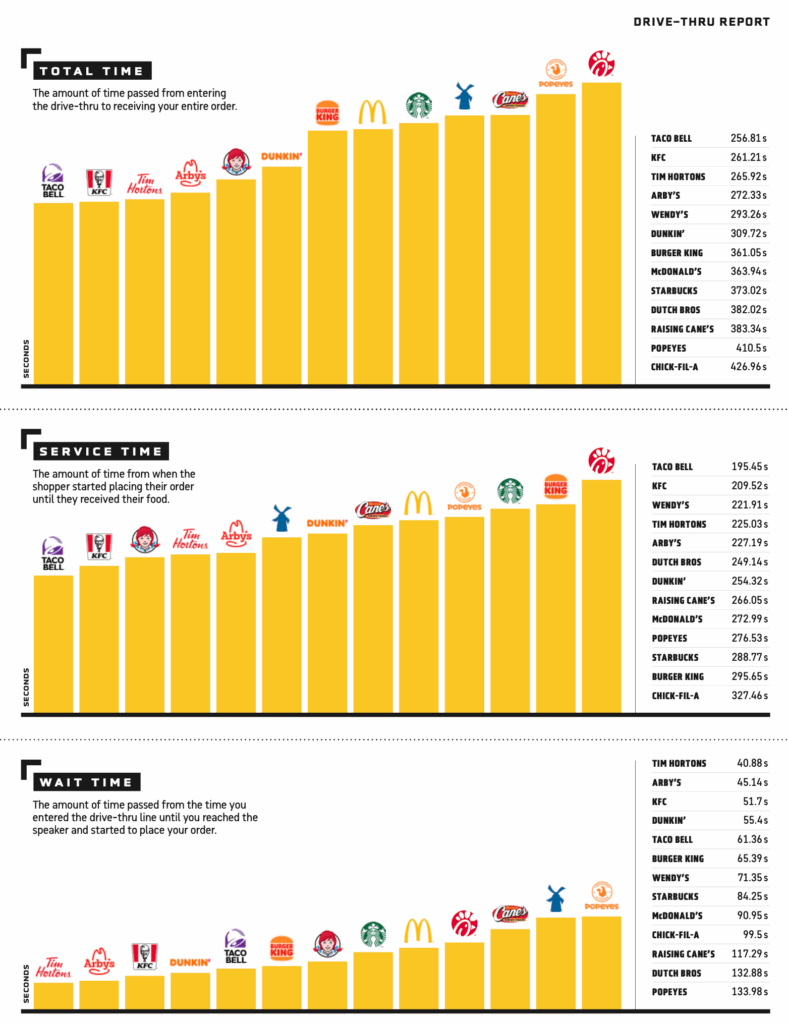
Taco Bell led the speed chart for a fifth straight year in QSR’s 2025 Drive-Thru Report, with an average service time of 256.8 seconds, or 257 seconds rounded. For the people on the headset, the line, and the window, the number ties speed, accuracy, and hospitality together in the same performance test.
What the speed number means on a Taco Bell shift
A drive-thru average in the mid-250s sounds like a simple leaderboard stat, but it carries practical pressure inside the store. If the order is taken quickly but comes out wrong, the correction usually happens at the window, where one mistake can stall every car behind it.
The competitive field is wide. Intouch Insight’s 25th Annual Drive-Thru Study covered 13 major QSR brands. Taco Bell is not being compared only with other burger chains anymore. It is being measured against coffee, chicken, sandwich, and breakfast operators as well as burger chains.
Speed alone no longer protects the lane
The 2025 report treats the category as a balancing act between technology and hospitality. Older drive-thru thinking treated speed as the main prize. Earlier QSR Drive-Thru Performance Study language made the point plainly: speed used to be the most important part of the drive-thru, but not anymore.
For Taco Bell crews, that shift changes what leadership is likely to reward. A quick speaker time is only part of the equation if the bag needs to be remade, the guest has to wait while a manager corrects an order, or the window line slows to a crawl after a custom build goes wrong. The better operators are the ones who can blend efficiency with accuracy and a calm guest experience, especially when promotions or value offers drive traffic spikes.
The lane works like a system, not a single station
Back in 2011, Taco Bell’s operations were already highly systematized, even factory-like. The drive-thru depends on coordination, not isolated speed. Headset timing, food build, bagging, register flow, and line-of-sight communication all have to move together.
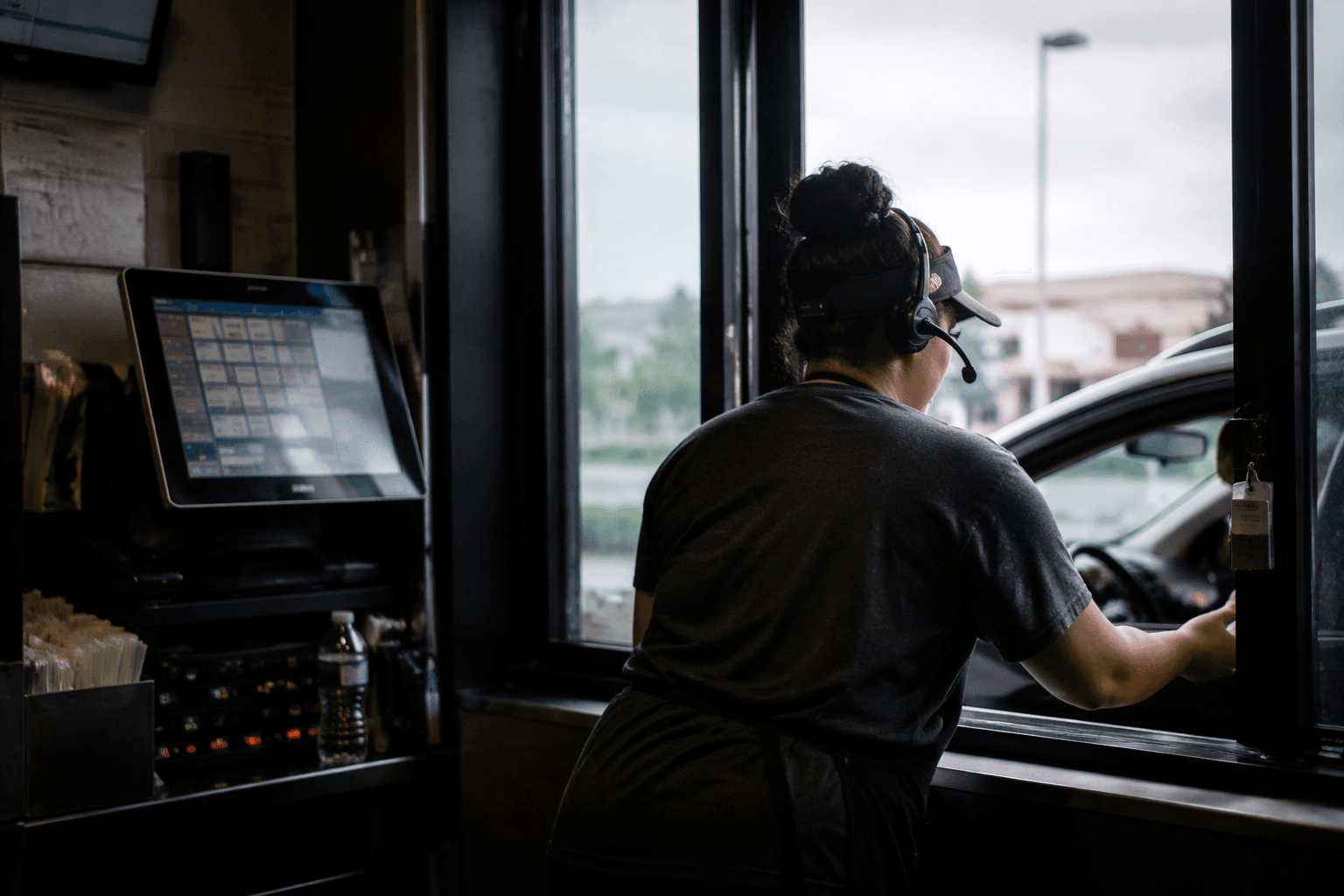
For shift managers, that means the hardest part of a rush is often not the order-taking itself. It is making sure the speaker, kitchen, expeditor, and window are synced when traffic spikes. Taco Bell’s menu complexity can help sales, but it also creates more chances for a breakdown if station roles are fuzzy or the handoff from the front end to the kitchen is sloppy.
Technology is raising the ceiling and the pressure
Taco Bell has been pushing drive-thru modernization for years. In March 2021, the company said it was on track to have 10,000 restaurants open globally that decade. On June 7, 2022, Taco Bell opened Taco Bell Defy in Brooklyn Park, Minnesota, a drive-thru-focused concept built to reimagine how orders move through the lane.
The biggest tech shift came on July 31, 2024, when Yum! Brands said it would expand voice AI to hundreds of Taco Bell U.S. drive-thru locations. Yum said the goal was to modernize drive-thrus and improve the experience for consumers and restaurant team members alike. The AI push was meant to speed service, improve order accuracy, and free employees to spend more time with customers. Later in 2025, Taco Bell had second thoughts about AI at the drive-thru.
For workers, that means the job can get more precise, not easier. AI can help if it correctly captures a custom order, but it also adds another point where mistakes can enter the system. When the software misses a modifier or mishears a guest, crew members are still the ones who have to catch the error, explain the fix, and keep the lane moving.
What managers are likely to keep measuring
The familiar list of metrics has higher stakes now because speed and accuracy are no longer separate conversations. Taco Bell leaders are likely to keep looking at service time, order accuracy, window waits, headset flow, remake counts, and the guest’s overall experience. If the lane looks fast on paper but the store is constantly fixing errors, the labor savings disappear quickly.
That is especially true during peak periods, when value offers and promotions push more cars into the same stretch of time. In those windows, a manager who only chases the clock can make the shift worse. The stores that hold up best will be the ones with clear station ownership, strong communication, and enough staffing to absorb the extra work that comes with customization and AI-assisted ordering.
This article was produced by Prism’s automated news system from verified source data, official records, and press releases, then run through automated quality and moderation checks before publishing. The system is built and supervised by the people who set the standards it runs under. Read our full AI policy.
Did this article answer your question?