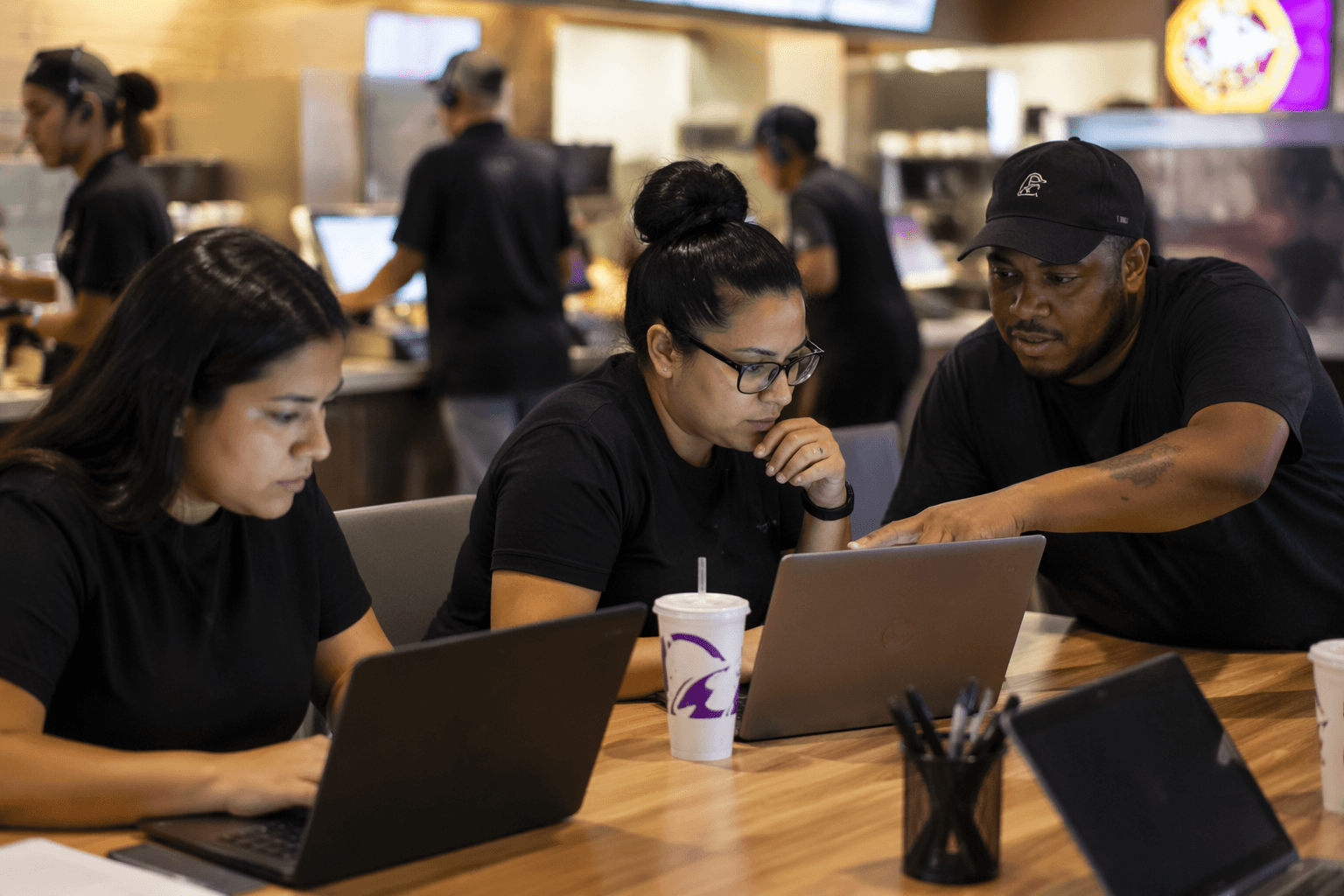
Taco Bell workers need to know federal wage and overtime rules
Taco Bell pay problems usually start with small timekeeping mistakes that turn into lost wages, overtime gaps, or youth-labor violations.

The paycheck rules that matter on a Taco Bell shift
At Taco Bell, the money problem is often hidden in the clock. A missed punch, an off-the-clock cleanup, or a shift that runs past 40 hours can change a paycheck fast, especially in stores that run on thin labor margins and constantly shifting schedules.
The federal rulebook that governs those mistakes is the Fair Labor Standards Act. It covers most full-time and part-time private-sector workers, plus government workers, and it sets the floor for minimum wage, overtime, recordkeeping, and youth employment. For covered nonexempt workers, the federal minimum wage remains $7.25 an hour, and overtime is generally time and one-half for hours worked over 40 in a workweek.
Where Taco Bell crew members get tripped up
The biggest paycheck gaps usually start with time, not pay rate. If you stay late to finish dishes, restock, clean a station, or help a manager close the store, that work still counts if you are not truly off the clock. The same goes for a call-in, a shift swap, or a busy week that pushes your hours over 40: extra time generally triggers overtime, even if it came from a schedule change instead of a planned long shift.
Break-time misunderstandings also create trouble. A short break is not the same as free labor, and a manager cannot make time disappear just because the rush was heavy or staffing was thin. If your punches do not match the time you actually worked, the safest move is to flag it immediately and keep your own record of when you started, when you left, and any work you did before or after the official punch.
Timekeeping is not a side issue under federal law. Employers are required to keep records and post the official FLSA notice, which means payroll logs, time punches, and schedule changes are compliance basics, not paperwork for the drawer. For workers, that means you should save screenshots of schedules, text messages about changes, and any pay stubs or edits that affect your earnings.
Overtime is the line that matters most
For shift leads and crew members who pick up extra hours, overtime is usually where the biggest loss shows up. If you are nonexempt, the law says you must be paid at least one and one-half times your regular rate for hours over 40 in a workweek. A busy Friday night, a double, or a late closing shift can push you over that threshold faster than you think.
That is why it helps to track your total weekly hours, not just your daily shift length. If you work multiple Taco Bell locations, split shifts, or extra hours after covering for a call-out, those hours still count toward the week. If the paycheck does not reflect that, ask for the exact calculation of your regular rate and overtime premium before the issue gets buried in a future pay period.
Tips and pay equity: what the law actually allows
Taco Bell is not a tipping restaurant in the way a diner or full-service dining room is, but the federal wage law still matters because restaurant workers often hear confused messages about tips, service pay, and what employers can deduct. The Labor Department says a tipped employee is someone who customarily and regularly receives more than $30 a month in tips, and if an employer claims a tip credit, the worker still has to receive enough direct wages plus tips to reach the federal minimum wage and overtime requirements.
The federal tip credit can be as much as $5.12 an hour under the current wage floor and direct wage level cited by the Labor Department, but that does not erase wage obligations. Employers also cannot use deductions such as walkouts, cash-register shortages, breakage, or uniform costs to push a tipped worker below required wages when a tip credit is claimed. For Taco Bell workers, the practical point is simple: if money is being taken out of your pay, ask what rule the company says allows it and whether that deduction is affecting your minimum wage or overtime.
Youth work is part of the same pay story
Taco Bell relies heavily on teen labor, especially for night, weekend, and summer shifts, so child-labor rules matter as much as wage rules. Working youth are generally entitled to the same minimum wage and overtime protections as adults, and the federal rules are meant to protect health, well-being, and educational opportunities.
There is no limit under the Fair Labor Standards Act on the number of hours employees aged 16 and older may work in a workweek. But that does not mean every job or every hour is allowed, because age-based occupation rules and hour limits still apply to younger teens. In a fast-food setting, that can affect late shifts, certain equipment, and tasks that are not safe or lawful for minors.
Why franchise stores deserve extra attention
The Taco Bell brand may feel national, but wage enforcement often lands at the franchise level. That matters because schedules, payroll practices, and manager habits can vary sharply from store to store, even under the same logo. In practice, the worker dealing with the time punch is usually dealing with the local operator, not the corporate headquarters.
The enforcement record gives that point real weight. In April 2023, the Labor Department said it recovered $22,744 for 12 workers at a Taco Bell in Spencer, Iowa, including $11,372 in back wages and an equal amount in liquidated damages, after finding they were shorted pay for time worked. In July 2022, the department said it recovered $56,000 for 31 managers after a Taco Bell franchisee in North Carolina misclassified them as exempt, and investigators also found five 15-year-old employees had worked outside legally allowed hours.
The older cases show the same pattern. In August 2018, the Labor Department said a KFC/Taco Bell operator in Athens, Georgia, violated child-labor rules by having minors operate an industrial mixer and allowing a 16-year-old to drive to pick up supplies. Fast-food enforcement did not stop there: in February 2024, the department announced child-labor and overtime penalties against a Popeyes franchisee, underscoring that these violations remain a live issue across the sector.
What to ask when something looks wrong
When a paycheck feels short, the fastest path is to get specific. Ask for your time records, your hourly rate, and the calculation used for overtime or any deduction. If a manager says a missed punch or a break erased the time, ask where that rule appears in the schedule, handbook, or payroll policy, because the burden is on the employer to keep accurate records.
A few habits can protect your pay before a dispute grows:
- Save schedules before they change.
- Photograph or screenshot your timecard after shifts that run long.
- Keep notes on off-the-clock tasks, such as prep, cleanup, or closing work.
- Write down the names of managers who approved shift swaps, call-ins, or schedule changes.
- Ask for a corrected paycheck right away if overtime or a punch looks off.
The broader lesson is that minimum wage, overtime, recordkeeping, and youth-labor rules all operate together. For Taco Bell workers, that means the safest paycheck is the one that matches the hours actually worked, the role actually performed, and the law that actually applies. When those numbers do not line up, the problem is usually not a minor payroll glitch; it is a wage-and-hour violation waiting to be corrected.
This article was produced by Prism’s automated news system from verified source data, official records, and press releases, then run through automated quality and moderation checks before publishing. The system is built and supervised by the people who set the standards it runs under. Read our full AI policy.
Did this article answer your question?