Yum! Brands promotes belonging across Taco Bell corporate and franchises
Yum says belonging runs through Taco Bell, but the real test is whether franchise stores turn that language into hiring, pay, and promotion practices.

The promise behind the language
Yum! Brands says its business will only endure if its brands are inclusive, sustainable, and responsive to evolving employee, franchisee, and other stakeholder needs. That is the core of the company’s Culture, Opportunity and Belonging message, and it matters at Taco Bell because the brand’s day-to-day reality is shaped less by corporate slogans than by what happens inside individual restaurants.
The company folds that idea into its broader Serving Up Good community ambition, which has three pillars: a connected, inclusive community, education and career readiness, and feeding communities. Yum’s 2024 Global Citizenship & Sustainability Report, published on July 1, 2025, and its prior annual report released on October 8, 2024, show that this is not a one-off statement. It is part of a recurring framework that ties people issues to business strategy.
Why Taco Bell workers should read this as a workplace issue
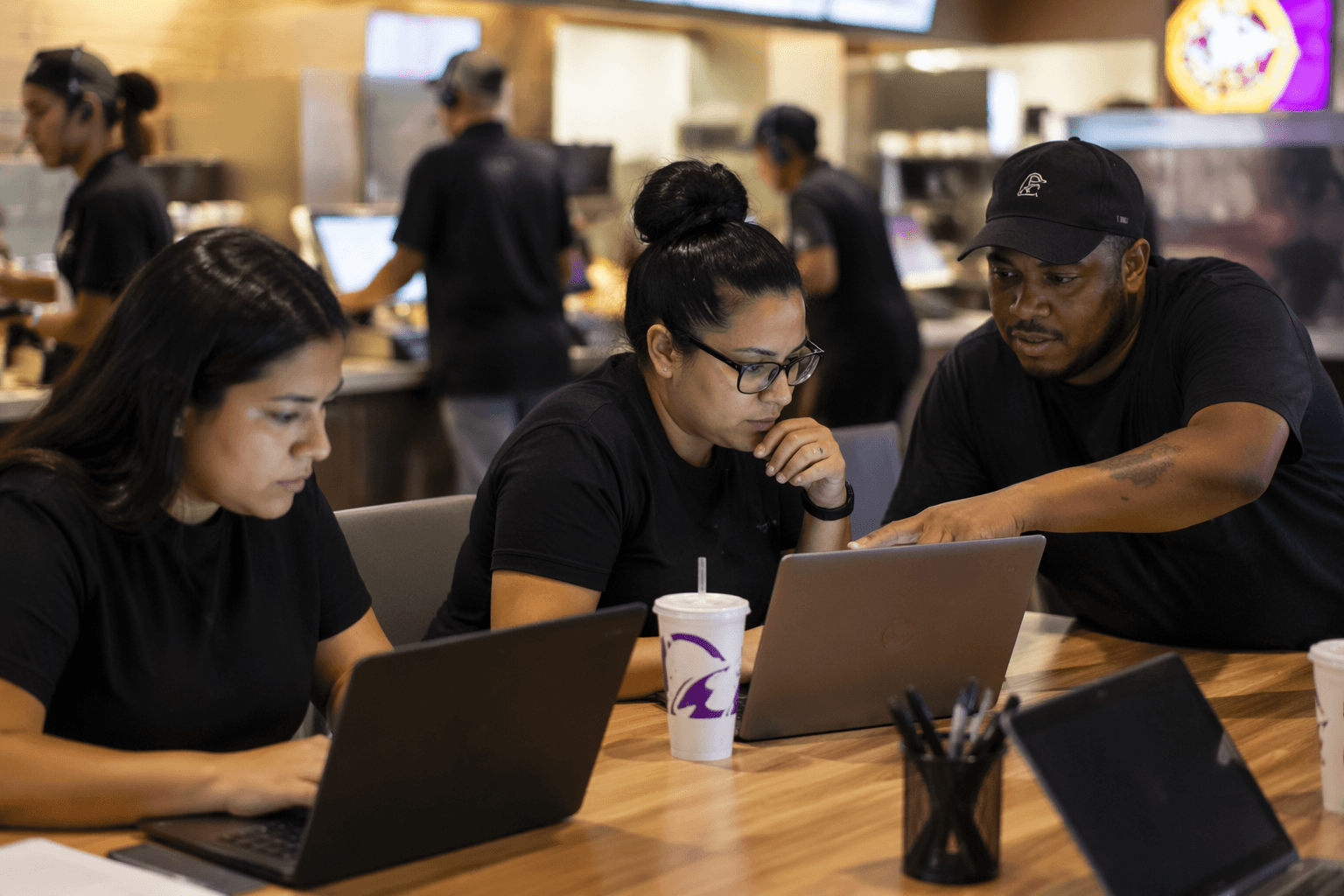
For crew members, shift leaders, and restaurant managers, the important question is not whether the language sounds welcoming. It is whether a store actually reflects it in hiring, training, scheduling, advancement, and how managers treat workers once they are on the clock. Yum says Culture, Opportunity and Belonging is ingrained across the company, throughout its franchise businesses, and in the communities where it serves. That means the promise is supposed to reach both corporate offices and the stores where most people experience the brand.
The scale makes that especially important. Yum says its system includes more than 63,000 restaurants in 155 countries and territories, operated primarily by about 1,500 franchisees. In a system that large, workplace culture is not uniform. A Taco Bell in one market may feel very different from another because local ownership, local management, and local community expectations shape the job as much as brand standards do.
Where the franchise system becomes the stress test
Yum’s own language says it supports franchisee organizations and recruits a wide spectrum of franchisees who represent the communities where the brands operate. That sounds broad, but it has real consequences for workers. If the people owning and running restaurants reflect their communities, the company is signaling that inclusion should show up in who gets hired, who gets trained, who gets promoted, and whether employees can see a path forward.
The practical test is simple. Does the location have different voices represented on the team? Do workers see a path to move from crew to shift lead to management? Does the franchisee invest in the community it serves, or does the restaurant feel disconnected from it? Yum’s framing invites those questions, which is useful because corporate language often stays vague unless workers and managers use it as a standard.
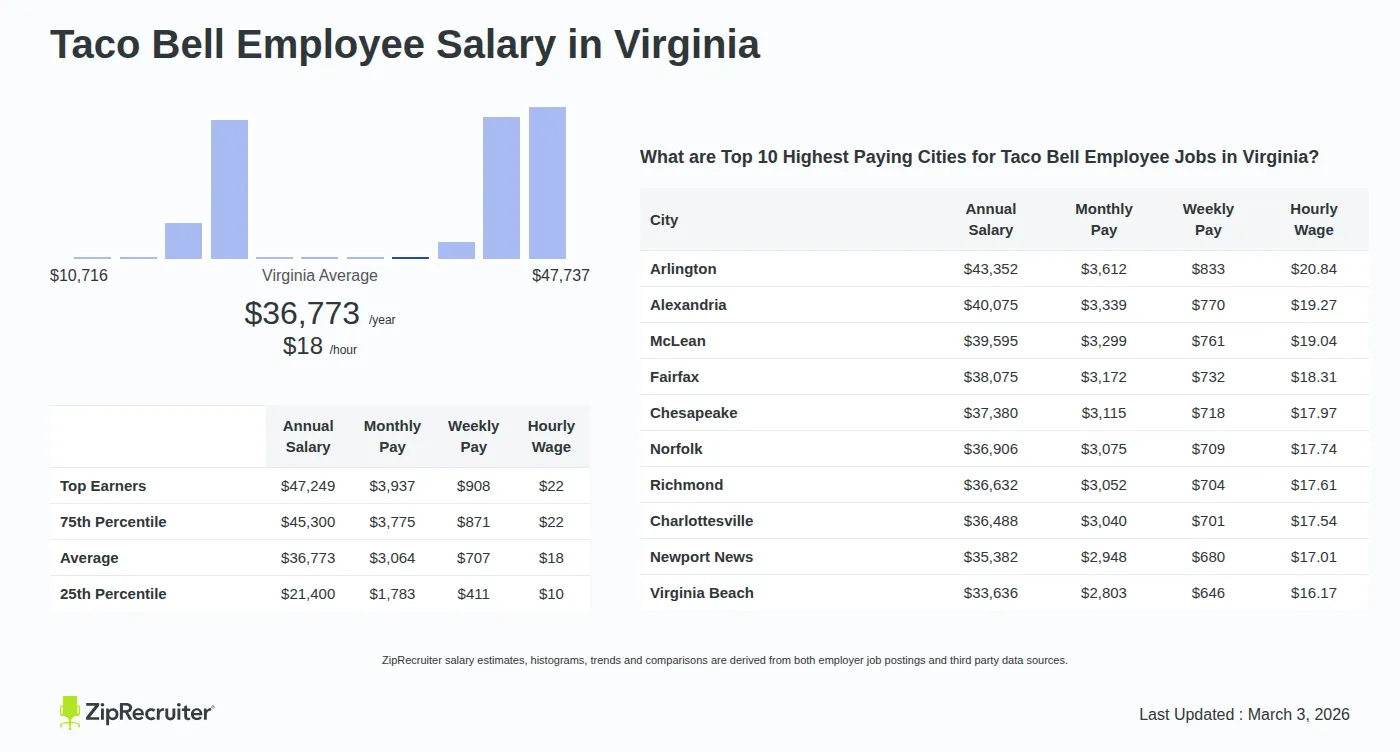
What the page does not answer is just as important. It does not tell workers what the starting wage is, how often pay rises, how schedules are set, or whether pay equity is enforced consistently from one franchise to another. That is where the gap lives between broad corporate positioning and the everyday reality inside a Taco Bell.
The corporate signal Taco Bell has already sent
Taco Bell has given the inclusion push a concrete internal face. In a February 1, 2023 podcast episode, the company said Katrina “KT” Thornton was its first-ever Chief Equity, Inclusion and Belonging Officer. That matters because it shows the brand did not leave the topic at the level of messaging. It created a named leadership role tied specifically to equity and belonging.
Taco Bell also said in 2023 that it consistently advances equity, inclusion and belonging at all levels of the organization, and that many franchisees share those same principles. For workers, that is encouraging only if it becomes visible in daily operations. A formal role at the brand level can help shape training, leadership expectations, and internal promotion standards, but it does not automatically change what happens in a particular restaurant with a particular manager.
Why franchisees are part of the conversation, not a side note
Taco Bell has also shown that franchisees are not treated as separate from these discussions. In 2020, the company said its chief people officer and Yum’s chief diversity and inclusion officer would host listening sessions that included franchisee leadership and HR representatives. That is a meaningful detail because it suggests the company understands that worker experience is mediated through franchise operators, not just through brand headquarters.
For managers, that means inclusion is not simply a corporate HR topic. It is a store-level operating issue. The people assigning shifts, coaching new hires, handling conflict, and recommending promotions are the ones who decide whether belonging feels real or performative. If franchise leaders are in the room during those conversations, then store-level practices are supposed to be part of the fix.
How to read the company’s promises like a worker, not a PR reader
Yum’s Culture, Opportunity and Belonging language gives you a checklist for judging a Taco Bell location. It is not about whether the company uses the right buzzwords. It is about whether the work environment supports actual mobility and fairness.
Look for these concrete signs:
- New hires are trained consistently, not left to learn only from whoever is on shift.
- Promotions are tied to clear performance standards, not personal favoritism.
- Managers reflect the communities they serve, or at least build teams that do.
- Franchisees invest in local hiring and community relationships, not just labor cost control.
- Workers can see a path from entry-level jobs to leadership roles.
If those things are present, the company’s belonging language has some teeth. If they are missing, the language starts to look like a corporate frame that sits above the real work instead of shaping it.
The bigger takeaway
Yum’s public materials are clear about the theory: inclusive brands are stronger brands, and a better workplace supports long-term growth. Taco Bell has backed that up with a named equity leader, franchisee-involved listening sessions, and repeated statements that belonging matters at every level.
The unresolved issue is execution. In a franchise-heavy system with more than 63,000 restaurants worldwide, the distance between a corporate value and a worker’s actual shift can be wide. That is why the most useful way to read Yum’s Culture, Opportunity and Belonging message is not as inspiration, but as a standard. It is a promise about hiring, advancement, training, and community roots. The question is whether the restaurant on your street, with your manager and your franchise owner, turns that promise into practice.
This article was produced by Prism’s automated news system from verified source data, official records, and press releases, then run through automated quality and moderation checks before publishing. The system is built and supervised by the people who set the standards it runs under. Read our full AI policy.
Did this article answer your question?