Yum! Brands Sets 2026 Shareholder Vote on Pay, Governance, and Special Meeting Rights
A shareholder push to slash Yum! Brands' special-meeting threshold from 25% to 10% is the sharpest governance fight on the May 14 ballot — and the one most likely to ripple into restaurants.
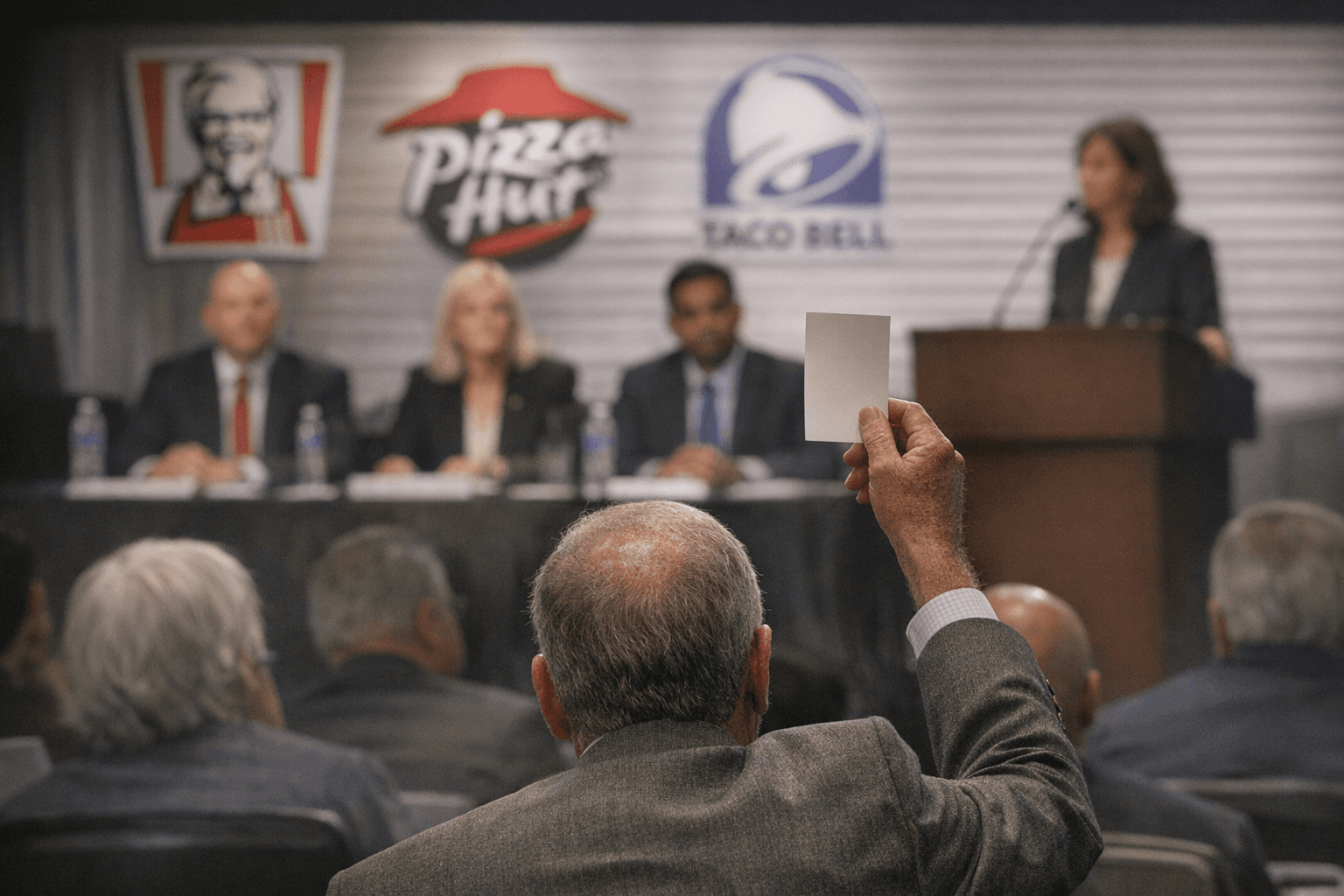
Two of the four proposals on Yum! Brands' 2026 annual meeting ballot deserve particular attention from anyone who runs a Taco Bell or works a shift in one: a shareholder bid to make it dramatically easier to call a special investor meeting, and an advisory vote on how the company pays its top executives. Both items landed in a proxy filing the company submitted to the Securities and Exchange Commission on April 3, with shareholders set to cast votes virtually on May 14.
The centerpiece governance fight is a shareholder proposal to lower the ownership threshold required to call a special meeting from 25% of outstanding shares to 10%. The board cites existing shareholder rights and alignment with common market practice, and unanimously recommends voting against this proposal while supporting all three management proposals.
That board opposition is worth noting in context. A 10% threshold would give a far smaller coalition of activist investors the power to convene a company-wide meeting outside the normal annual-meeting cycle, which is precisely the kind of mechanism advocacy groups and labor-focused shareholders use to force disclosure on workforce practices, AI deployment policies, or diversity programs. The board's push to hold the line at 25% signals how much control it wants to retain over when and how those conversations happen at the corporate level. For restaurant managers, the downstream effect is indirect but real: a lower threshold, if approved now or in future cycles, increases the likelihood of investor-driven directives landing in corporate communications and trickling into operational guidance.
The second item to watch is the say-on-pay advisory vote on executive compensation. This vote is non-binding, but a weak result sends a signal. Investors will also elect eleven directors to serve until the 2027 annual meeting and ratify KPMG LLP as independent auditors for 2026. Yum! has spent the past year publicly emphasizing its digital transformation, Byte by Yum! technology platform, and AI-linked investments — and executive incentive packages tied to digital key performance indicators often become a flashpoint when investors feel the payoff isn't matching the pitch. A strong say-on-pay approval tends to affirm the board's current strategic direction, including tech spending; a weak vote can accelerate calls for new disclosure requirements or altered investment priorities.
The official proxy materials are available through the SEC's EDGAR system, filed under Yum! Brands' ticker at sec.gov/cgi-bin/browse-edgar. Shareholders who want a paper copy must request it by April 30. Those voting ahead of the meeting face a deadline of May 13 at 11:59 p.m. Eastern Time.
For operators and shift managers, the practical monitoring list between now and May 14 is straightforward. Watch for internal memos framed as "what the annual meeting means for restaurants" — proxy season reliably produces this kind of top-down communication, and the language used often previews which strategic priorities the company plans to accelerate or defend. Pay close attention to any corporate messaging around technology pilots or scheduling tools, since those are the operational areas most likely to carry investor optics this cycle. And if the special meeting proposal passes against the board's recommendation, expect a sharper conversation at the corporate level about governance disclosures that could eventually include labor practices or AI use in scheduling and ordering.
The May 14 vote won't rewrite any Taco Bell job description overnight. But the governance decisions shareholders ratify this spring set the table for what Yum! leadership will feel pressure to defend, invest in, or disclose for the rest of 2026.
This article was produced by Prism’s automated news system from verified source data, official records, and press releases, then run through automated quality and moderation checks before publishing. The system is built and supervised by the people who set the standards it runs under. Read our full AI policy.
Did this article answer your question?