Florida man charged in Target Pokémon card self-checkout theft scheme
A Palm Beach man is accused of 75 Target self-checkout thefts using 99-cent taco seasoning packets to hide Pokémon cards, then flipping them on eBay for nearly $40,000.
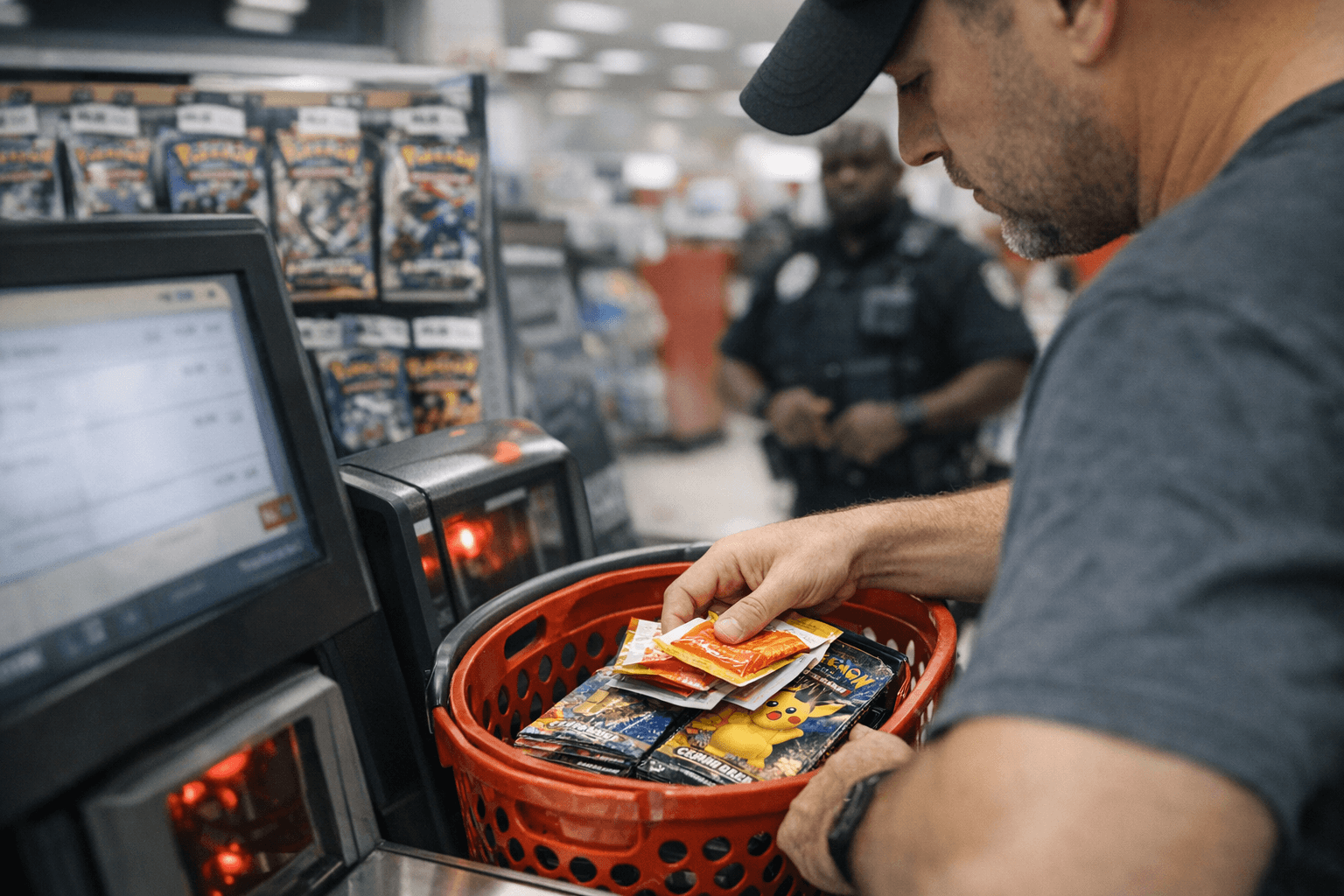
A Palm Beach man is accused of turning Target self-checkout into a repeat theft pipeline for Pokémon cards, using 99-cent taco seasoning packets to mask the scans and spreading the scheme across stores from Miami to Orlando.
Florida authorities identified the suspect as Keith Wallis, 39, and said the thefts ran from July 2025 through February 2026. Investigators say Wallis made 75 separate thefts at multiple Target locations, with losses to the company exceeding $10,000 and resale revenue on eBay approaching $40,000. He faces two counts of felony organized retail theft, three counts of felony dealing in stolen property and one count of felony money laundering.
Authorities said Wallis used an equal number of taco seasoning packets and trading-card boxes, then scanned only the seasoning at self-checkout before taking the cards. The case was investigated by the Palm Beach County Sheriff’s Office and the Office of Statewide Prosecution, and Florida Attorney General James Uthmeier announced the arrest on Feb. 26, 2026. If convicted on all charges, Wallis could face up to 90 years in prison under Florida law.
For Target workers, the case goes beyond one man and one product. It shows how self-checkout fraud can become a frontline workload issue, especially when the item is small, high-value and easy to resell fast. Pokémon cards have become a magnet for theft and robbery because they are compact and can move quickly through secondary markets, which means a missed scan can turn into repeated shrink across multiple stores before anyone catches the pattern.
That kind of theft puts extra pressure on front-end team members and asset protection staff who are already balancing speed, guest service and constant visual checks. It also helps explain why retailers like Target have been adjusting self-checkout policies and tightening controls around high-risk merchandise. When the same method is used 75 times in different stores, the question is not just how the theft happened, but how much more staffing, monitoring and policy enforcement stores will need to stop the next one.
Know something we missed? Have a correction or additional information?
Submit a Tip