Nike cuts 1,400 jobs as it consolidates technology operations
Nike cut about 1,400 jobs, mostly in technology, and concentrated work in two hubs. Target employees should read that as a warning on leaner tech, faster automation.

Nike’s latest 1,400 job cuts show how quickly retail technology is being pulled into fewer hands. The company said most of the reductions hit technology roles as it consolidates operations and pushes work into two hubs, the Philip H. Knight Campus in Beaverton, Oregon, and the Nike India Technology Center. Affected employees were set to be notified beginning April 23, and the cuts covered North America, Asia and Europe, less than 2% of Nike’s global headcount.
Nike said the reductions were part of its Win Now turnaround strategy and would help reshape its technology team, modernize Air manufacturing, move some Converse Footwear operations and fold materials supply chain work into footwear and apparel supply chain teams. That is the part Target team members should notice: the cuts were not framed as a narrow layoff in one country or one plant, but as a deliberate tightening of the systems that connect product, supply chain and technology.
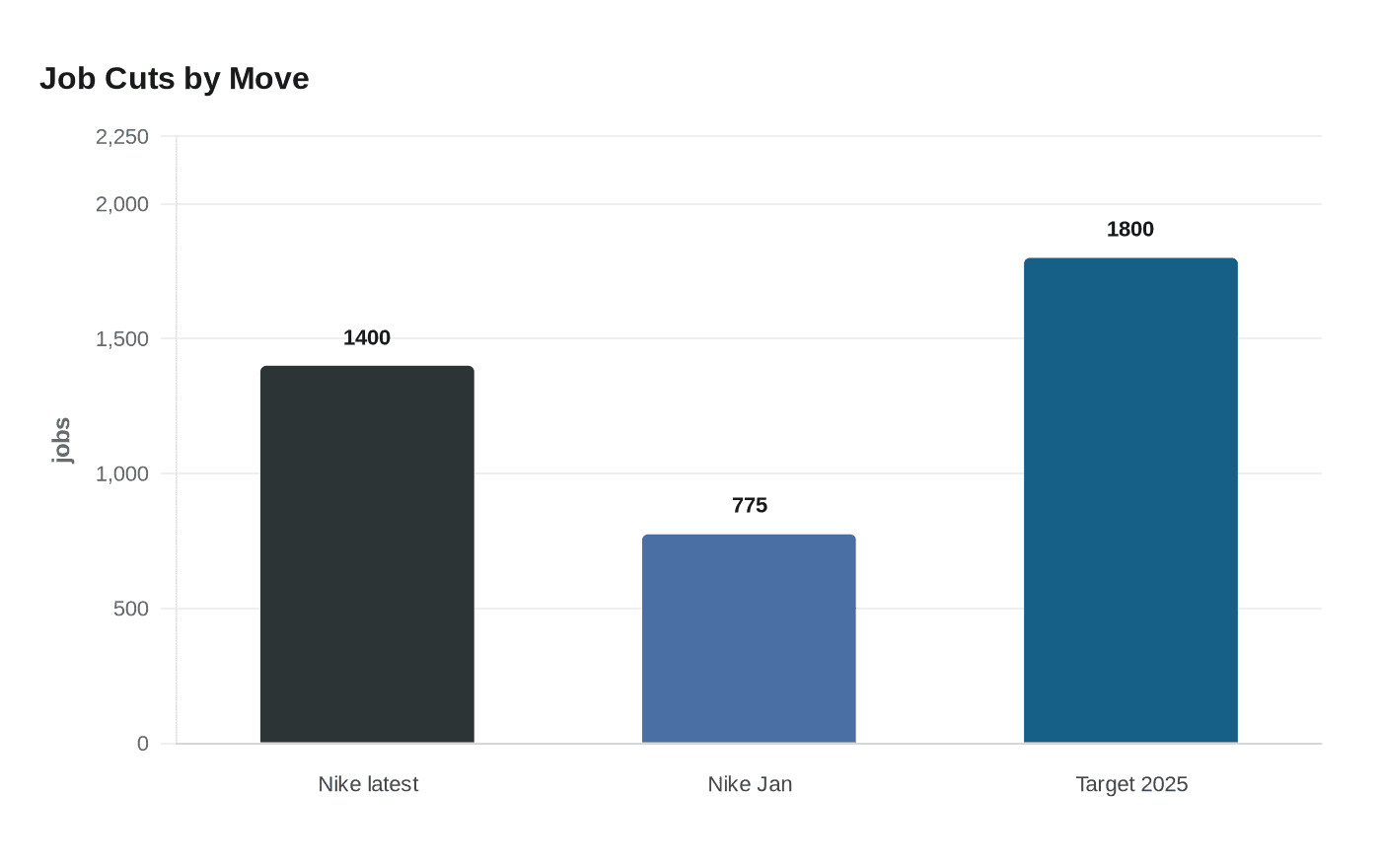
This was not Nike’s first move in that direction. In January, the company cut 775 jobs in distribution centers in Tennessee and Mississippi as part of an automation push. It had already announced more than 1,600 job cuts in February 2024, equal to about 2% of its workforce. Nike’s fiscal third-quarter 2026 report also warned of continued sales declines and projected a 20% drop in China for the quarter, suggesting management is still under pressure to do more with less.
For Target, the comparison is direct. The company cut 1,800 corporate jobs in October 2025, about 8% of its corporate workforce, after incoming CEO Michael Fiddelke said too many layers, overlapping work and slow decisions had bogged down the business. Nike’s cuts point to the same playbook across major retailers and consumer brands: simplify the org chart, centralize technology, and use automation to reduce the number of people between a business problem and a fix.
That matters for store teams because the first signs usually show up in the middle of the operation, not on a layoff notice. Scheduling tools, inventory visibility, internal support response times and software training can all get leaner when companies collapse duplicate roles and move more work into centralized teams. The most durable jobs are likely to be the ones that connect systems to store execution, not the ones built around managing handoffs.
Nike’s move is another sign that retail competition is now about speed as much as scale. For Target workers, the question is whether the company can strip out complexity without stripping out the support stores still need.
Know something we missed? Have a correction or additional information?
Submit a Tip