Target and other large employers face proposed $25 federal minimum wage
A $25 federal wage floor would sit above Target’s current $24 starting-pay ceiling, forcing a rethink of raises, promotion gaps and pay compression.
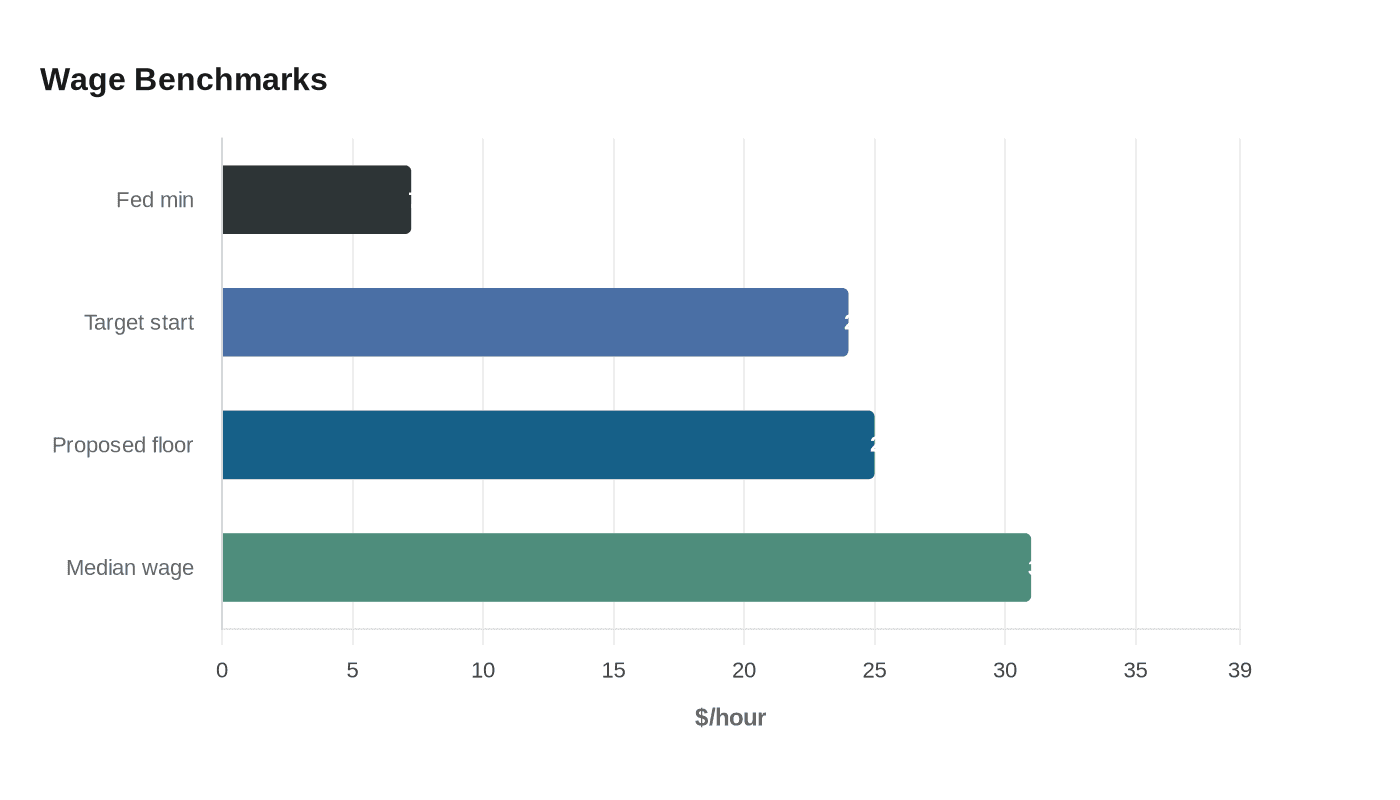
A $25 federal minimum wage would land above Target’s current starting-pay ceiling of $24 an hour, which means every entry-level pay band the company uses today would need a reset long before any new federal rule took effect. Target says its average hourly wage for frontline team members is already above $18.50, but a $25 floor would still push the chain into wage compression territory, where the gap between starting pay, team lead pay and leadership roles gets much tighter.
That is the practical stakes test for the Living Wage for All Act, the bill Democratic lawmakers introduced to raise the federal minimum wage to $25 an hour. Under the proposal, large employers with 500 or more workers nationwide, or annual revenue above $1 billion, would have until 2031 to reach the new floor. Smaller employers would get until 2038. The bill would also tie the federal wage floor to two-thirds of the national median wage, which CNBC pegged at about $31 an hour in the first quarter of 2026.
The federal minimum wage has been stuck at $7.25 an hour since July 24, 2009, according to the U.S. Department of Labor. CNBC reported that about 82,000 workers earned that federal minimum in 2024, using the latest Bureau of Labor Statistics data. Five states, Alabama, Louisiana, Mississippi, South Carolina and Tennessee, still do not have their own state minimum wage, which leaves the federal floor especially important in parts of the country where local pay laws offer no backstop.
Target is not a $7.25 employer, and that is exactly why this debate matters inside stores. The company raised its starting wage to $15 an hour in July 2020 and later expanded its starting range to $15 to $24 depending on role and location. If a federal wage floor ever reached $25, Target would have to widen the spread above entry-level pay or risk flattening the incentives for workers to move from cashier, fulfillment or general merchandise jobs into team lead and executive team lead tracks.
Labor groups argue the political pressure is not going away. The National Employment Law Project says the federal minimum wage has not increased since July 24, 2009, and says inflation has eroded its purchasing power to the lowest level since 1949. The United Food and Commercial Workers International Union says workers in the 17 states with the highest union densities are guaranteed a minimum wage 40 percent higher than workers in low-density union states, citing Economic Policy Institute data. For Target employees, the key signal to watch is not just whether Congress moves, but whether the retailer keeps adjusting its own wage ladder to stay ahead of a national conversation that is still climbing.
This article was produced by Prism’s automated news system from verified source data, official records, and press releases, then run through automated quality and moderation checks before publishing. The system is built and supervised by the people who set the standards it runs under. Read our full AI policy.
Did this article answer your question?