Target guide explains leave of absence eligibility and request process
Target’s leave process turns on eligibility, the reason for time off, and store staffing needs, so the safest move is to loop in HR before you step away.
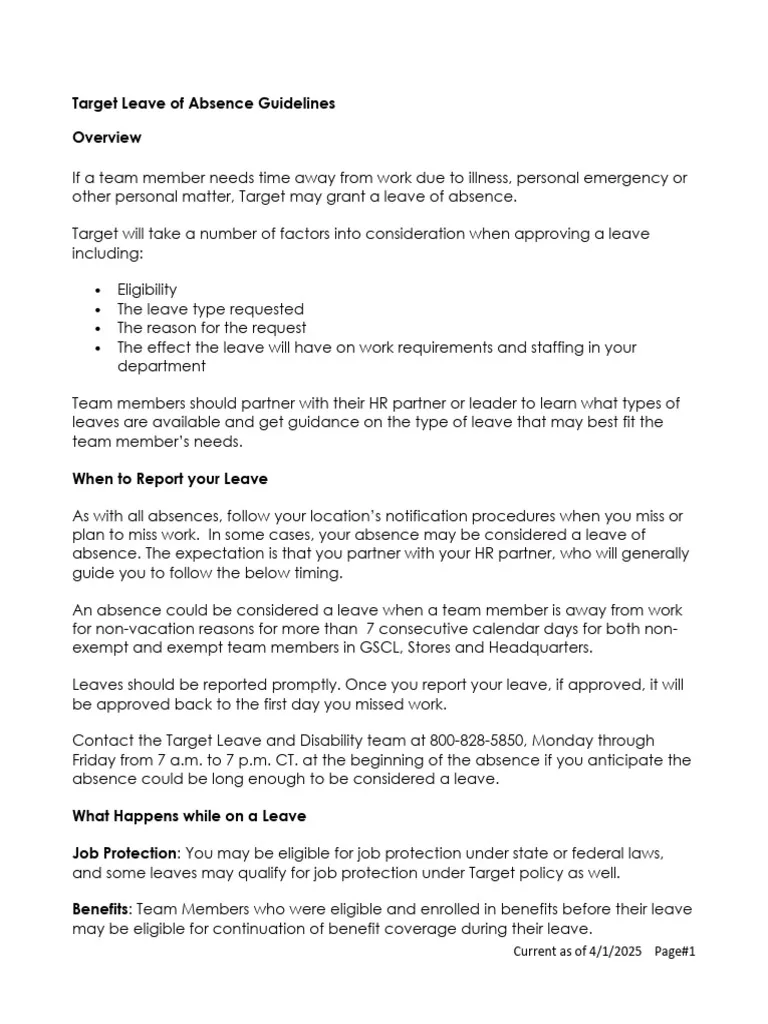
At Target, leave is not automatic. The company evaluates requests based on eligibility, the type of leave requested, the reason for the request, and the effect the absence will have on staffing and work requirements in the department. That is why the first step is to get the right people involved before your absence starts.
When leave becomes the right move
Leave becomes an option when a normal schedule no longer works. A medical issue, a family crisis, or another personal matter can quickly become a staffing issue in a retail environment where shifts are tightly coordinated and coverage matters every hour of the day. At Target, leave is handled case by case rather than as a one-size-fits-all benefit.
Leave can protect recovery time, family responsibilities, and the stability you need during a hard stretch. Team leads and executive team leaders often become the first point of contact when a teammate is dealing with something serious. The policy gives leaders a common starting point instead of forcing them to improvise in the middle of a store schedule.
How Target evaluates a request
Those four factors tie leave not just to the employee’s situation, but also to the operational needs of the workgroup.
For employees, that means the type of leave you ask for has to fit the situation you are facing. For managers, it means the decision is not just about whether someone needs time off, but also about how the department keeps operating while that person is out. In a store environment, where schedules, task coverage, and daily workload can shift quickly, those details can determine whether a leave request moves smoothly or gets held up.
Do not guess which leave bucket you belong in. You should partner with an HR partner or leader to determine eligibility and identify the leave type that best fits your situation. That step helps avoid the most common mistake workers make, which is assuming the same rules apply to every absence.
What to do before your first day out
The process is straightforward, and the key move is to start early. If you wait until the last minute, the department has less time to plan coverage and you have less room to sort out whether your absence is being handled under the right leave type. Starting the conversation early also gives HR and your leader a chance to ask questions before the schedule becomes a problem.
A clean leave request usually starts with a few basics:
- Tell your HR partner or leader that you need time away and explain the reason at a high level.
- Work with them to determine whether you are eligible for leave.
- Identify which leave type best matches your situation.
- Ask how your absence will affect staffing, departmental work requirements, and any next steps you need to complete.
In retail, where a missed shift can ripple across a whole workgroup, clarity before the first day out prevents confusion later.
Where to look for help during leave planning
Target presents its support as something meant to help team members, their families, and their future. Leave is not an isolated policy. It sits alongside Pay & Benefits resources, and employees often need to understand how time away from work fits into the larger support system.
The public Team Member Services Hub gives workers a place to start when they need employee-related support resources. It is a useful entry point if you are trying to find the right path before a leave begins or while you are sorting out what comes next.
Target’s 2023 Sustainability and Governance Report includes a section on Supporting Our Team Members, and its 2021 Corporate Responsibility Report includes a section on the company’s continuing response to COVID-19.
Why managers need a disciplined process
The operational side of leave is easy to underestimate until the schedule breaks. Target’s September 2023 seasonal staffing fact sheet reflects recurring staffing pressure, especially during peak periods when stores need every available hand. A leave request landing in that environment can affect task coverage, productivity, and the workload of everyone else on the team.
When a teammate needs time away, the right response is not to make ad hoc promises or deny the request on the spot. It is to route the situation through the company’s leave framework, keep the conversation tied to eligibility and leave type, and make sure the department has enough information to adjust.
This article was produced by Prism’s automated news system from verified source data, official records, and press releases, then run through automated quality and moderation checks before publishing. The system is built and supervised by the people who set the standards it runs under. Read our full AI policy.
Did this article answer your question?