Target Security Specialists focus on prevention, de-escalation and guest safety
Security Specialists are the calm layer in Target stores, using prevention, de-escalation and fast judgment to keep guests and team members safer.
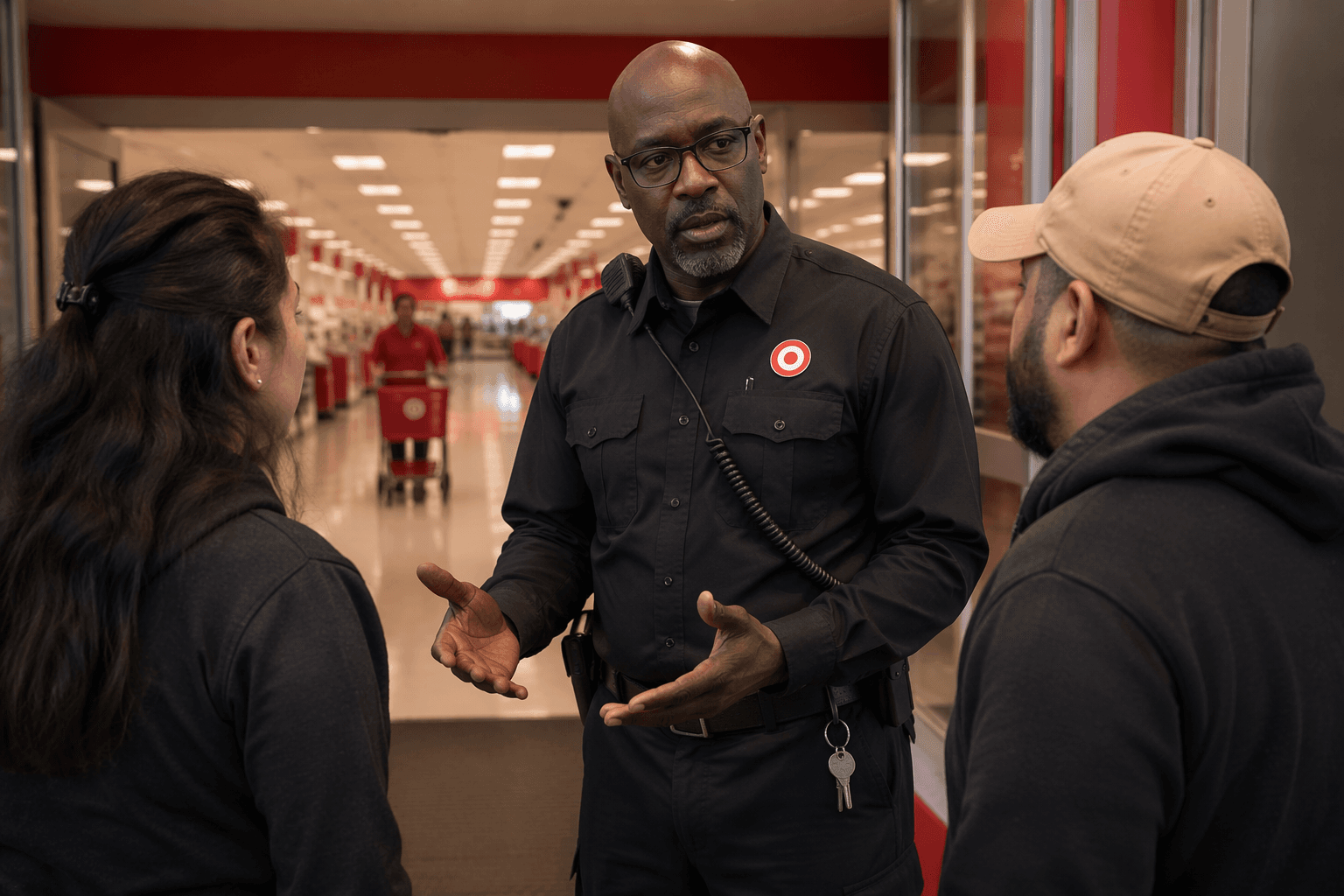
Target’s Security Specialists are built to do more than respond after a problem has already spilled into the aisle. Their job is to help keep guests, team members and the brand secure by preventing incidents, calming tense situations and protecting the store so the day can keep moving. For anyone working front-end, on the sales floor or in leadership, that means AP is part of the store’s operating rhythm, especially when volume is high and a small conflict can quickly disrupt the entire team.
What the Security Specialist role actually covers
Target’s Security Specialist materials frame Assets Protection as a prevention-first function. The work includes de-escalation, crowd management, video surveillance, case documentation, receipt checks, theft-recovery support and protection of the exterior property. It also includes responding to incidents and maintaining a safe and secure environment for guests and team members, which is why the role sits at the intersection of guest service and store stability.
That mix matters on a busy day. When a situation starts to escalate, AP is often the team that can step in before it becomes a confrontation at the register, a disruption in the lanes or a safety issue near closing. The goal is not constant presence for its own sake. The goal is a store that feels controlled, where team members can keep helping guests without spending the shift bracing for the next incident.
Why the role matters to the rest of the store
The day-to-day value of AP shows up in the moments other teams usually feel first. Front-end workers deal with suspicious receipts, payment disputes and the first signs of fraud. Sales-floor employees see when a guest interaction is turning tense, when a group is crowding an area or when a suspected shortage issue needs support. Security Specialists are there to handle those situations in a way that keeps the guest experience friendly while protecting the team.
For store leaders, that makes AP part of the operating model rather than a side function. A strong AP team can help reduce disruption, keep closing routines safer and lower the stress level for everyone else on the schedule. When the work is done well, the store feels calm and normal. When it is not, the whole team feels it.
Target treats AP as a companywide safety function
Target’s broader Assets Protection and Corporate Security messaging makes clear that the store role sits inside a larger network. The company says its AP teams protect team members, guests, stores and physical assets across stores, supply chain facilities, headquarters and beyond, while preventing and responding to incidents and promoting a culture of safety. That means store-level security is connected to a wider system, not just a front-door presence.
The job materials also emphasize relationships. Target says AP teams build ties inside and outside the company, including with store leaders and public safety officials. That matters because security in a retail store depends on more than technology or a badge at the entrance. It depends on communication, trust and the ability to move quickly when a situation calls for backup, documentation or outside coordination.
The Safe City playbook behind Target’s approach
Target’s emphasis on relationships has roots in its Safe City initiative, which it launched in 2003 as a public-private partnership with local law enforcement and community leaders. An Urban Institute evaluation of the program found that it relied on frequent meetings, information-sharing, radio networks and closed-circuit television in designated areas. The same evaluation found increases in perceived safety and cost-effective reductions in crime in two of the four sites studied.
That history helps explain why Target still frames AP as a partnership role rather than a purely internal security function. It also shows why the company expects Security Specialists to work comfortably with store leaders, public safety officials and community partners. The store is one piece of a broader safety ecosystem, and the specialist’s observations can help connect what happens inside the building with what happens outside it.
Why safety and theft prevention became a business decision
Target has also been explicit that security is tied to store viability. On September 26, 2023, the company said it would close nine stores on October 21, 2023, citing theft, organized retail crime, violence and worker safety. In that same statement, Target said it was adding security team members, third-party guard services, theft-deterrent tools, locking cases for some merchandise and training for store leaders and security team members on de-escalation.
That announcement made clear that AP is not only about preventing shrink. It can become a labor-safety issue, a store-hours issue and a community-access issue all at once. When a location becomes difficult to keep safe, the impact is felt by the team members who work there, the guests who shop there and the leaders who have to keep the building running day after day.
Shrink adds financial pressure to the role
Target’s 2024 annual report puts another layer of pressure on AP work. The company says it has experienced elevated levels of inventory shrink relative to historical levels, and that shrink has adversely affected, and could continue to adversely affect, results of operations and financial condition. That is the financial backdrop to the store role: every theft prevention effort, every recovered item and every avoided disruption has a direct connection to sales, margins and operating performance.
For team members, that does not mean AP exists only to chase losses. It means the role has a measurable business effect. Preventing theft and fraud helps keep product on the shelf, keeps the store functioning more predictably and reduces the chance that shortages or repeated incidents will turn into bigger operational headaches.
How law enforcement partnerships fit into the picture
Target says it works with state and local law enforcement, shares information and investigative support with other retailers, hosts store walks with elected officials and prosecutors, and supports organized retail crime task forces and federal anti-ORC efforts. The company also says it has been creating organized retail crime task forces and holding store walks with members of Congress, state legislators, city officials, district attorneys, law enforcement and local community partners.
Those partnerships matter because Security Specialists often see the first signs of a pattern before anyone else does. Video review, documentation and incident response are not just internal housekeeping. They can feed broader efforts to identify repeat problems, support investigations and improve how stores handle recurring safety issues.
What the role means on a real Target shift
Put together, Target’s AP model is less about standing guard and more about keeping the store functional. A Security Specialist helps prevent problems from growing, steps in when tempers rise, uses surveillance and documentation to support decisions and works with leaders and public safety contacts when an incident needs wider attention. The role touches the guest experience, closing routines, team morale and the store’s ability to stay open and stable.
That is why Target presents Security Specialists as part of the store’s safety structure, not just its loss-prevention system. In a retail environment where theft, violence and operational strain can all hit at once, the value of AP is often clearest when the rest of the team can keep doing its work without a disruption becoming a crisis.
This article was produced by Prism’s automated news system from verified source data, official records, and press releases, then run through automated quality and moderation checks before publishing. The system is built and supervised by the people who set the standards it runs under. Read our full AI policy.
Know something we missed? Have a correction or additional information?
Submit a Tip