Target Website and App Outage Disrupts Shoppers, Creates Frontline Staff Pressure
Target's website and app went down at 3:28 p.m. ET on April 1, flooding guest services with failed checkouts and turning Drive Up shifts into hours of exception handling.
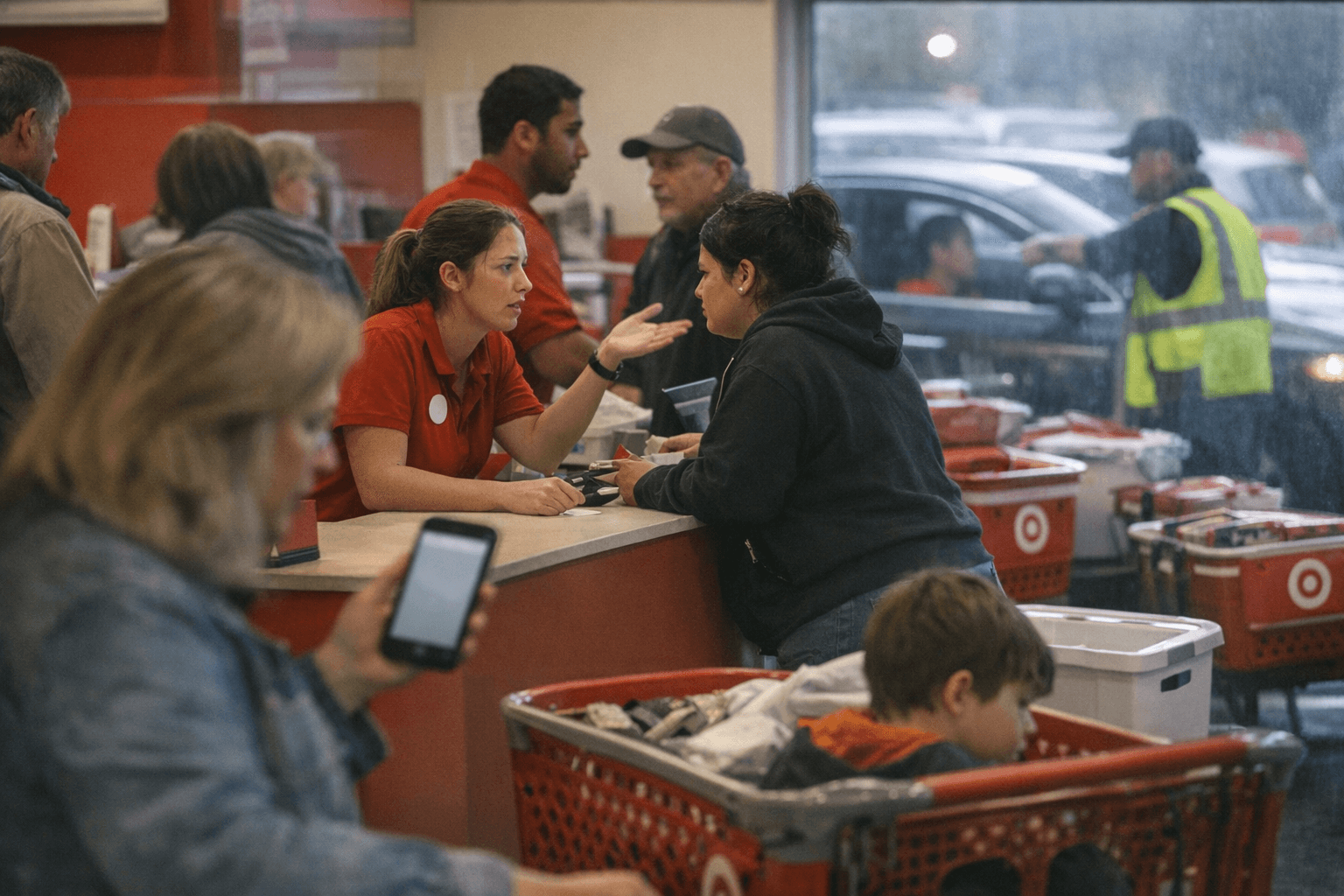
The spike hit DownDetector at 3:28 p.m. Eastern time on April 1, and within minutes, Target's website and app were generating a flood of error reports and failed checkout attempts across social media. What followed for store teams was predictable in shape but no less disruptive for it: a compressed wave of frustrated guests, exception transactions, and operational triage that stretched well beyond the moment the systems came back online.
The outage landed during mid-afternoon, a window when Drive Up and Order Pickup queues are active and teams are often managing shift transitions. When app access failed, customers who had planned to order ahead and pick up in store arrived anyway, pushing unplanned traffic to Front-of-Store and Guest Services. The dynamic cuts both ways: failed online checkouts temporarily suppress order volume, then create a compressed recovery spike as customers retry, flooding fulfillment teams with a backlog in a shortened window.
That backlog doesn't stay digital. Every failed checkout a guest brings into the store becomes a manual exception: an order lookup, a price match, a supervisor approval. For Guest Services leads, those interactions stack quickly. The time spent handling app-related escalations is time not spent on routine operational tasks, raising the risk of overtime and missed service standards at close.
Payment reconciliation adds another layer. Partial transactions and ambiguous payment states, the kind that result from a checkout process interrupted mid-attempt, require manual review. For Guest Advocates and store managers, that work doesn't surface until till reconciliation at end of shift, long after the guest has left the building.
For store leaders managing through the next outage, the preparation window is now. Guest Services and Front-of-Store Leads should designate a single teammate at shift start to own app and online exceptions during disruptions, so the rest of the team keeps checkout and Drive Up moving without constant context switching. Store managers and district ops teams should log outage timing precisely: start time, stop time, number of impacted guests, and number of exception transactions. That documentation accelerates reconciliation with digital operations teams and supports any earned-wage or attendance conversations if shifts run long.
Team members should use company-approved language when explaining the disruption to guests and avoid sharing outage speculation on social media. The exact escalation path, who to call, when to open an incident ticket, and what script to use with a frustrated guest, is documented in the Leader resources section of myTime and the Team Member Services hub.
The broader operational lesson is that a brief digital outage is never self-contained. Online and in-store fulfillment are tightly coupled at Target, which means even a short window of app failure can produce hours of downstream store work. Stores with pre-defined contingency plans, manual order-taking scripts, designated reconciliation leads, and a real-time incident log absorb that pressure more cleanly than stores responding ad hoc. Team leads should run one tabletop exercise per quarter so every teammate knows the protocol before the next mid-afternoon spike lands.
Know something we missed? Have a correction or additional information?
Submit a Tip