Target workers' retail labor priorities mirror Macy's contract fight, pay, leave, scheduling
Macy’s contract fight is a retail warning sign for Target: the real battleground is still pay, schedules, leave, and control over time.
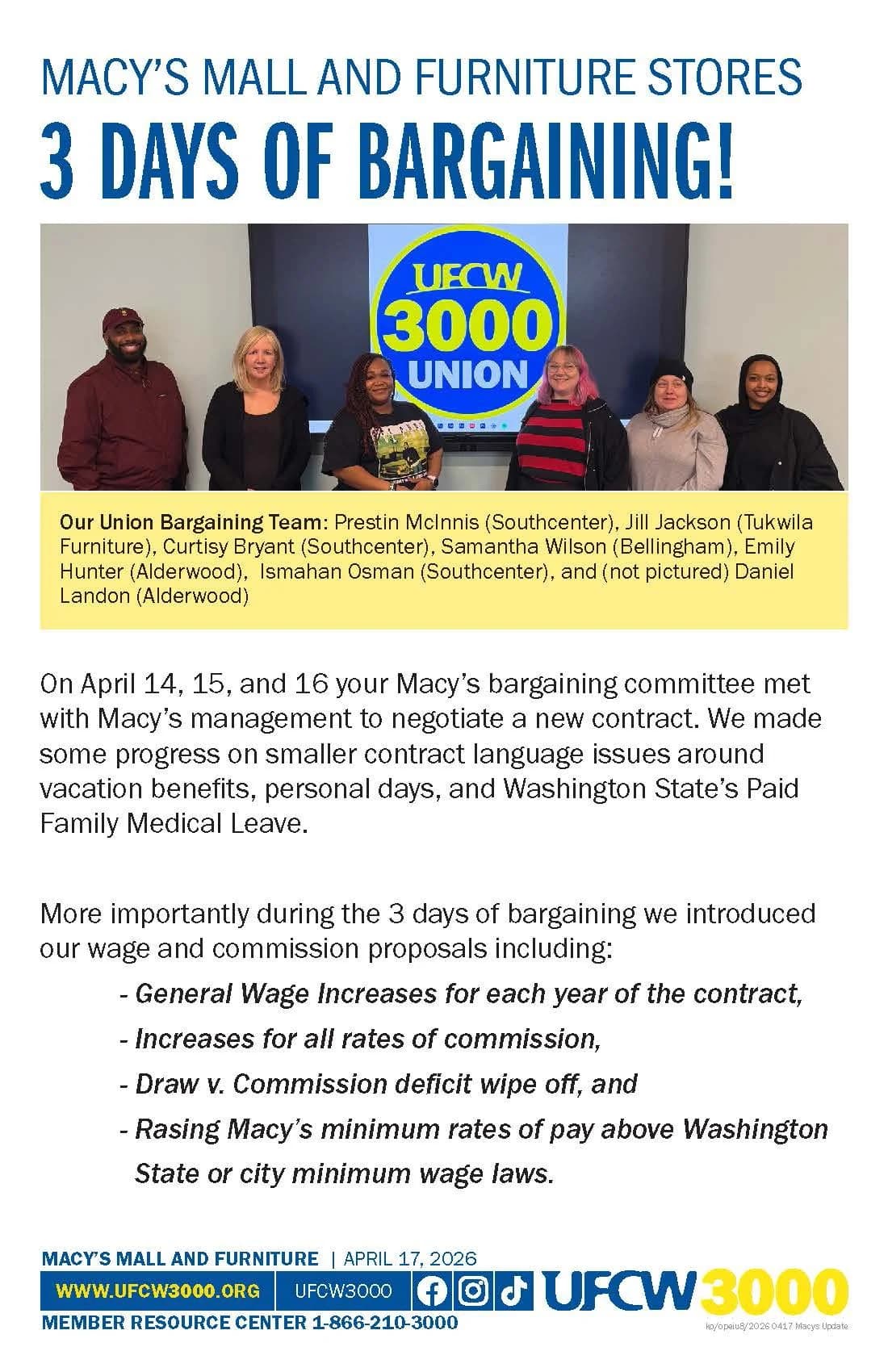
A contract dispute at Macy’s is not a Target story, but it is a sharp read on what retail workers are actually asking for right now: steadier pay, more predictable schedules, and leave rules that do not fall apart when life gets messy. The issue is not abstract labor ideology. It is whether a job lets you plan a bill, a school pickup, or a sick day without losing ground.
What Macy’s workers are pushing for
UFCW 3000 says its bargaining committee met with Macy’s management on April 14, 15, and 16 to negotiate a new contract, and the talks centered on the same pressure points that come up in retail break rooms everywhere. The union says it put forward wage and commission proposals that included annual wage increases, higher commission rates, and minimum rates lifted above state or city minimums. It also says the talks covered vacation benefits, personal days, and Washington State paid family and medical leave.
The management proposals the union rejected tell their own story. According to UFCW 3000, Macy’s sought to eliminate perfect-attendance PTO, narrow transfer options, and change domestic partner leave language. That mix matters because it shows where workers feel most vulnerable: not just on hourly pay, but on the rules that govern time off, movement inside the company, and whether benefits actually cover the family structure they live in.
For Target team members, the lesson is less about Macy’s and more about the shape of retail bargaining in 2026. The core demands are not changing much because the pain points are not changing much. Workers still want to know if their hours will hold, whether they can swap stores or roles without getting stuck, and whether leave is real when they need it.
Why these demands look familiar at Target
Target does not bargain over a Macy’s-style union contract, but its own public materials show why these issues hit a nerve. Target’s pay-and-benefits fact sheet, updated April 13, 2026, says the company is investing in pay, time off, and reliable scheduling as part of its “care, grow and win together” culture. Its 2024 annual report says U.S. hourly team members in stores and supply chain facilities start in a wage range of $15 to $24 per hour and can receive paid vacation and holidays, family leave, sick time, and a 401(k) match of up to 5 percent of eligible earnings.
That is a meaningful package, and it helps explain why Target often talks about being competitive on wages and benefits. But it also shows the real benchmark workers use: not just what sounds generous on paper, but whether the schedule is stable, leave is usable, and the pay matches the cost of showing up every week. A good benefits line is only useful if the store can still staff the floor and honor the time off.
One reason Macy’s bargaining matters is that it shows how retail workers connect their own quality of life to store execution. Workers are not only asking for more money. They are asking for rules that make attendance fair, transfers possible, and leave usable. That is the same logic behind Target’s emphasis on reliable scheduling and time off. The job feels better when the system is easier to plan around.
What Target workers can infer, and what they cannot
The safest takeaway is that the retail sector is still under pressure to make jobs more predictable. The National Labor Relations Board says collective bargaining covers wages, working hours, leave, health and safety, and other terms and conditions of employment. That definition is broad because the issues workers care about are broad. A paycheck matters, but so does whether the paycheck arrives in time to cover rent, whether you can move to a better shift, and whether a family emergency turns into a financial crisis.
What Target workers should not infer is that Macy’s bargaining automatically predicts a contract fight inside Target. The company structure is different, the labor model is different, and the customer mix is different. But the sector pressure is real. When one major retailer is debating perfect-attendance PTO, transfer rights, and family leave, it gives every other chain a fresh reminder of what workers are measuring.
That comparison is especially relevant for team members who are trying to figure out whether Target’s current benefits are enough for the next phase of work. A wage range of $15 to $24 per hour is stronger than the floor many retailers offer, but it does not erase the value of schedule control. Nor does a 401(k) match solve the problem of a week with too few hours or a shift pattern that makes child care impossible.
Why ETLs should watch this closely
For executive team leaders and store leaders, these fights are a staffing signal. Target said in March 2026 that it planned to increase payroll and training as part of its 2026 growth strategy, which suggests the company knows execution depends on more than a larger headcount. Better-trained teams, more stable schedules, and clearer staffing plans can reduce churn and improve the customer experience, especially in a high-volume store.
The broader retail context matters too. Target’s 2024 annual report says the company operates in a highly competitive retail landscape and cut prices on more than 10,000 items in 2024. That is the kind of number that reminds you how much pressure sits on the model. If a retailer is cutting prices, investing in payroll, and trying to keep labor costs under control at the same time, workers will notice whether that investment reaches the floor in the form of hours, training, and dependable time off.
Target’s scale makes the stakes even bigger. An industry tracker cited 58 Target distribution centers at the end of January 2024, which means labor expectations are shaped not just by stores, but by a huge supply chain behind them. In that kind of operation, a scheduling problem in one location can quickly become a morale problem somewhere else.
The practical takeaway for Target workers
Macy’s bargaining is useful because it strips retail labor down to the essentials. Pay, leave, scheduling, and transfer options are the issues that touch daily life first. That is why they keep reappearing in contracts, employee complaints, and corporate benefit statements.
For Target workers, the point is not to copy Macy’s fight. It is to read it as a preview of what matters most across the sector: whether the job comes with enough money, enough control over time, and enough flexibility to make the rest of life work. The companies that understand that are the ones most likely to keep workers and keep stores running well.
This article was produced by Prism’s automated news system from verified source data, official records, and press releases, then run through automated quality and moderation checks before publishing. The system is built and supervised by the people who set the standards it runs under. Read our full AI policy.
Did this article answer your question?