Instacart tops $1 billion in revenue, signaling growing grocery delivery pressure on Trader Joe's
Instacart crossed $1.02 billion in quarterly revenue, while Trader Joe’s still rejects delivery and online ordering. The gap shows digital grocery’s staying power.
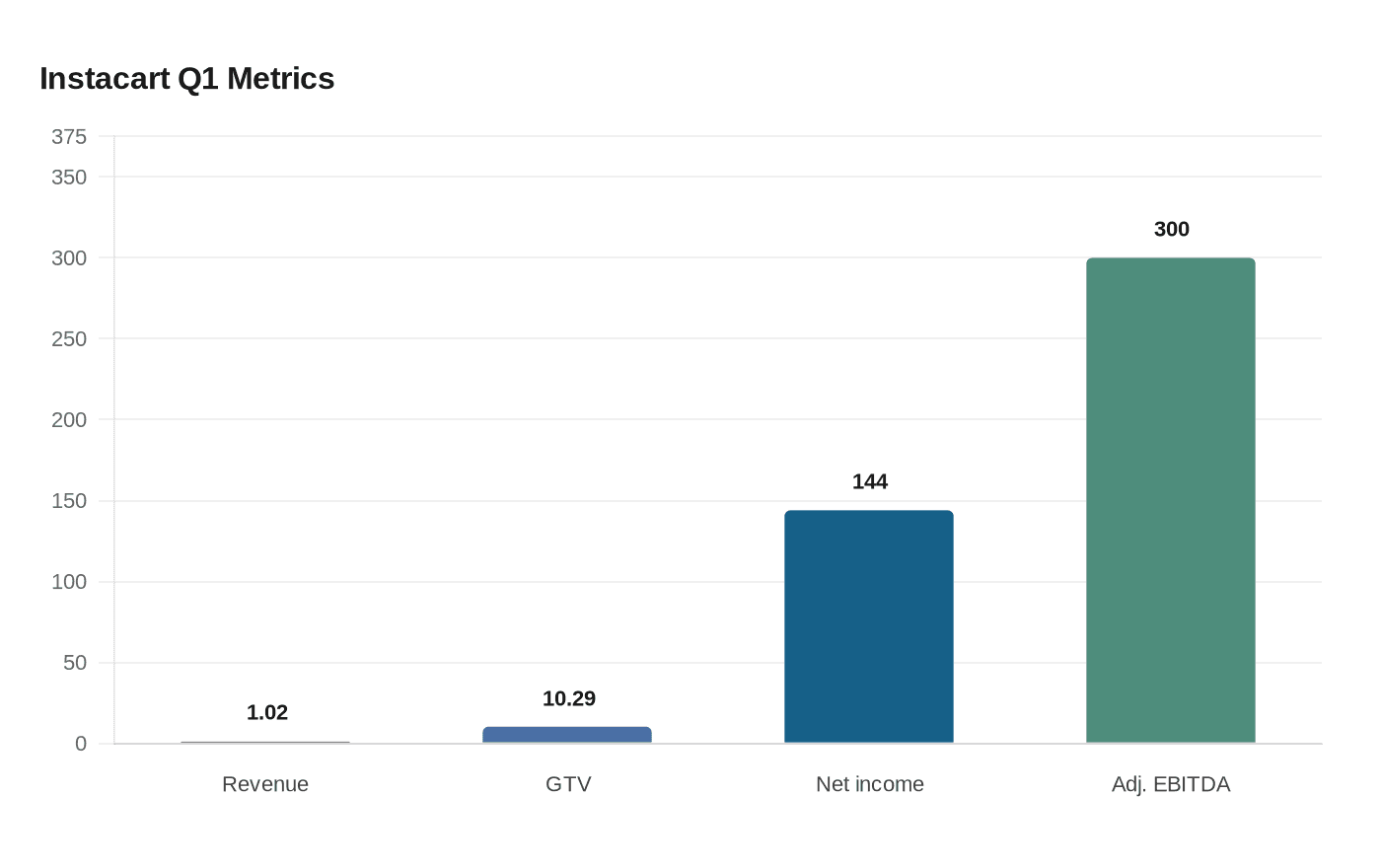
Instacart crossed $1.02 billion in revenue in the first quarter, the company’s first quarter above the $1 billion line. Gross transaction value reached $10.29 billion, up 13% from a year earlier, while GAAP net income rose to $144 million and adjusted EBITDA reached $300 million. Instacart said the quarter marked its ninth straight period of double-digit GTV growth, and its advertising and other revenue grew at the fastest pace since the third quarter of 2023.
That matters well beyond Instacart’s own business. The numbers show that grocery delivery and the digital layer around food retail are still large enough to influence how shoppers discover products, how suppliers buy visibility, and how competitors think about convenience. Instacart is also leaning into AI Solutions, international expansion and in-store technologies, which pushes the company deeper into the same operational questions grocers have been debating for years: who owns the customer relationship, who pays for convenience, and how much of the basket should be monetized through data and ads.
For Trader Joe’s, the contrast is stark. The chain says it does not sell products online, does not offer curbside pickup or delivery, and does not work with third-party delivery services such as Instacart or Dumpling. It also does not run sales, coupons, loyalty programs or membership cards, saying every customer should have access to the best prices every day. That model keeps the focus on the store floor, where crew recommendations, product curation and the in-person shopping experience do the work that apps and algorithms handle elsewhere.
The practical pressure is that shoppers do not leave digital habits at the door. Even when Trader Joe’s stays offline by design, many customers now arrive expecting speed, certainty and a frictionless trip shaped by delivery apps, saved lists and same-day shopping norms. Instacart’s scale suggests those expectations are not fading. One Instacart executive also said moving to price parity is a retailer decision, a reminder that grocers still make the call on whether convenience is built into the shelf price or left to an outside platform.
Trader Joe’s is still betting on physical growth. The company announced a new store in Woodinville, Washington, opening Friday, May 15, 2026, and said it planned 18 more stores across 12 states. With roughly 600-plus U.S. locations, Trader Joe’s remains a brick-and-mortar business at its core. Instacart’s quarter shows why that choice now looks less like an omission than a strategic bet about where value, labor and customer loyalty should live.
Know something we missed? Have a correction or additional information?
Submit a Tip