Target's social commerce push shows how shoppers find products online
Shoppers now discover groceries on social feeds first, and that puts Trader Joe’s crew at the center of every viral demand spike.
Discovery starts on the phone
The grocery aisle is no longer the first place many shoppers meet a product. Nearly three out of four U.S. consumers have bought something because a creator recommended it, and that matters for Trader Joe’s because the chain has built its brand on in-store discovery, not digital targeting. For a company that relies on word-of-mouth, limited runs, and crew knowledge, the question is no longer whether social commerce affects the business. It is how quickly the floor can absorb it.
Target’s new Club Target program makes that shift easy to see. The retailer says about 8,000 creators joined during the pilot phase, with a minimum of 500 followers on TikTok or Instagram to apply, and its current base skews toward accounts with about 5,000 followers or fewer. Target has also made clear that Club Target and Target Ambassadors serve different creator cohorts, which shows how deliberately it is organizing influencer marketing instead of treating it as a side experiment. In other words, Target is trying to manufacture the kind of product stories shoppers now expect to find online.
Why that matters for Trader Joe’s
Trader Joe’s does not run the same playbook, and that is exactly why the comparison is useful. The company says it has been turning grocery shopping into a “welcoming journey full of discovery and fun since 1967,” and it also says it does not have sales, coupons, loyalty programs, or membership cards. That means the store itself has to do more of the work that other chains now outsource to apps, creator campaigns, and personalized offers.
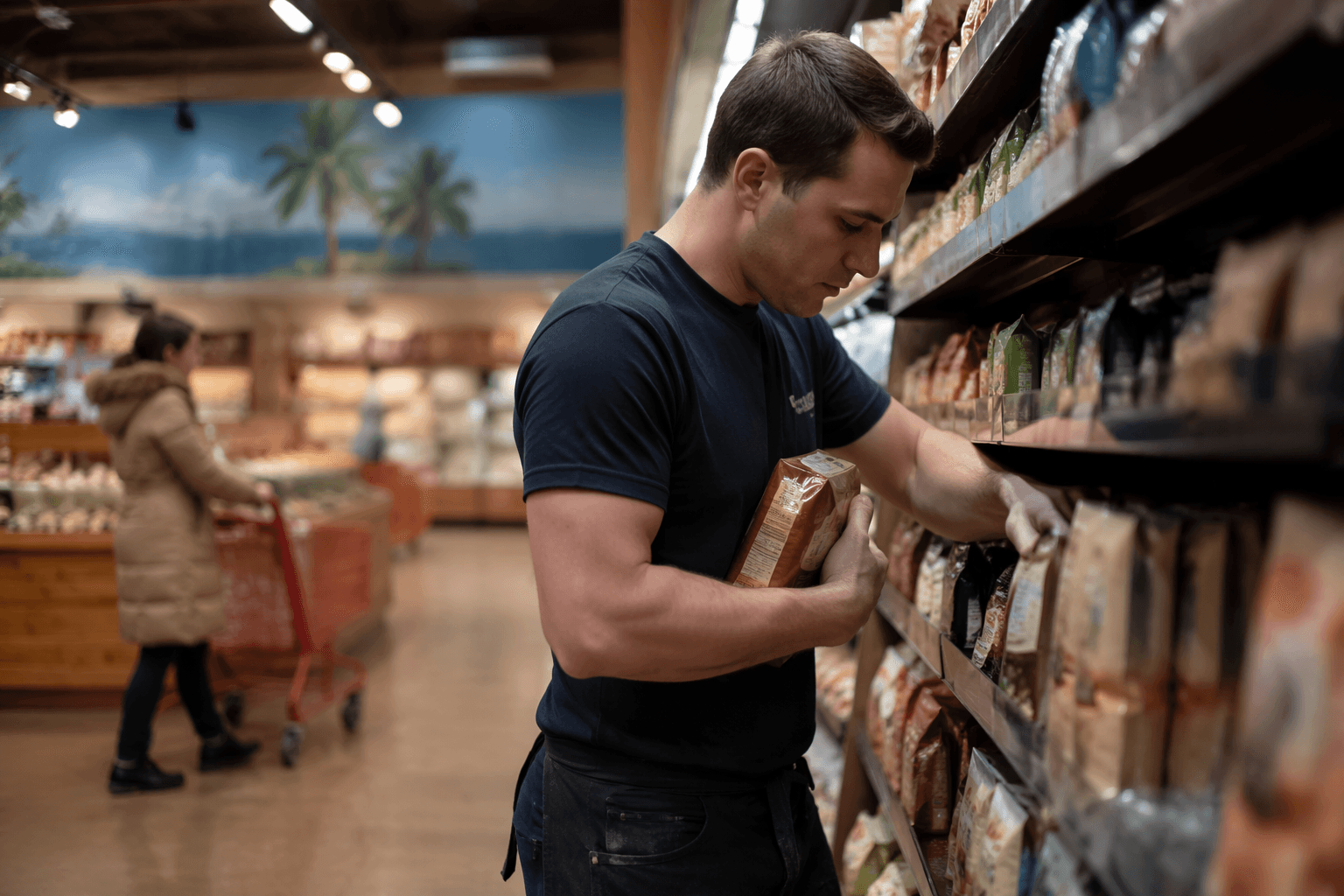
The chain has long leaned on a different kind of discovery engine: customer conversation, crew recommendations, and product curation that feels personal even at scale. Trader Joe’s says its crew members help create a store environment that is “rewarding, eventful and fun,” and that language lines up with the way shoppers actually move through the chain. They ask what is new, what is seasonal, what sold out, and what to try instead. That is already social commerce, just without the paid creator layer.
The practical takeaway for crew members is simple. If social feeds are becoming the top of the funnel, the store team is becoming the last mile. A shopper may walk in because of a TikTok video, but the basket is still won or lost by the way the crew explains a product, points to a substitute, or sets expectations when the shelf is empty.
What Trader Joe’s already knows about buzz
Trader Joe’s has never needed a loyalty app to prove that customer attention can move fast. The company says customers vote every year in its Customer Choice Awards, and it marked the 17th annual awards in January 2026. That kind of participation shows how much the brand already depends on customers turning product discovery into a shared game.
The mini canvas tote episode made the same point even more sharply. In 2024, the bags retailed for $2.99 and spread across TikTok fast enough that some resale listings climbed into the hundreds of dollars. TIME reported one eBay listing for a set of four at $1,199.99, a number that says more about scarcity and fandom than about the bags themselves. Trader Joe’s told TIME in March 2024 that more totes were coming, that they sold more quickly than anticipated, that customers across the country found them before the company had a chance to promote them, and that it did not endorse resale on any platform.
That pattern did not stop there. Trader Joe’s confirmed in 2026 that another mini canvas tote would be restocked daily “for as long as they are available,” putting crew members back on the front line of a viral product moment. Once again, the company’s store teams are not just stocking shelves. They are managing the spread of demand in real time.
What crew and managers should infer from the shift
The bigger lesson is not that every chain needs an influencer army. It is that demand now arrives in waves that are harder to predict and easier to amplify. GRIN’s Modern Consumer Survey found that 74% of U.S. consumers had purchased a product or service because an influencer recommended it, and 68% said they had bought products directly from social media apps. Those are not fringe behaviors anymore. They are part of the baseline shopping pattern crew members are already seeing at the register and on the floor.
For Trader Joe’s, that means a few operational realities matter more than they used to:
- Product knowledge becomes a sales tool and a de-escalation tool. If a customer comes in for a viral snack or limited-run item, the crew member who can explain what is in stock, what is seasonal, and what is closest in taste can save the trip.
- Signage has to work harder. Clear shelf tags, fast handwritten callouts, and simple explanations matter when shoppers are arriving with internet-fed expectations.
- Demand spikes are not random anymore. A product can go from niche to must-have overnight, so managers need to watch social momentum as closely as they watch case counts.
- Substitution skill is part of the brand. Trader Joe’s built trust on recommendations, and that trust is what keeps a disappointed shopper from walking out empty-handed.
Target’s Club Target shows one version of the future: a retailer trying to turn creators into a measurable traffic engine. Trader Joe’s shows another: a company whose organic buzz machine already exists in the aisles, through limited assortment, crew guidance, and products people feel compelled to tell each other about. As shopping discovery keeps moving onto phones, the value of a well-briefed crew only goes up. The stores that win will be the ones that can turn online curiosity into an orderly, well-explained in-store experience before the shelf sells out.
This article was produced by Prism’s automated news system from verified source data, official records, and press releases, then run through automated quality and moderation checks before publishing. The system is built and supervised by the people who set the standards it runs under. Read our full AI policy.
Did this article answer your question?