Trader Joe's applicant privacy notice reveals data and interview footage rules
Trader Joe’s hiring notice spells out the data it gathers, from resumes to interview security footage, and gives California applicants a direct privacy-request path.
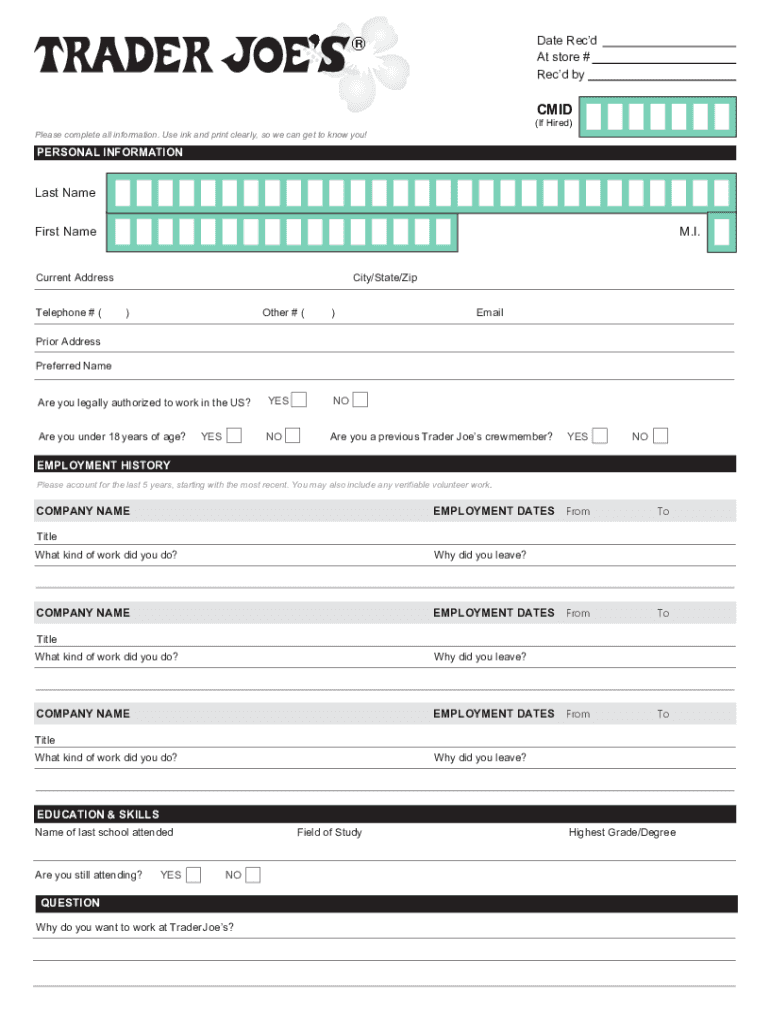
Before you apply, check the fields Trader Joe’s is likely to ask for and decide how much of your work history you want tied to one hiring file. The company’s California applicant privacy notice says it collects identifying details, resume material, education history, licenses or certifications, work history, and references, and if you interview in a store it may also capture security footage in public areas. That makes the notice more than a legal formality: it is a practical map of what enters the hiring process, how far the record can reach, and where a candidate should pay attention.
What Trader Joe’s collects in the application process
Trader Joe’s says the first layer of applicant data is the standard hiring packet: name, email address, phone number, address, resume, education history, professional licenses or certifications, employment history, and references. Those are the details most job seekers expect to hand over, but the notice is useful because it lists them plainly instead of burying them in broad language about “recruitment data.”
The second layer starts when the application moves through the company’s online career portal. Trader Joe’s says application information is submitted to Avature, the provider of that portal, for evaluation. In practice, that means the information you enter is not just sitting in a store manager’s inbox; it is part of a routed hiring system designed to sort, review, and manage candidates across roles and locations.
The part that may surprise applicants
The most unexpected line in the notice is the security language. If you come in for an interview, Trader Joe’s says it may collect security footage in the public areas of stores. That is a different kind of applicant record than many candidates picture when they think about a job application, and it matters because the interview is not limited to a conversation at a desk. The store environment itself can become part of the file.
Trader Joe’s also says it limits collection to what is necessary for its business purposes. For applicants, that reads as a narrow-data promise, but the practical takeaway is broader: a Trader Joe’s interview can involve both the usual hiring paperwork and the normal security setup of a busy retail space. If you are interviewing in-store, it is worth assuming that the process is more monitored than a simple office meeting.
How Trader Joe’s says it uses applicant data
The notice says applicant data may be used for HR processes, internal recruiting improvement, promotional job alerts, and legal, safety, or security reasons. That is a wide enough list to cover the company’s day-to-day hiring work, but also its effort to keep candidates in the pipeline for future openings.
That broader recruiting use fits the way Trader Joe’s describes its workforce. On its careers pages, the company says 78% of Mates started as Crew and 100% of Captains were promoted from the Mate role. Those numbers point to a company that sees hiring as a long runway rather than a one-off transaction, which helps explain why applicant information can be kept in a system built for follow-up, internal movement, and future openings.
Trader Joe’s also says applicant information may be disclosed to contracted service providers for services related to applying for a job. In plain terms, if you apply, more than one company may handle pieces of the process. That is common in modern recruiting, but it is still worth knowing if you are trying to keep track of where your information goes and who can touch it.
What California applicants can do with that information
Trader Joe’s says applicants may have privacy rights over the personal information collected during hiring, and it provides a Privacy Rights Request Form for Job Applicants. The form gives applicants a toll-free number, 833-670-4649, and a privacy email address, caprivacy@traderjoes.com. For California applicants, that means the notice is not just a disclosure; it also points to a direct channel for asking for information, making a request, or following up on rights tied to the data in the hiring file.
That matters because the notice covers more than a quick screening form. It ties together identity information, education and work history, references, portal activity, and in some cases store footage during an interview. A candidate who wants to understand what Trader Joe’s has on file has a concrete place to start, and the company has given a specific contact path rather than leaving the question open-ended.
What the careers pages suggest about the system behind the notice
Trader Joe’s career FAQs show the application process is built as an ongoing system, not a single submission and done. The FAQs address practical problems such as incomplete applications, account status issues, and applying to multiple stores. That tells candidates the hiring pipeline is designed to keep track of people over time, especially if someone is interested in more than one location.
The company’s careers pages also point to a broader hiring footprint. Trader Joe’s says its office crew is based in Monrovia, California, and Boston, Massachusetts, which is a reminder that the application and recruiting structure is not just a store-level operation. There is an office side to the business as well, and the same data-handling expectations apply across that wider employment system.
What this says about Trader Joe’s workplace culture
Trader Joe’s has built its public image around crew pride, above-market pay, and a strong internal pathway from Crew to leadership. The hiring notice fits that culture in a quieter way: it is structured, specific, and transparent about what it collects and why. That style of communication can matter to applicants and current crew alike, because it signals whether the company treats people data as an afterthought or as part of a managed relationship.
For job seekers, the takeaway is simple. Double-check the information you submit, note that interview visits can include public-area security footage, and keep the privacy request contact details handy if you are applying in California. Trader Joe’s is telling candidates that hiring is not just about matching a resume to a shift schedule; it is a documented process with records, portals, and rights attached, which is exactly how a modern retail employer shows how it handles trust.
This article was produced by Prism’s automated news system from verified source data, official records, and press releases, then run through automated quality and moderation checks before publishing. The system is built and supervised by the people who set the standards it runs under. Read our full AI policy.
Know something we missed? Have a correction or additional information?
Submit a Tip