Trader Joe’s benefits go beyond pay, Built In highlights retirement and insurance
Trader Joe’s package can be worth more than the hourly wage. Built In spotlights retirement and insurance, but the real value hinges on hours rules, plan details and coverage.
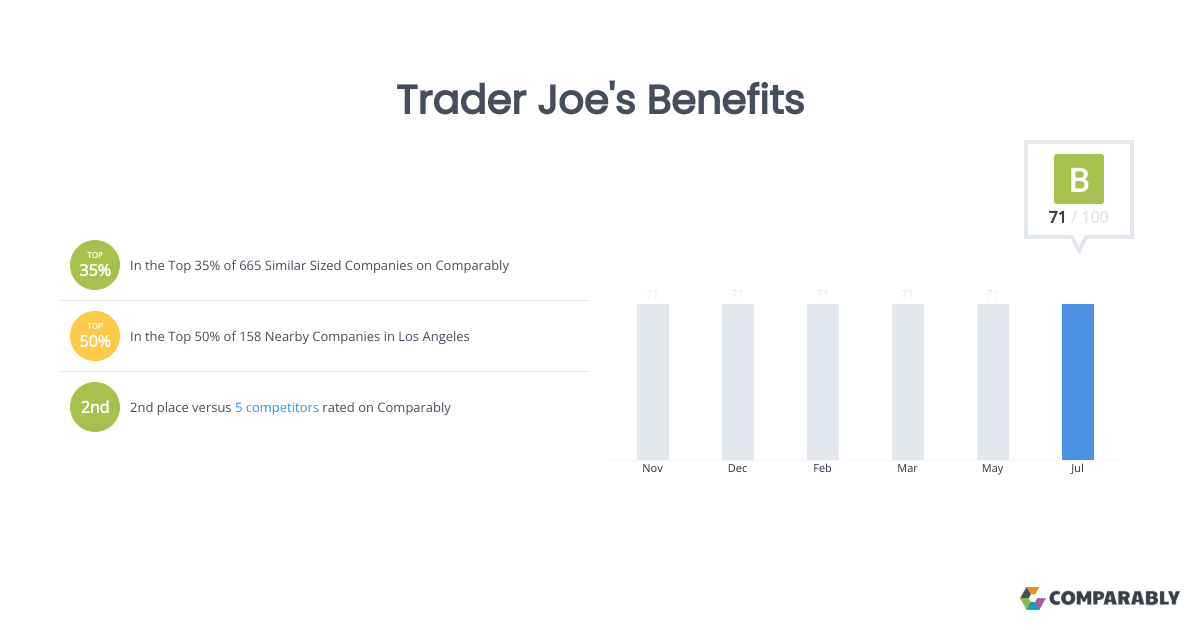
Trader Joe’s hourly pay gets attention, but the bigger question for crew is what happens after the paycheck clears. Built In’s compensation-and-benefits overview puts the focus where job seekers need it: retirement, insurance, leave and other protections that can change the real value of the job over time. Trader Joe’s own careers pages reinforce that approach with a “What We Offer” section and a career FAQ page, signaling that applicants should look at the whole package, not just base pay.
What Built In shows in the package
The Built In listing points to a benefits mix that matters in a retail job with unpredictable schedules and physical work. It includes a 401(k), life insurance, occupational accident insurance, disability insurance and supplemental life insurance. Those categories tell you more than a wage figure ever could: they speak to whether a job helps you save for retirement, whether your family has a financial backstop, and whether an injury or long-term medical issue could destabilize your income.
That broader framing is especially relevant at Trader Joe’s, where crew culture and above-market pay often dominate the conversation. Pay matters, but the value of a role at a specialty grocer is also shaped by whether health coverage, retirement savings and injury protection are available once you are on the floor, handling freight, helping customers and keeping stores moving. Third-party summaries also repeatedly describe Trader Joe’s as offering health, dental, vision, PTO and retirement savings, though the exact details vary from source to source.
Health coverage is the detail that changes the math
The most important question for many applicants is not whether Trader Joe’s offers insurance, but who actually qualifies. Search results consistently point to a health coverage threshold of around 28 hours a week, while some entries say 30 or 32 hours. One Reddit result says crew members must average 28 hours a week over each six-month measurement period after gaining insurance, which shows why a schedule that looks good in one week can still leave someone short over time.
That matters because the difference between qualifying and not qualifying can change the real take-home value of the job far beyond the hourly rate. If you are comparing Trader Joe’s with another grocery chain, the premium you would otherwise pay for private coverage, plus the security of staying on an employer plan, can be worth a lot more than a small bump in wages. It is also a reminder to verify the measurement period, the average-hours test and any waiting period directly with official human resources materials before accepting a role.
The 2013 health insurance shift still shapes how people read the job
Trader Joe’s benefits have not always been viewed as stable or simple. In 2013, reports said the company told employees that some part-time workers would lose health insurance at the end of the year. A memo described by the Cape Cod Times said qualified staff working more than 15 hours per week would get an extra $500 in their January 2014 paycheck to help cover health care costs, and CEO Dan Bane tied the change to the Affordable Care Act.
Other coverage framed the move differently. Puget Sound Sage said Trader Joe’s would drop employees working under 30 hours a week from health insurance and rely on the public health care exchange to absorb some of the cost. HKM Employment Attorneys LLP also summarized the change as part-time employees joining the public insurance marketplace. However it is described, the episode shows why workers still pay close attention to the fine print: a company can have a strong brand and still change how benefits work for part-time staff.
Why labor groups keep putting benefits at the center
Trader Joe’s has also become a focal point for worker organizing, and the benefits package is part of that pressure. UFCW’s Trader Joe’s campaign focuses on wages, fair scheduling and family-related workplace concerns, while a Coworker.org petition referenced in the search results says crew members were demanding no cuts to wages and health care coverage. That mix tells you benefits are not treated as a side perk by workers; they are part of the basic bargain.
That context matters for current crew and managers alike. In a store culture that is often described as collaborative and high-energy, benefits still determine whether the job works for someone who needs reliable scheduling, family coverage or a path to stay long enough to build savings. Union activity also tends to sharpen attention on exactly those questions, because compensation at a retailer is never just the posted wage.
Retirement is part of the real compensation story
The 401(k) deserves the same close reading as health insurance. Search results mention litigation over Trader Joe’s retirement plan, including allegations of high fees and misuse of forfeited funds. One result says the plan had more than $1 billion in assets and over 40,000 participants, which shows this is not a small, peripheral benefit.
For workers, the practical lesson is straightforward: a 401(k) only adds real value if the fees, investment lineup and administration work in your favor. A plan with weak fund options or high costs can eat into the long-term advantage of saving at work. That is why applicants should ask not only whether a 401(k) exists, but whether Trader Joe’s offers a match, how long vesting takes and what the investment menu looks like.
What to verify before you take the job
Before you decide whether a Trader Joe’s offer fits, make sure the official materials answer these points:
- Whether health coverage applies at your store role and how many hours you must average to keep it
- Whether eligibility is measured weekly, monthly or over a longer period
- Whether part-time and full-time crew have different benefit tiers
- What the 401(k) match is, if any, and when you become vested
- Whether disability, occupational accident, supplemental life and standard life insurance are automatic or optional
- What PTO, sick leave and any other leave policies look like for your classification
Trader Joe’s has built a brand on crew culture, but the value of the job still comes down to structure: hours, eligibility, coverage and retirement support. The company’s own careers pages invite that kind of reading, and the third-party benefits summaries show why it is worth doing the math before you sign on.
This article was produced by Prism’s automated news system from verified source data, official records, and press releases, then run through automated quality and moderation checks before publishing. The system is built and supervised by the people who set the standards it runs under. Read our full AI policy.
Did this article answer your question?