Trader Joe's CEO answers crew questions in podcast Q&A
Trader Joe’s crew-facing podcast Q&A shows a rare direct line to top leadership, but the curated format also shows how carefully the company controls that conversation.
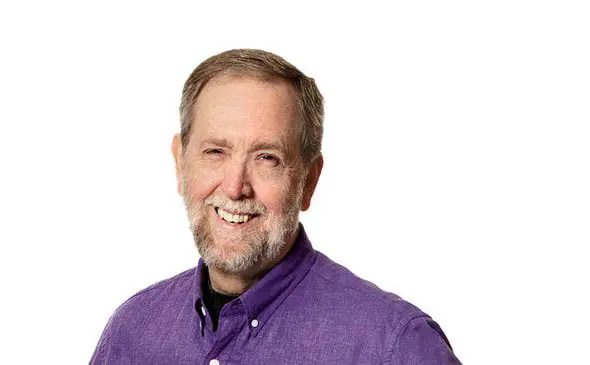
Trader Joe’s Episode 65, “Q&A with Trader Joe’s CEO and President,” gives crew members a rare official look at how the company’s top leadership speaks when the audience is internal rather than customer-facing. The transcript sits on Trader Joe’s own website, the episode was published on August 14, 2023, and it arrived just after a leadership handoff at the top of the chain.
What crew get from the episode
The episode is built around questions from Trader Joe’s crew members, not shoppers or outside commentators. That detail matters because it shifts the conversation from brand polish to workplace concerns, even if only for a limited run of questions chosen for the podcast. The transcript identifies Tara and Matt as the podcast hosts, with Bryan and Jon answering from Trader Joe’s leadership team.
The setting also signals where authority sits. The transcript references the Trader Joe’s mothership in Monrovia, California, while the YouTube description says the team first chatted with a group of Trader Joe’s crew members in Chicago before sitting down with the CEO and president, now also described as vice CEO. For crew members, that means the conversation is anchored in headquarters, not in a store break room, but it still points directly at the people shaping policy and tone.
Apple Podcasts lists the episode at 26 minutes, which is short enough to feel conversational and long enough to cover more than a sound bite. That length, paired with the transcript PDF, makes the episode easy to revisit later. In practice, that creates an internal archive: if leadership says something about culture, growth, or store operations, it is not just a fleeting podcast comment, it is a searchable company record.
Why the format is a transparency test
The strongest signal in this episode is not the questions themselves, but the fact that Trader Joe’s chose to answer crew questions publicly in an official podcast format. That is a different kind of communication from a memo or a store-level huddle. It suggests the company wants employees to see leadership as accessible, while also keeping the conversation within a controlled channel.
That balance is familiar to anyone who works in a company known for informal culture and strong store identity. Trader Joe’s has long presented itself as different from a conventional grocery chain, and the podcast reflects that by letting executives speak in a crew-facing register. At the same time, the format remains highly managed: leadership selects the questions, edits the episode, and publishes only what the company wants preserved.
The scale of the business raises the stakes. Trader Joe’s says it has 622, and counting, neighborhood grocery stores and more than 67,000 Crew Members. Once a company reaches that size, communication is no longer just about tone, it becomes part of operations. Crew members can read this episode as a sign that headquarters understands the need for a direct channel, but also that the channel is still curated from the top down.
The podcast itself has become a larger communication tool than originally planned. Trader Joe’s says Inside Trader Joe’s began in 2018 as a five-episode project and later grew far beyond that first run. For crew, that matters because it means leadership has kept using the podcast as a standing archive for company stories, not just as a one-off experiment. It is a sign that the company sees value in having executives explain themselves in a format employees can revisit.
What the leadership change adds
The timing makes this episode more revealing. Trader Joe’s announced in 2023 that CEO Dan Bane would retire effective July 2, with Bryan Palbaum taking over as CEO and Jon Basalone becoming Vice CEO and President. That means the August 2023 Q&A was not just any leadership appearance, it was one of the first opportunities for the new top structure to present itself in a crew-facing setting.
For employees, that gives the episode a practical use. It helps show how the incoming leadership team speaks about the company, how much context it gives, and whether it leans toward openness or a tighter corporate script. The answer, based on the format alone, is mixed: it is more direct than a generic corporate announcement, but still carefully packaged.
A 2024 scholarly paper on Trader Joe’s pushed the new leadership to seek greater input from store managers, which adds an important layer to how crew should read this kind of podcast. The episode shows executive accessibility, but it does not by itself prove that day-to-day decision-making has become more bottom-up. Crew members can take from that the company is willing to talk publicly with employees, while still leaving open the larger question of how much store-level feedback actually reaches the top.
What workers can infer about policy and expectations
For crew and managers, the clearest takeaway is that Trader Joe’s uses this podcast to normalize a certain kind of communication culture: questions are welcome, answers are public, and leadership wants to sound close to the floor. That can be useful when trying to understand how the company frames operations, growth, and culture, especially during a period of leadership transition.
It also suggests that the company values a controlled version of openness. Crew members hearing from Bryan Palbaum and Jon Basalone can infer that HQ wants to be seen as accessible and responsive, but the transcript and podcast format show that this openness comes through an edited, official channel. In other words, the company is making room for dialogue without giving up control of the message.
For workers deciding how to read Trader Joe’s culture, that distinction matters. The episode says the company is willing to answer crew questions in public, and the transcript makes those answers part of the permanent record. It is a more direct leadership style than a standard corporate bulletin, but it is still a managed one, which is exactly what crew should expect from a company trying to preserve its informal image at national scale.
This article was produced by Prism’s automated news system from verified source data, official records, and press releases, then run through automated quality and moderation checks before publishing. The system is built and supervised by the people who set the standards it runs under. Read our full AI policy.
Did this article answer your question?