Trader Joe’s faces rising labor costs as employee benefits drive pay competition
Trader Joe’s crew benefits sit inside a labor market where private-industry compensation reached $46.60 an hour, and benefits made up 30.1% of that bill.
Trader Joe's is selling a people-first culture at a time when the cost of employing workers keeps climbing. For grocery chains, that pressure can ripple into schedules, staffing depth, cross-training and how many hours a store can afford to allocate before any manager says so out loud. The U.S. Bureau of Labor Statistics said civilian employer compensation averaged $49.32 an hour in March 2026, while private-industry workers averaged $46.60 an hour; $32.60 of that went to wages and salaries and $14.01 to benefits, which accounted for 30.1% of total compensation.
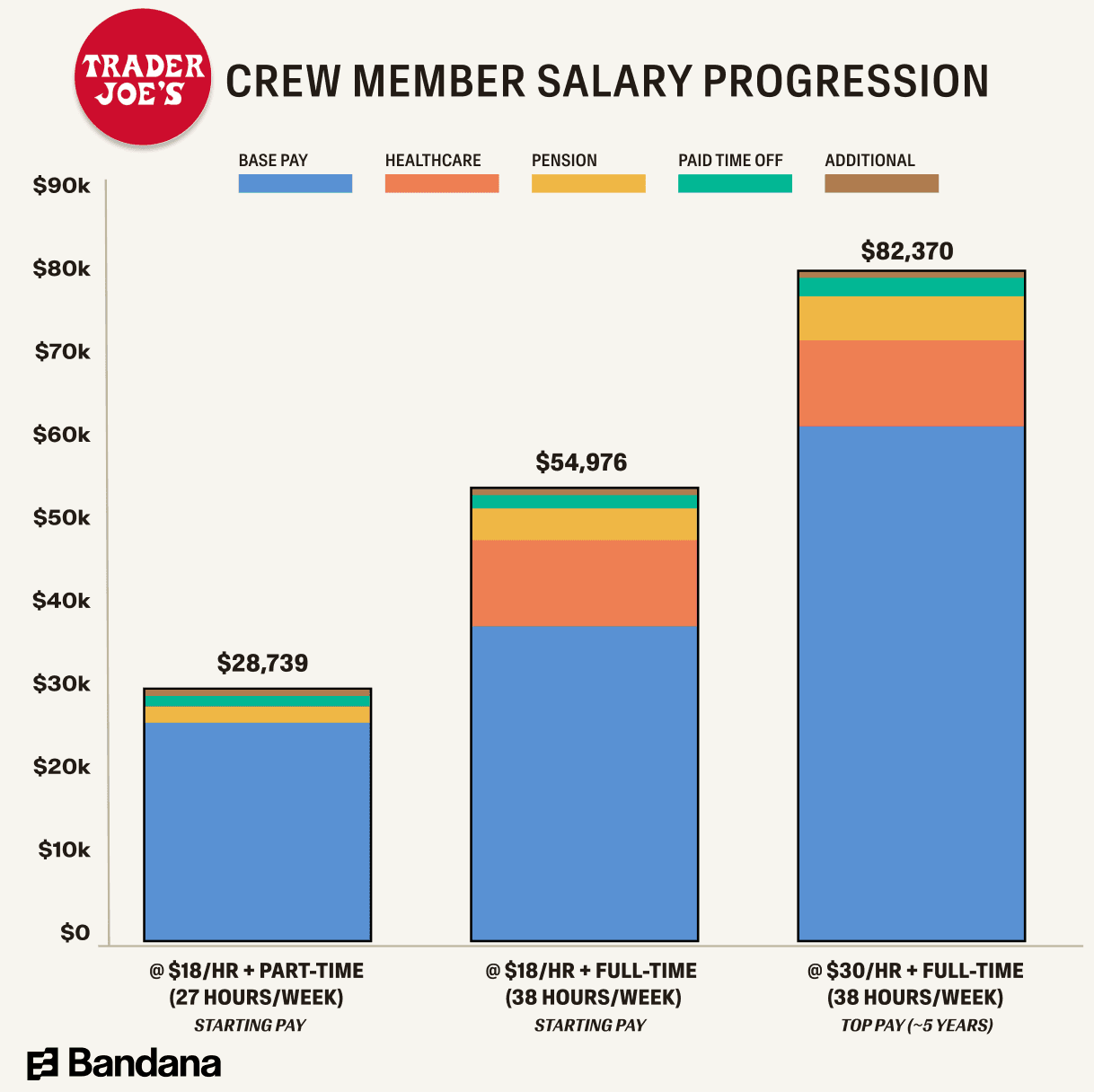
Trader Joe's has built its pitch around a compensation package that goes well beyond the hourly rate. Eligible crew members can get medical, dental and vision plans, with contributions as low as $25 a month. The company says paid time off increases with tenure and works out to about 5 to 10 days a year from hire, and crew members get up to a 20% store discount. Trader Joe's also says 78% of Mates started as crew and 100% of Captains were promoted from the Mate role, a sign that retention and internal promotion are part of the business model, not just the branding.
The company has also described that model in unusually plain terms. In a Trader Joe's podcast transcript, a representative said the chain pays more than 80% of health premium costs for crew and that the full array of benefits costs a crew member less than $100 a month. That matters because the labor conversation in grocery is not only about wages on a schedule board. It is about whether the full package, health coverage, paid leave, retirement support and discount value, is strong enough to keep trained workers in place.
Union activity has sharpened that debate inside Trader Joe's stores. Trader Joe's United says the first store to unionize was in Hadley, Massachusetts, on July 28, 2022. The Minneapolis store later voted 55-5 for the union, and the Chicago vote ended 70-70 with one challenged ballot. Trader Joe's United says it now has four locals, in Hadley, Minneapolis, Louisville and Rockridge in Oakland, while the National Labor Relations Board says private-sector employees have the right to join together to improve wages and working conditions.
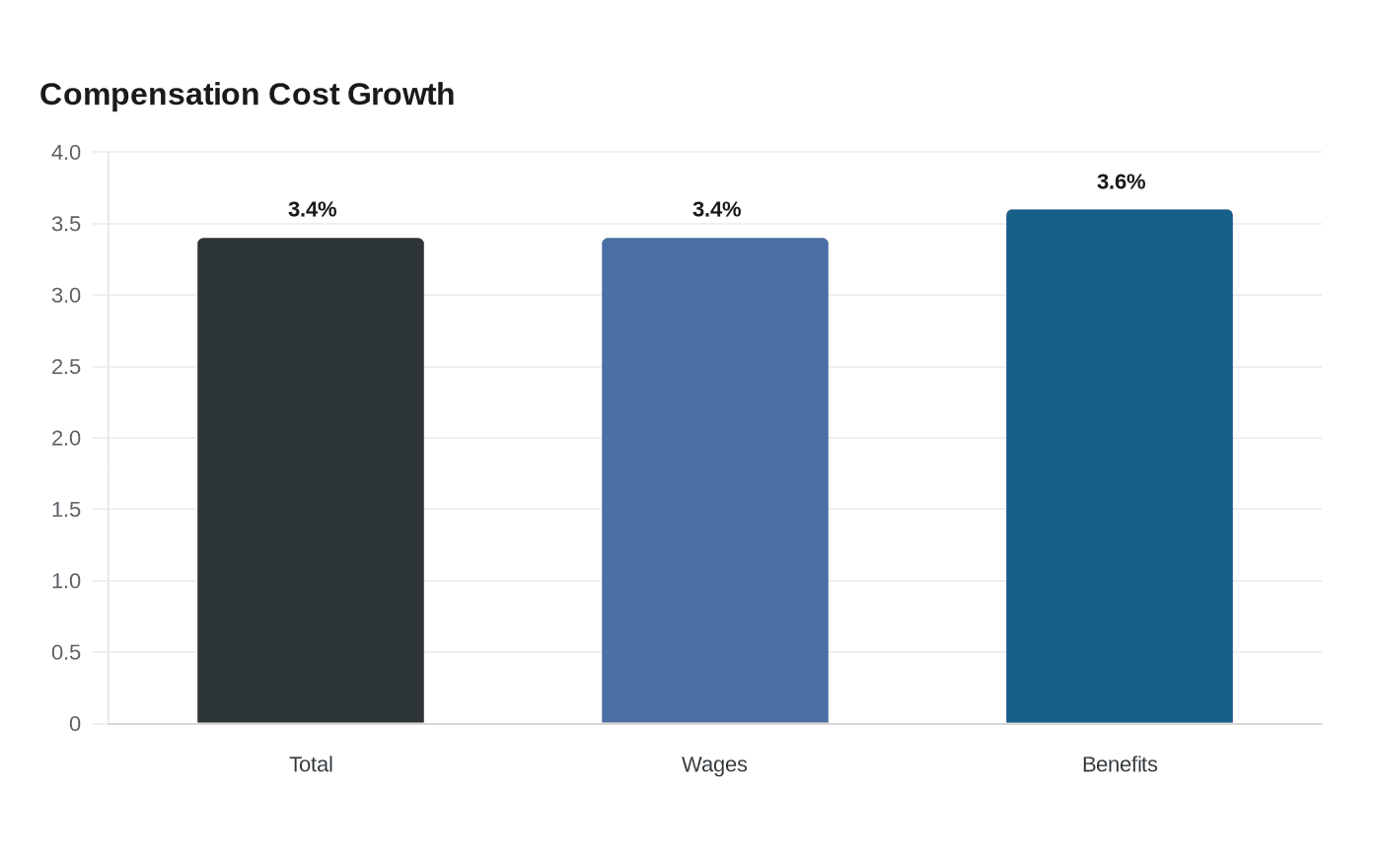
The broader cost trend helps explain why those fights keep landing in compensation and working-condition questions. Private-industry compensation costs rose 3.4% over the 12 months ending in March 2026, with wages and salaries up 3.4% and benefit costs up 3.6%. For Trader Joe's, that means the real pressure may show up first in how many hours a store can staff, how much training one crew member is expected to absorb, and how much of the company's promised culture survives when labor gets more expensive.
This article was produced by Prism’s automated news system from verified source data, official records, and press releases, then run through automated quality and moderation checks before publishing. The system is built and supervised by the people who set the standards it runs under. Read our full AI policy.
Know something we missed? Have a correction or additional information?
Submit a Tip