Trader Joe's grocery work raises ergonomics, injury reporting concerns
Trader Joe’s fast, multi-task shifts can turn small aches into real injuries. OSHA says early reporting, tracking, and ergonomics fixes are the difference between a sore back and a long absence.
Why Trader Joe’s work can wear on the body
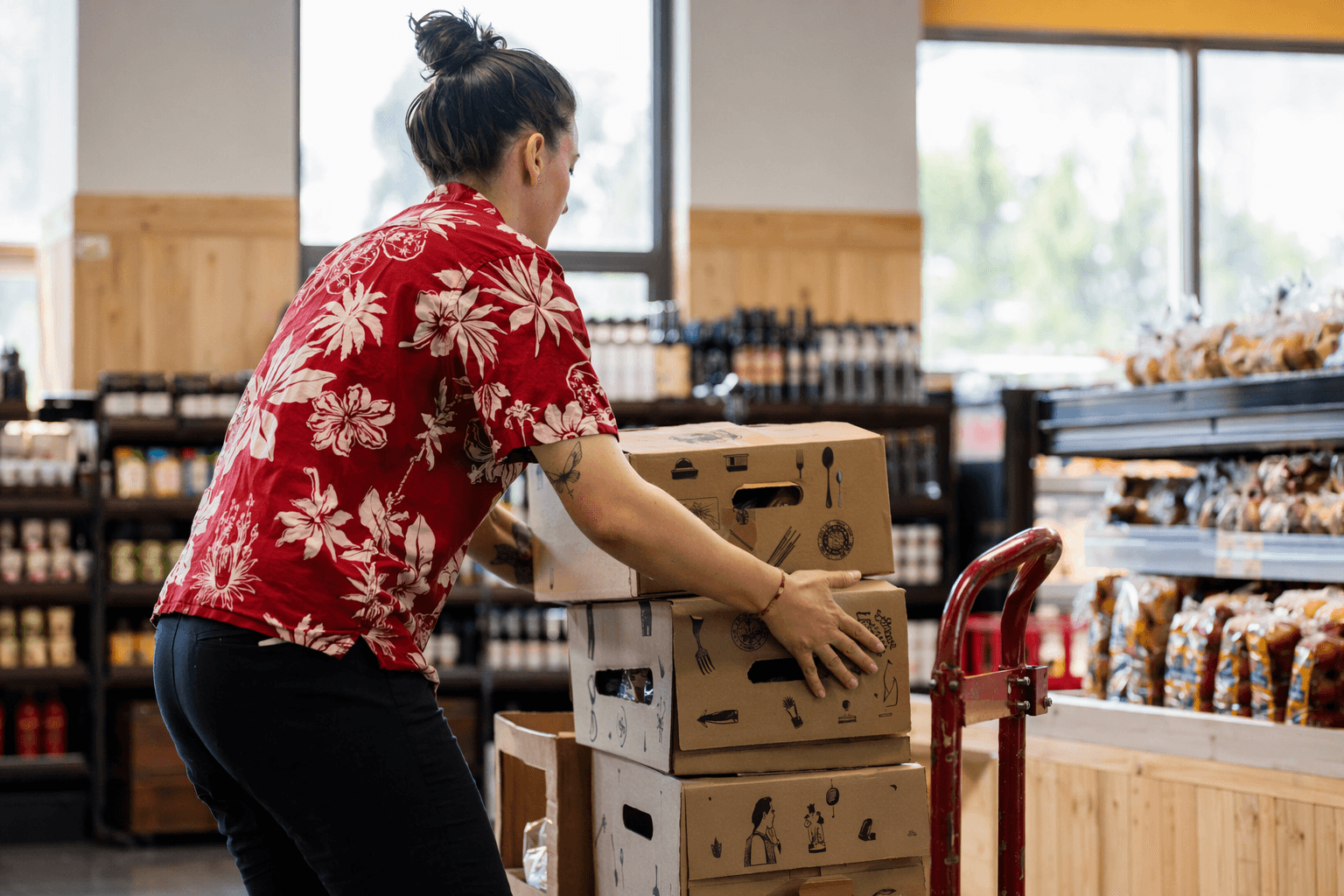
Trader Joe’s crew members do a little of everything: running the register, stocking shelves, and creating displays while also lifting, bending, carrying, rotating product, and bagging all day. That mix is part of the chain’s identity, but it also means one shift can combine repetitive motion, awkward reaches, heavy loads, and a fast pace in the same hour.
For crew, that matters because the first warning sign is often small. A shoulder that feels tight after facing product, a wrist that starts to tingle at the register, or a back that aches after receiving may seem manageable until it is not. In grocery, those are the kinds of problems that can snowball into time off, restricted duty, or a long recovery if they are ignored.
What OSHA says stores need to track
The Occupational Safety and Health Administration says many employers with more than 10 workers must keep records of work-related injuries and illnesses using OSHA Forms 300, 300A, and 301, or equivalent forms. OSHA’s Form 300 is the Log of Work-Related Injuries and Illnesses, Form 300A is the Summary, and Form 301 is the Injury and Illness Incident Report.
The agency also requires fast reporting for serious events. Employers must notify OSHA within 8 hours after a work-related death and within 24 hours after certain severe injuries, including hospitalization, amputation, or loss of an eye. That reporting is not just paperwork; OSHA says recordkeeping helps employers, workers, and the agency identify hazards and remove them before more people get hurt.
OSHA also makes a point of public transparency. It says it provides inspection and citation data, electronically submitted injury and illness data, and severe injury and fatality data. For workers, that means safety issues are not just internal conversation topics. They can become part of a broader record that shows where a store or a company is taking real risks.
What grocery ergonomics problems usually look like
OSHA says retail grocery injuries often involve musculoskeletal disorders, or MSDs. Those include back injuries, sprains, strains, and repetitive motion disorders such as carpal tunnel syndrome. In plain terms, these are the injuries that come from the daily physical grind of grocery work, not from one dramatic accident alone.
That is why the agency’s retail grocery ergonomics guidance is so specific. It addresses the front end, stocking, bakery, meat and deli, and produce departments, recognizing that each part of the store creates different strain points. A cashier’s stress is not the same as a stocker’s, and neither looks exactly like the work in the meat case or the produce cooler, but all of them can create injury when the pace stays high and the body is asked to repeat the same motions over and over.
OSHA says the guidance was developed through a public process. The agency disseminated a draft in May 2003, then held a stakeholder meeting on October 2, 2003 before finalizing the retail grocery store guideline. That history matters because it shows the guidance was not written in a vacuum. It was shaped around the realities of grocery labor.
What a safer ergonomic process is supposed to include
OSHA says effective ergonomic programs are built on worker involvement, training, and evaluation of progress. In practice, that means safety is not just a manager’s checklist or a corporate slogan. It is a system that depends on crew members speaking up when a task hurts, on leaders listening, and on the store checking whether a fix actually reduced strain.
For a Trader Joe’s crew, that can mean flagging the same sore shoulder that gets worse after facing product, the wrist pain that appears after repeated scanning and bagging, or the back twinge that shows up after hauling cases from receiving. Reporting early symptoms is important because a problem that is caught early is far easier to adjust than one that has already become a lasting injury.
Managers also need to treat those reports as useful data, not noise. If the front end is seeing repeated complaints, or if produce or bakery keeps generating the same strains, the store has a clue about where task design, break timing, equipment use, or rotation needs attention. OSHA’s view is straightforward: good ergonomics depends on seeing the pattern, not just reacting to the worst injury after it happens.
Why Trader Joe’s safety history matters here
Trader Joe’s recent OSHA history gives extra weight to these concerns. In April 2024, OSHA announced nearly $217,000 in penalties against a Colorado Trader Joe’s location. The agency’s citation record for that case shows a repeat citation issued on March 4, 2024, an initial penalty of $126,764, and 25 exposed workers.
OSHA’s citation record also shows that Trader Joe’s had a previous powered-industrial-truck citation that was affirmed as a final order on March 20, 2020. Taken together, those records show why injury reporting and prevention cannot be treated as background compliance work. They are part of the store’s actual operating risk.
That does not mean every store has the same problem, but it does show how quickly safety issues can become formal enforcement when hazards are not addressed. For a company that says it relies on crew feedback to continuously improve and offers twice-yearly performance reviews, OSHA’s framework adds a harder-edged truth: real improvement requires more than a friendly culture. It requires records, follow-through, worker participation, and proof that changes reduce harm.
What this means on the floor
In a Trader Joe’s store, the safest version of “we all do a little of everything” is one where the physical load is shared intelligently, not piled onto the same people day after day. That means being alert to how much lifting, reaching, and repetitive motion each job actually demands, especially during rushes when speed can hide strain.
The practical rule for crew is simple: if a cut, shoulder strain, back ache, or repetitive-motion issue is getting worse, tell a leader quickly. That is not complaining. It is how a minor injury gets documented, adjusted, and kept from turning into a longer absence.
For managers, the responsibility is equally clear. Good reporting should give the store a real picture of where strain is happening, whether that is front end, stocking, bakery, meat and deli, produce, or receiving. The stores that handle this best are the ones that treat ergonomics as part of daily operations, not as an after-the-fact fix. In grocery work, the difference between a healthy team and a hurting one often comes down to whether the warning signs are heard before the shift is over.
Know something we missed? Have a correction or additional information?
Submit a Tip